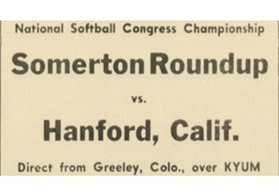
Somerton, Arizona, with a population under two thousand, was an unlikely home for a powerhouse softball team in the late 1940s: the Somerton Roundup. With one notable exception, the team was comprised of young men from Somerton and Gadsden. The sponsor of the team was Jack Sims, owner of the Somerton Roundup Bar, but “bar” was not usually included in the team name. In 1949 the Roundup team won the Yuma Softball Championship on August 16, and then captured the Arizona championship of the National Softball Congress on August 29. The team earned an invitation to the NSC national tournament in Greeley, Colorado–a week-long event in September with 17 teams–where Somerton Roundup finished in 2nd place to the Hanford (California) Kings.
I. The Rise of Yuma Fast-Pitch Softball

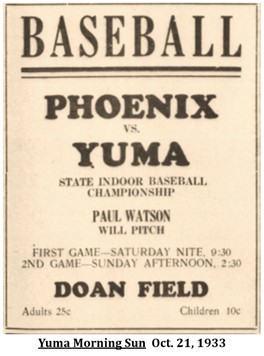
Until around 1935 softball was typically referred to as “indoor baseball.” Yuma had its first indoor baseball league in the summer of 1931, and 20-year-old Paul “Windmill” Watson was the first out-of-town star to be “imported” (i.e. paid) to play softball in Yuma. The legend of Paul Watson had its birth in Whittier, California where he pitched for the American Legion team. In Yuma Watson’s “windmill” delivery gained further notoriety, and by 1934 he was pitching for Phoenix’s celebrated Funk Jewels squad. The Yuma newspaper determined that a two-game series between Yuma and a team of Phoenix All-Stars in October 1933 would decide the “State Indoor Baseball Championship.” Yuma won both games, marking the end of Paul Watson’s memorable contribution to local softball lore.
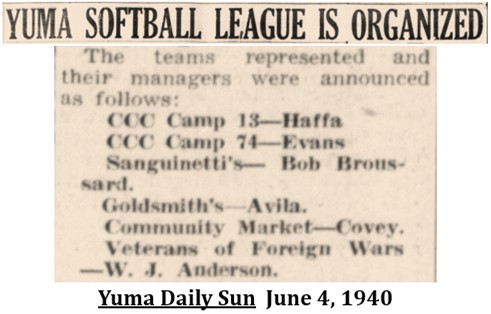
In the late 1940s the Yuma Softball League had 8 teams which played from June to August at Yuma High School’s Doan Field. The participating teams, changed slightly from year to year, but included the following: American Legion, Bureau of Reclamation, Emporium, George Y. Wah, Jack and Kelly, Lutes, Sanguinetti, Somerton Roundup Bar, Yuma Distributing Co., Yuma Merchants, and Yuma Test Branch. There were mid-week and weekend games. At season’s end the top 4 teams played a Yuma tournament with the winning team advancing to the state championship tournament in Phoenix.


In 1947 Sanguinetti defeated the Bureau of Reclamation for the Yuma softball championship, and in 1948 Reclamation captured the title from Sanguinetti. The 1948 season saw the practice of “importing” star pitchers turn into a heated “arms race”: Yuma’s American Legion team brought in Nolly Trujillo, Emporium hired Paul Lopez, and Sanguinetti signed Kenny Law. All three men were fast-pitch superstars in Phoenix and future softball hall of famers. The Bureau of Reclamation was fortunate to have a local pitcher, Abie Gordoa, who was nearly the equal of the Phoenix stars. The 1948 Somerton Roundup team imported Larry Higgins from Phoenix, and that summer he often out-performed the more highly heralded pitchers–plus he found his future bride in Somerton.
II. The 1949 Yuma Softball League Season and Championship Tournament
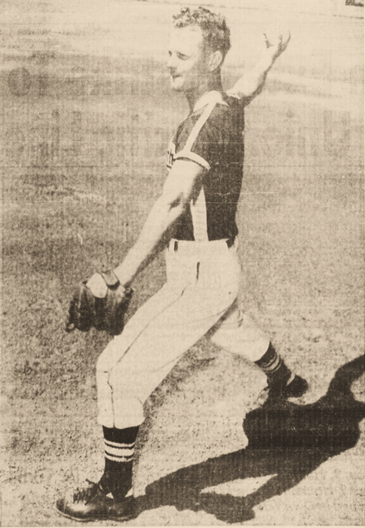

In 1949 the Somerton Roundup team returned its strong lineup from the previous summer, plus a familiar name as the team’s new pitcher. Twenty-four-year-old Kenny Law signed with the Somerton team after pitching for Sanguinetti a year earlier. Somerton lost only one game during the regular 1949 season thanks to Kenny Law’s dominance and durability. In the Yuma championship tournament the Roundup team won 7 of their 8 games, including a dramatic 1-0 clincher over the defending champion Bureau of Reclamation in 16 innings. As the above headline states, Kenny Law struck out 24 batters while Reclamation’s Johnny Martin struck out 23 in an equally brilliant outing. Roundup outfielder Vic Mann drove in the game-winning run in what the newspaper called the “longest game on record at Doan Field.”
III. The 1949 Arizona Softball Championship Tournament
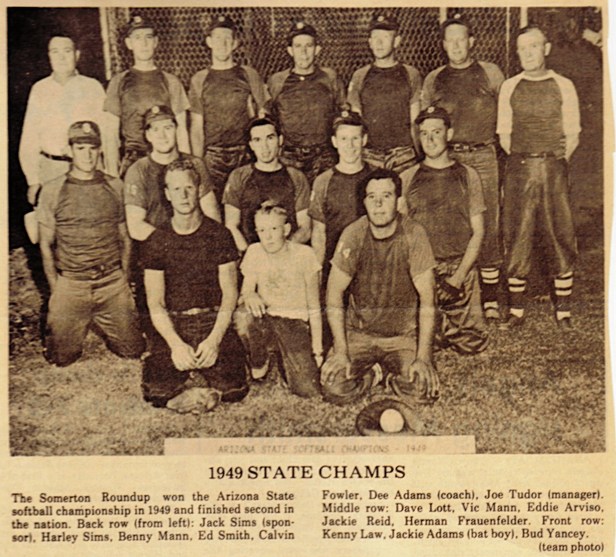
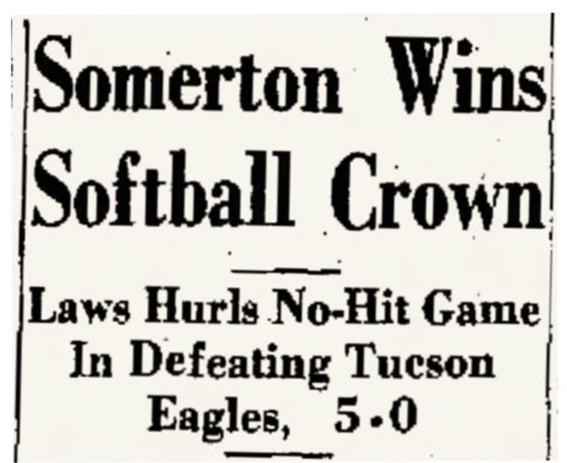
The 1949 Arizona state softball tournament presented less of a challenge to the Somerton Roundup than they had faced in the Yuma softball league–an indication of the high level of softball excellence in Yuma. Somerton defeated Avondale 8-0 in game one, a one-hitter by Kenny Law. Game two was a 5-1 victory over Flagstaff, another Law one-hitter. In game three Law gave up 3 hits in a 3-0 win over Ajo, and in the final game Kenny Law threw a no-hitter in a 5-0 win against Tucson. Other Roundup players had excellent performances as well. In addition to Law, Roundup selections to the all-tournament team included catcher Bud Yancey, second baseman Jerry “Red” Cahoon, and outfielders Davy Lott and Bill “Pigeon” Doten. Doten and Cahoon had been added to the Roundup roster from the Bureau of Reclamation team following the conclusion of the Yuma tournament. The state championship was not completely joyful for the Roundup ballplayers: Eddie Arviso’s home in Somerton was burglarized while the team was in Phoenix.
IV. The 1949 National Softball Congress Championship Tournament

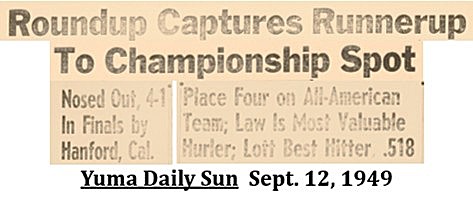
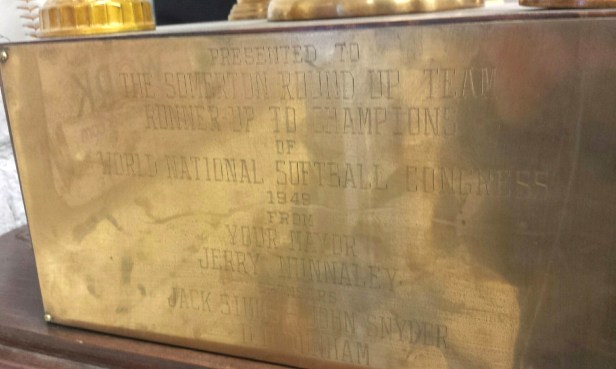
Somerton mayor Jerry Nunnaley honored the Roundup softball team with a dinner prior to their thousand mile journey by automobile to Greeley, Colorado. Around 20 persons made the trip, and by rotating drivers, the party arrived in a long, single day. Greeley is not quite a “mile high” city, but the change in altitude would have been noticeable to the men from Yuma County. Kenny Law had pitched in the previous year’s national tournament, but it had been held in Oklahoma City, so Greeley was unfamiliar to him as well.
The 17 teams came from far-flung locations, as indicated by the Roundup opponents. In game one Somerton defeated Churubasco, Indiana 9-0 as Kenny Law gave up two hits. In game two Bill Doten’s two-run home run led Roundup to a 2-0 win against Stamford, Texas. Game three was a 6-0 Kenny Law shutout versus a team from Toronto, Ontario. Game four saw Somerton facing the defending champions from Taft, California. The Roundup squad defeated Taft in another epic 16-inning game, climaxed by Herman Frauenfelder’s game-winning steal of home. In the final game against Hanford, California, Kenny Law gave up a rare three-run home run, and Somerton Roundup lost by a 4-1 score.
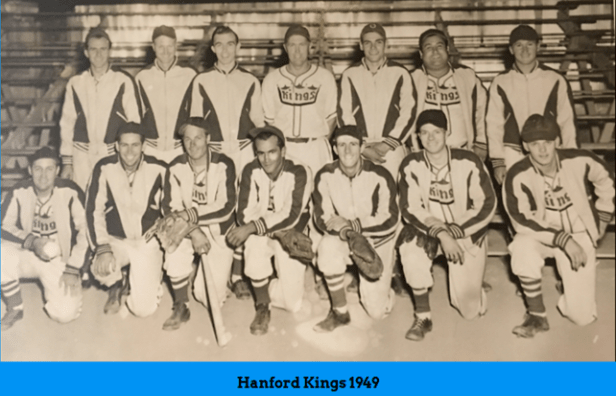
Although they did not win the national title, the Somerton Roundup team received several honors for their Greeley tournament performances. Kenny Law was selected outstanding pitcher; he began the tournament with a streak of 46 scoreless innings, and his 83 total strikeouts was a long-standing tournament record. Outfielder Davy Lott was chosen as top hitter of the tournament by virtue of an incredible .519 batting average, while infielders Jack Reid and Jerry Cahoon also made the all-tournament team.
V. Life After Greeley
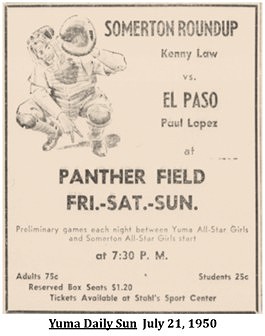
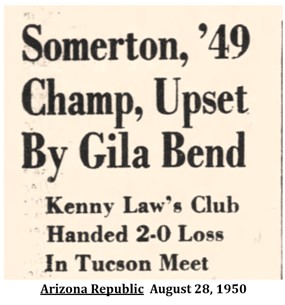
The 1950 Somerton Roundup team included most of the players from the previous year’s national runner-up roster, including ace pitcher Kenny Law, but the Yuma softball league did not stage a local tournament that year. Instead, Roundup and the Bureau of Reclamation scheduled games against each other and with area teams such as El Centro. The Roundup team also played a series of matchups pairing their star pitcher Kenny Law against the El Paso, Texas team with Paul Lopez. In July El Paso traveled to Yuma to play Roundup at Panther Field, and in August the Somerton team traveled to El Paso for a rematch. The Roundup squad was invited to the 1950 state tournament in Tucson, but Gila Bend’s surprising upset victory over Somerton signaled the decline of fastpitch softball in Yuma County.
Most of the Somerton Roundup players remained in Yuma County after their playing days, raising families while working in agriculture, government, and law enforcement. Because of their ages, many of them had served in the armed forces during World War II prior to joining the Somerton team. Here are a few of the after-Greeley stories.
Jack Sims, the sponsor of the Somerton Roundup softball team, owned the Roundup Bar which he managed, along with his wife Julia. In 1936 the Sims moved to Somerton from Texas. Julia died at in 1962, but Jack remained owner of the Roundup Bar through the late 1970s. At the time of his death in 1995 at the age of 86 Jack Sims was living in Altus, Oklahoma. According to his obituary, “He was a business man, rancher, farmer, and gambler before retiring.”
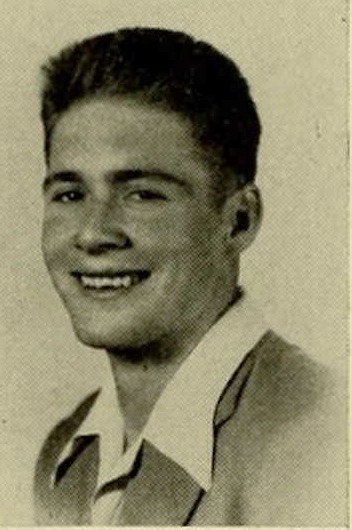
Vic Mann, the Roundup right-fielder who had the 16th-inning game-winning hit in the Yuma tournament against the Bureau of Reclamation, died at the young age of 35 in June 1962. The newspaper article announcing his death referred to Mann as a “Yuma softball player,” and the article began by calling him a “well-known Yuma area ballplayer.” The article went on to note Vic Mann’s service in U.S. Navy, his employment as assistant watermaster for the Yuma County Water Users, and his involvement with a Yuma Babe Ruth baseball youth team. But, clearly, even 13 years after the Somerton Roundup glory days, Vic Mann and his teammates were well-remembered for their softball accomplishments.
When Cal Fowler, the Roundup third baseman, died at age 81 in 2006, his obituary made no mention of his softball days. The article did note that after graduation he had enlisted in the Army Air Corps, and that he had a long career as manager of YUCO Gin, Yuma’s venerable cotton gin company. And Cal Fowler’s soft spot for stray animals was emphasized: “Quiet, honest, hard-working, and with a heart so big there was always room for one more.”
Henry Britton Smith also died in 2006, at the age of 85, and his lengthy obituary noted that he had been a member of the 1949 Roundup team, but hadn’t been able to make the trip to Greeley due to the imminent birth of his first child.

Roundup center fielder and hitting star David “Davy” Lott is pictured here in 1950 signing a contract with Yuma’s first minor league baseball team, the Panthers. Lott didn’t remain with the Panthers for long, choosing instead to follow his father as a longtime Yuma valley farmer who served several terms on the Gadsden school board.

As catcher of the Roundup team, Travis “Bud” Yancey had the thankless job of catching Kenny Law’s blazing and occasionally wayward fastballs and change-of-pace curveballs. Having served as a paratrooper in World War II, Yancy was certainly tough enough to handle any challenge that softball presented. Bud Yancey went on to a long career in law enforcement, highlighted by his 17 years as Yuma County Sheriff, and his 1968 selection as Arizona Sheriff of the Year.
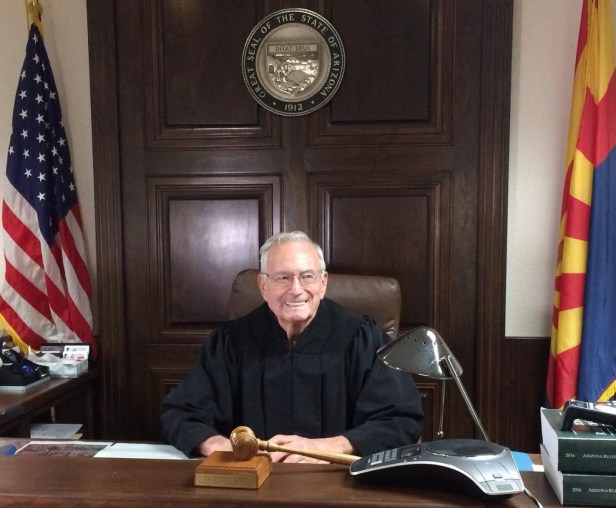
Herman Frauenfelder, Roundup third baseman and a member of the expansive Lott-Frauenfelder clan, became Justice of the Peace for Somerton in 1961, a position he held until his 1987 retirement.
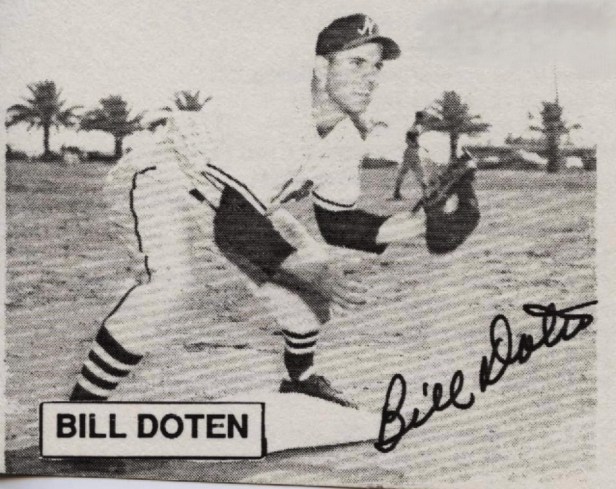
Bill “Pigeon” Doten was added from the Bureau of Reclamation team to the Roundup roster for the Greeley tournament where he hit a towering home run in the game two win over Stamford, Texas. Doten excelled at softball and baseball, along with his brothers Hubert (“Chili”) and Albert. Bill signed a contract with the Cleveland Indians in 1949 and went to camp with their Tucson farm team that spring. In 1950 Doten played for Yuma’s minor league baseball team, the Panthers, in their inaugural season. And in 1953 he was on the roster of an outstanding service team, the San Diego Naval Skyraiders.
“Fast-pitch died a well-deserved death. Nobody could hit the damn ball. It’s a one-man game—the pitcher—and everyone else stands around.” —Elby “Boom Boom” Bushong, slow-pitch softball hall-of-famer (Arizona Republic Sept. 22, 2006)
“Boom Boom” Bushong was hardly an impartial observer on the subject of fast-pitch softball, since he was a slow-pitch legend who hit over 1500 career home runs. But he is correct that fast-pitch was a pitcher’s game which did sharply decline in popularity in Arizona after its heyday in the 1940s and 1950s. A factor in Yuma’s decreased interest in fast-pitch softball was the introduction of minor league baseball with the Yuma Panthers (1950-1952) and the Yuma Sun Sox (1955-1956). Neither team succeeded financially, but many fans who had attended softball games at Doan Field in the past began attending baseball games at Municipal (Panther) Field. Importing big-name pitchers to Yuma was no longer feasible for team sponsors due to the cost and the dwindling softball crowds. At its peak, however, fast-pitch softball may have been the most popular spectator sport locally and statewide, so we will close by celebrating some of the individuals who contributed to Yuma’s golden age of fast-pitch softball.
Extra Innings: Fast-Pitch Legends, Yuma Connections
Abraham (“Abie”) Gordoa
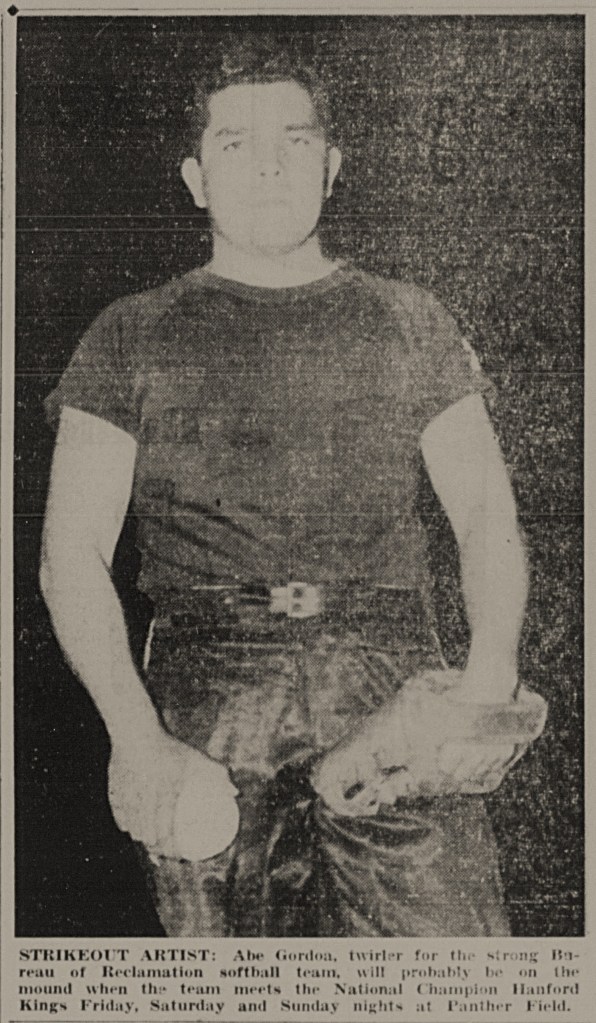
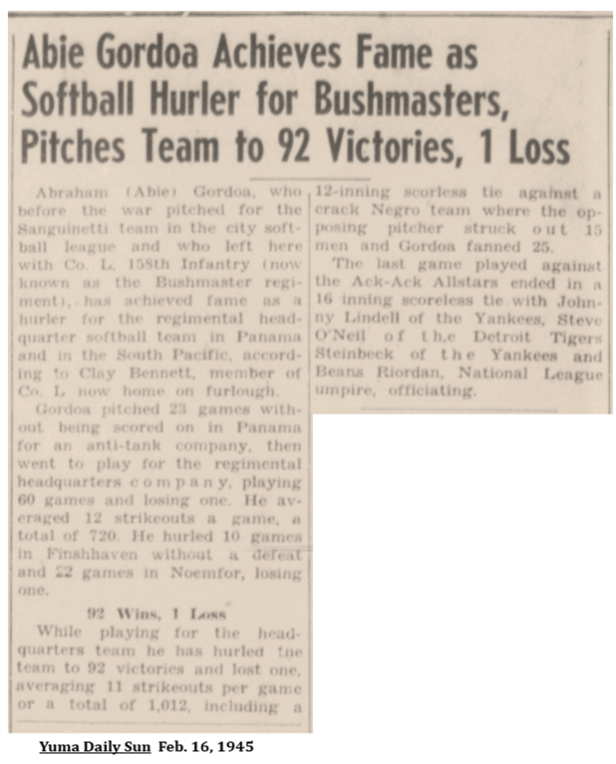
Abraham (“Abie”) Gordoa was not an “import” from Phoenix or elsewhere like the other elite softball pitchers mentioned here. He lived in Yuma for most of his 93 years, working for the Bureau of Reclamation while starring for their softball team. In 1947, when Gordoa was pitching for the Sanguinetti team which won that year’s Yuma’s softball tournament, the local newspaper described him as “the loop’s top twirler.” In 1948 Gordoa became a member of the Bureau of Reclamation team and was once again the winning pitcher of the Yuma tournament’s championship game. During World War II Abraham Gordoa had been a member of the acclaimed Arizona Bushmasters, and as the above article illustrates, he had spectacular success as the pitcher of the Bushmaster softball team. Abie’s 2013 obituary noted that he retired as Fire Captain for MCAS.
Paul “Windmill” Watson
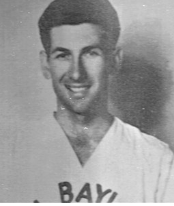
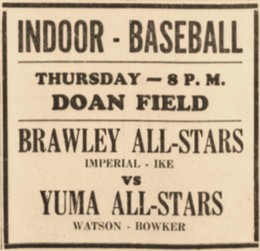
“Originator of the ‘windmill’ delivery, Paul ‘Windmill’ Watson became the most colorful pitcher in softball history. He put Arizona on the world softball map in 1935 when he led the Funk Jewels of Phoenix to the semifinals of the national tournament in Chicago.” —Arizona Softball Foundation Hall of Fame
Paul Watson’s multi-whirl windup was so baffling to batters that in 1935 the Amateur Softball Association adopted a rule in direct response to Watson and his imitators. Pitchers were now required to release the ball “on the first forward swing of the pitching arm.” Not all softball leagues were bound by the rule, however, so “windmilling” continued to be practiced, particularly by its originator.
Paul Watson was the first out-of-town softball star “imported” by a Yuma team. In the early 1930s when softball was still referred to as “indoor baseball,” Yuma had an indoor baseball commission which oversaw schedules, ticket sales, and other administrative functions. The commission’s annual report indicated that in 1932 $602 had been spent on “outside players” (namely, Paul Watson). Umpires came much cheaper: $27 total.
Paul Watson came to Yuma at the age of 20 after gaining fame with the American Legion team in Whittier, California. He pitched in Yuma from 1931 to 1933, plus a few later exhibition game appearances. He was “imported” to Phoenix in 1934 where he had a long run of success with Joe Hunt’s Funk Jewels team. When Watson joined the Jewels, the team’s “other pitcher” was future Arizona governor and U.S. senator, Paul Fannin.
Paul Watson died in 2006 at the age of 95. He and wife Muriel were married for 71 years. For many years he had been the assistant postmaster at Oceanside, California.
Joe Hunt


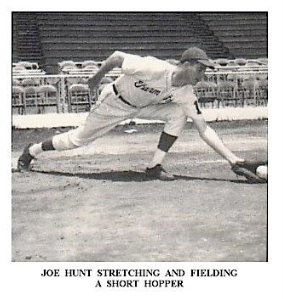
Joe Hunt was a first baseman, not a pitcher, and he left a Hall of Fame legacy as a hitter, fielder, and long-time player-manager. He achieved national championships with the 1938 Funk Jewels and the 1947 Farm Fresh Market team, both from Phoenix. Hunt, who added a comic element to his team’s games, was fond of staging gags that took advantage of his gangly 6′ 6″ stature. He balanced his softball career with his “day job” in Arizona politics, first as State Treasurer and later as Tax Commissioner. Joe Hunt was also a restaurateur who operated the Yuma Sports Arena from 1956 to the mid-1960s. One of the venue’s first events was a Louis Armstrong concert which drew a crowd of 1500. And in 1957 Yuma High School played basketball games at the Sports Arena due to fire damage at the high school gym.
Paul Fannin & Rose Mofford (Arizona Governors #11 and #18)
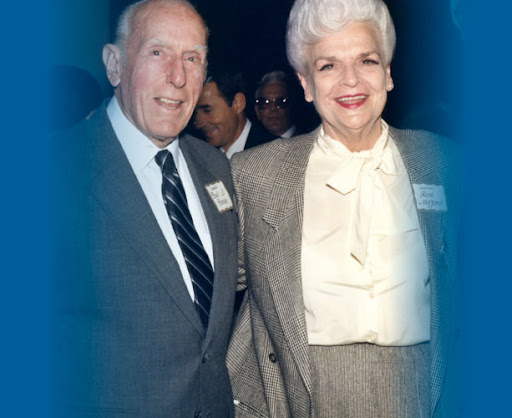
Paul Fannin was an original member of Joe Hunt’s Funk Jewels. Teammate Paul “Windmill” Watson was the team’s star, but Fannin was a fine pitcher in his own right. He continued to support Arizona softball as Arizona governor and later as U.S. Senator.
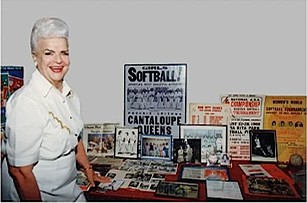
Rose Perica Mofford was an excellent athlete at Globe High School. In 1938 she played third base for Globe’s Cantaloupe Queens softball team on their cross-country barnstorming tour which included an exhibition series at Madison Square Garden. She had a long career in Arizona politics, beginning as a teenage secretary to State Treasurer Joe Hunt and ending with her governorship from 1988-1991. Mofford, who lived to age 94, was a lifelong advocate of Arizona sports: “I attribute all of my success — besides my parents, of course — to sports.”
Arnold “Nolly” Trujillo
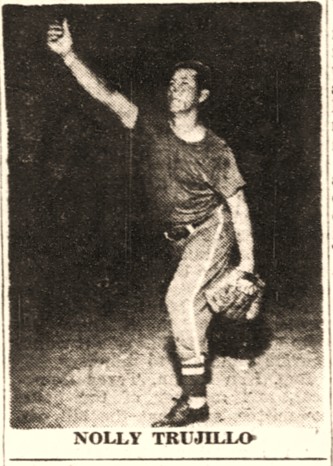
Arnold “Nolly” Trujillo won over 600 games as an Arizona softball pitcher who was also a powerful hitter. The most impressive of Nolly’s wins were his two national championship clinchers for the 1938 Funk Jewels and the 1947 Farm Fresh Market teams from Phoenix. Nolly Trujillo was “imported” by Yuma’s American Legion team for the 1948 season, but following that season, the Legion adopted a Legionnaires-only policy when selecting their roster. In 1974 Trujillo was a charter selection of the Arizona Softball Foundation Hall of Fame. His 1991 obituary noted that he had served as a fireman for the City of Phoenix.
Paul “Hoss” Lopez
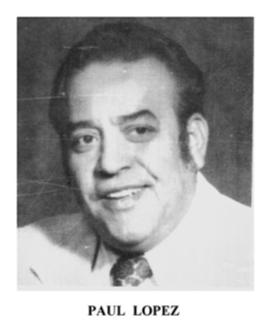
Paul Lopez rose to fame at the age of 15 and continued to excel as a power pitcher for the next 30 years. Lopez was coached by Joe Hunt and starred for the 1947 national championship team sponsored by Farm Fresh Markets of Phoenix. Paul Lopez was “imported” to Yuma in 1948 to pitch for the Emporium team, and the following year to pitch for Yuma Distributing. In 1950 he began a long stint as a fast-pitch hurler in El Paso, Texas, although he returned to Yuma in July of that year for an exhibition face-off against Kenny Law. Paul Lopez was known for never wearing a fielder’s glove when he pitched—a trait that unnerved and intimidated many opposing batters.
Kenny Law
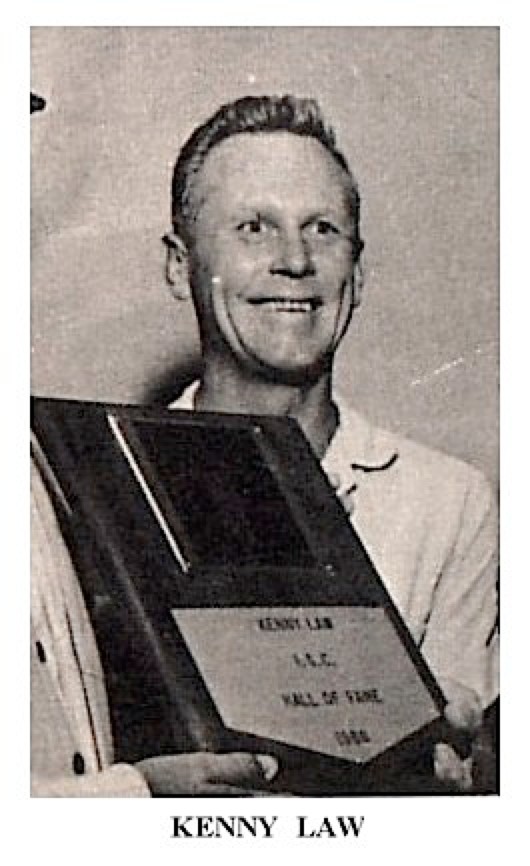
1942 was a momentous year for Kenny Law. He married fellow softball star Margie Wood; he made his debut with the dominant Funk Jewels team; and he began a three-year stint as a Navy gunnery officer. Like Major League stars such as Bob Feller and Ted Williams, Kenny Law was fulfilling military service to his country during the prime years of his athletic career. Law was on national runner-up fast-pitch teams three times–in 1948, 1949 and 1951. In each of those tournaments, he was named the outstanding pitcher. Of course, in 1949 Kenny pitched for the Somerton Roundup team. In 1948 he pitched for Clark Smith Autos and in 1951 for Fike Plumbers, both of Phoenix. Law also pitched for Yuma’s Sanguinetti squad in 1948, but at the conclusion of the Yuma softball season, he hooked up with the Clark Smith Autos team which greatly benefited from his pitching dominance–including 27 strikeouts in a 15-inning national tournament game.
The Laws retired from softball while in their early thirties in order to spend more time with their children. After his retirement, Kenny Law worked as a plastering contractor and as a trainer of quarter horses. He died in 2002 at the age of 77.
Margie Law
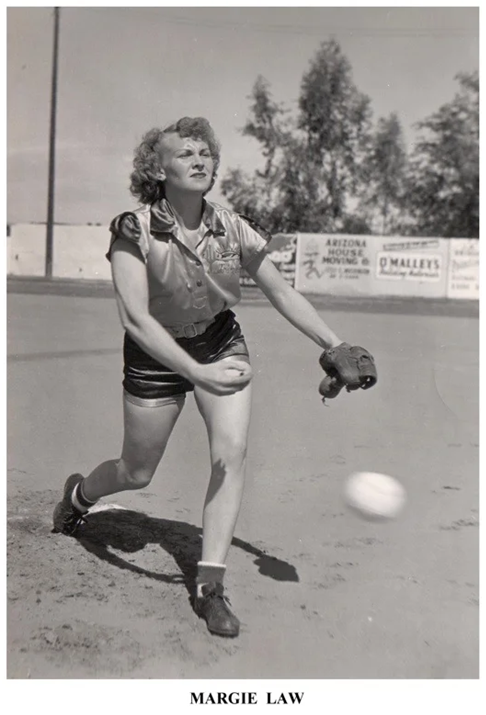
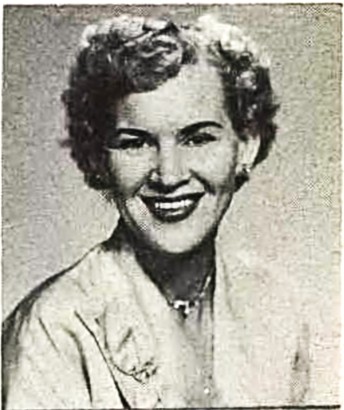
While husband Kenny was commuting from Phoenix to Yuma and Somerton in 1948-1950 to pitch for the Sanguinetti and Somerton Roundup teams, Margie Law was building her own legendary career in Phoenix with the PBSW Ramblers women’s fast-pitch softball team. The Ramblers, who were led by celebrated catcher-manager, Dottie Wilkinson, won national championships in 1940, 1948 and 1949. Margie Wood (Law) was only 16 years old when she starred for the 1940 squad. The Laws were married in 1942 and had three sons. Margie retired from softball in 1958, and after earning her masters degree in Physical Education, she joined the faculty of Arizona State University. She died at age 76 in 2000. Her obituary stated that during her softball career she had been named an All-American 17 times at 3 different positions, primarily as—what else?—a pitcher.
Eddie Feigner—The “King and His Court”
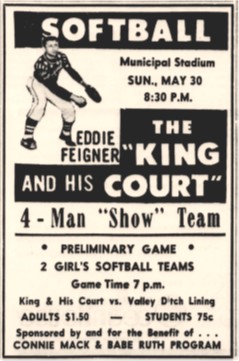
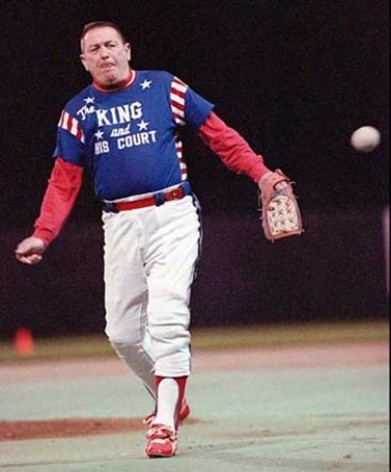
Eddie Feigner pitched in the 1947 National Softball Congress tournament for the 8th place Seattle team. Following this early success as a “legitimate” fast-pitch star, Feigner embarked on a 50-plus year barnstorming career as Eddie “The King” Feigner and His Court. His 4-man team combined softball skills with entertainment and showmanship (pitching blindfolded, etc.) as they challenged local teams around the world to exhibition games, including stops in Yuma in 1964, 1965, and 1970. Eddie Feigner estimated that over his career he traveled 4 million miles and pitched in 14,000 games, including 930 no-hitters and 238 perfect games. Nearly 10,000 of Feigner’s games were victories. Amazingly, the “King” gave up only 3 home runs during his entire reign.
 Yuma History Guy