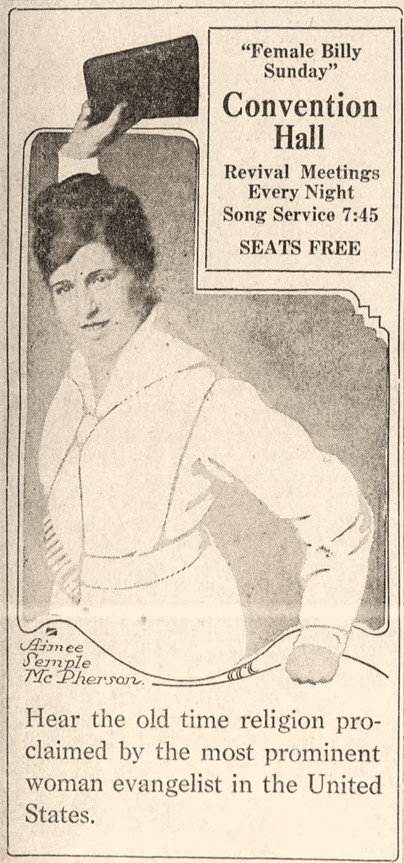
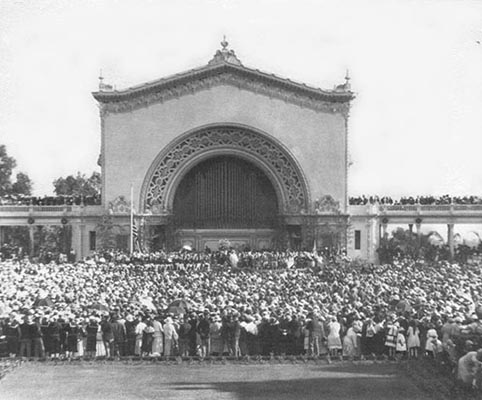
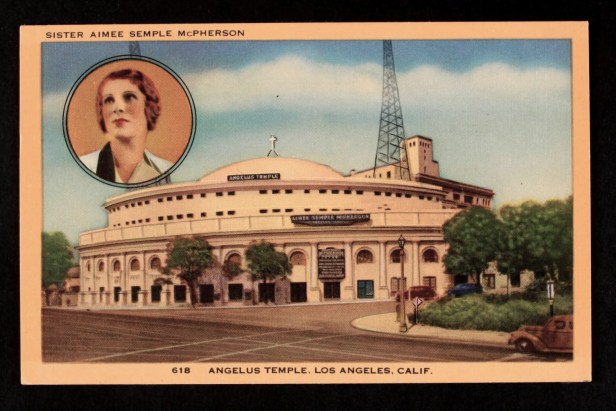
From the 1920s until her death in 1944, evangelist Aimee Semple McPherson was one of the most famous women in America. She presided over her massive Angelus Temple in Los Angeles with a flair and a popularity which rivaled that of the city’s Hollywood stars. She started a Bible college and founded her own Christian denomination—The International Church of the Foursquare Gospel. Her personal life and her ministry were intertwined, with an abundance of of successes, controversies, and tragedies. And Yuma played a small role in this remarkable woman’s story.
Called to the Ministry
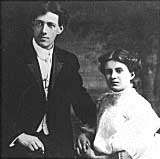
Aimee Semple McPherson was born Aimee Kennedy in 1890 and grew up on a farm in Ontario, Canada. At the age of 17 she attended a revival service conducted by a traveling Irish evangelist named Robert Semple. Aimee committed herself to Semple’s brand of Pentecostal Christianity, and she soon became Robert Semple’s wife. The couple embarked on a missionary journey to China, but, tragically, Robert Semple died on August 19, 1910 from malaria, leaving Aimee a widow at 19. Daughter Roberta was born in Hong Kong a month later.

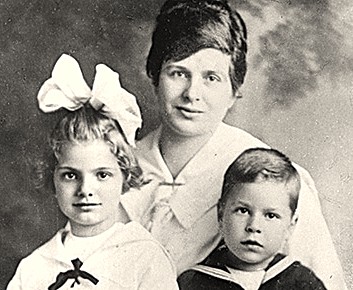
While Aimee Semple was staying with her mother in New York, she met Harold McPherson who became her second husband in 1912. Their son Rolf was born a year later. Aimee tried to be the traditional housewife Harold wished her to be, but by 1913 she was traveling along the East Coast presenting revivals which included faith healing and speaking in tongues. Harold McPherson sometimes accompanied Aimee, but he was unable to adapt to his wife’s nomadic evangelism. The couple separated in 1918, and Harold filed for divorce in 1921.
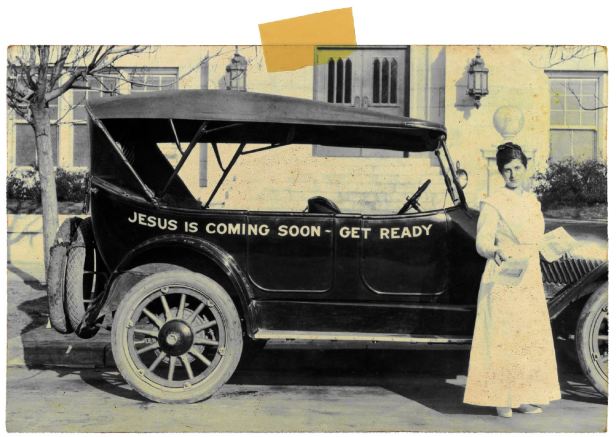
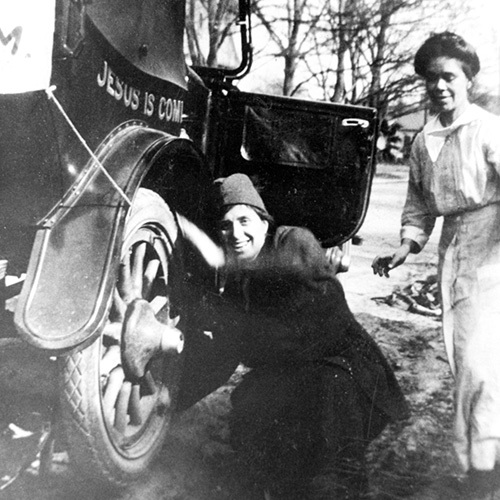
Harold McPherson cited “desertion” as the grounds for divorce, since in late 1918 Aimee, accompanied by her children and mother Minnie, set off on a two-month cross-country journey to California that included several revivals along the way. The family traveled in (and lived out of) Aimee’s “Gospel Car.”
Also a member of the traveling party was stenographer Mabel Bingham, pictured here with Aimee. While driving, Sister Aimee would dictate notes to Bingham for sermons and articles. According to Mabel Bingham, “We faced bad roads; I watched Sister routinely repair flat tires, put on snow chains, nurse along a leaky radiator and complete mechanical repairs to get us to the next town with a garage. When we truly needed the expertise of a mechanic, God led us to just the right person or place.”
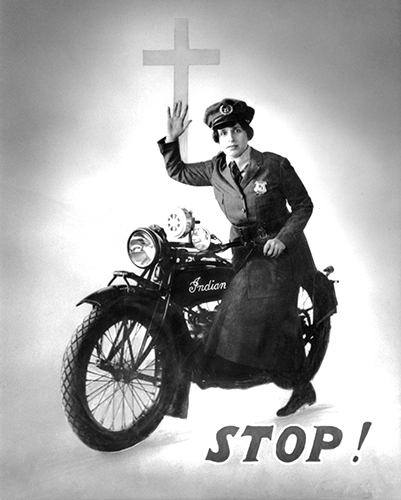
The Kidnapping / Disappearance
May 18 – June 23, 1926
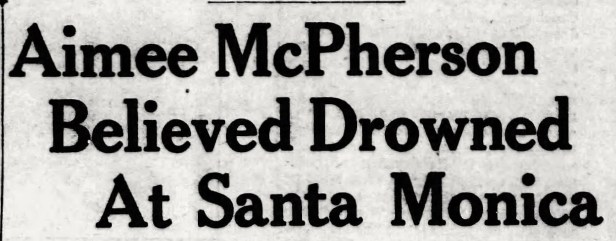

When Sister Aimee failed to return from her swim at the Ocean Park Beach on May 18, 1926, she was feared to be a drowning victim. When she was “found” wandering into Agua Prieto, Mexico thirty-six days later, the exhausted evangelist told authorities a fantastic tale of being kidnapped at the beach and taken to a desert shack where she was tied up and held hostage before finally escaping and walking nearly 20 miles across the desert into Agua Prieto. While Aimee McPherson spent a few days recuperating at the hospital in nearby Douglas, Arizona, law enforcement officials and journalists immediately began expressing doubts about Sister Aimee’s account. For example, no credible kidnapping suspects were produced; no desert shack was located; Aimee’s clothes, shoes, and general appearance did not show the expected effects of a 20-mile desert trek; footprints and tire tracks pointed to Aimee having been dropped off only a few miles from Agua Prieto–the final maneuver, according to the doubters, of an elaborate “kidnapping hoax.”
Aimee Semple McPherson never backed down from her version of being kidnapped, nor did she amend any of the very specific details which she often repeated from the pulpit and in her writings. As she once stated, “Perhaps you are skeptical. I don’t blame anyone, because it does sound absurd, but it did happen, ladies and gentlemen.”
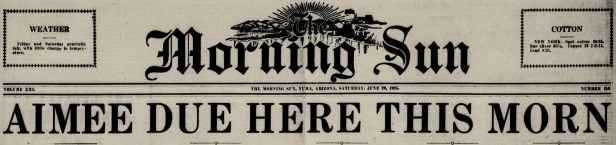

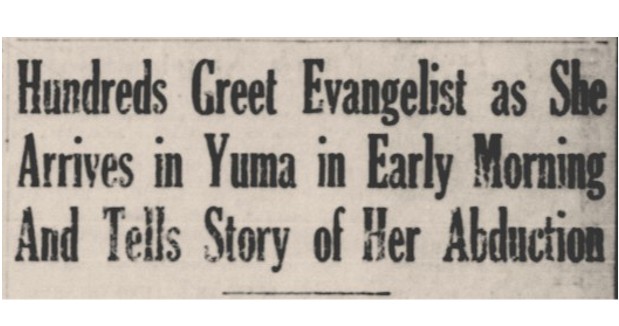
On June 26, 1926 Sister Aimee stopped briefly at the Yuma railroad depot to address a crowd of nearly one thousand locals. As the headline indicates, she related the events of her kidnapping and escape, while also leading the crowd in a hymn. Aimee then resumed her journey back to Los Angeles, accompanied by her children and her mother.

The man pictured with Aimee McPherson is radio operator Kenneth Ormiston. In February 1924 the Angelus Temple launched its own radio station. According to Claire Hoffman, “Aimee was the first woman to hold a radio license in the United States, and KFSG one of the country’s first radio stations for a religious organization.”
Yuma sightings and witnesses
The “kidnapping hoax” theory gained momentum when the friendship between Sister Aimee and Kenneth Ormiston came to light, along with the fact that Ormiston had left his wife a few months earlier. Newspaper reports detailed a rumored “lovers’ tryst” at a Carmel-by-the-Sea “love shack.” Many persons (across the nation) came forward to share their reported sightings of Aimee McPherson and Kenneth Ormiston during the days of her supposed kidnapping. And, as the headline below notes, for a moment, the “floodlight of Aimee case publicity turned on Yuma.”
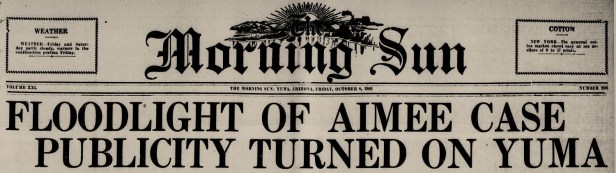

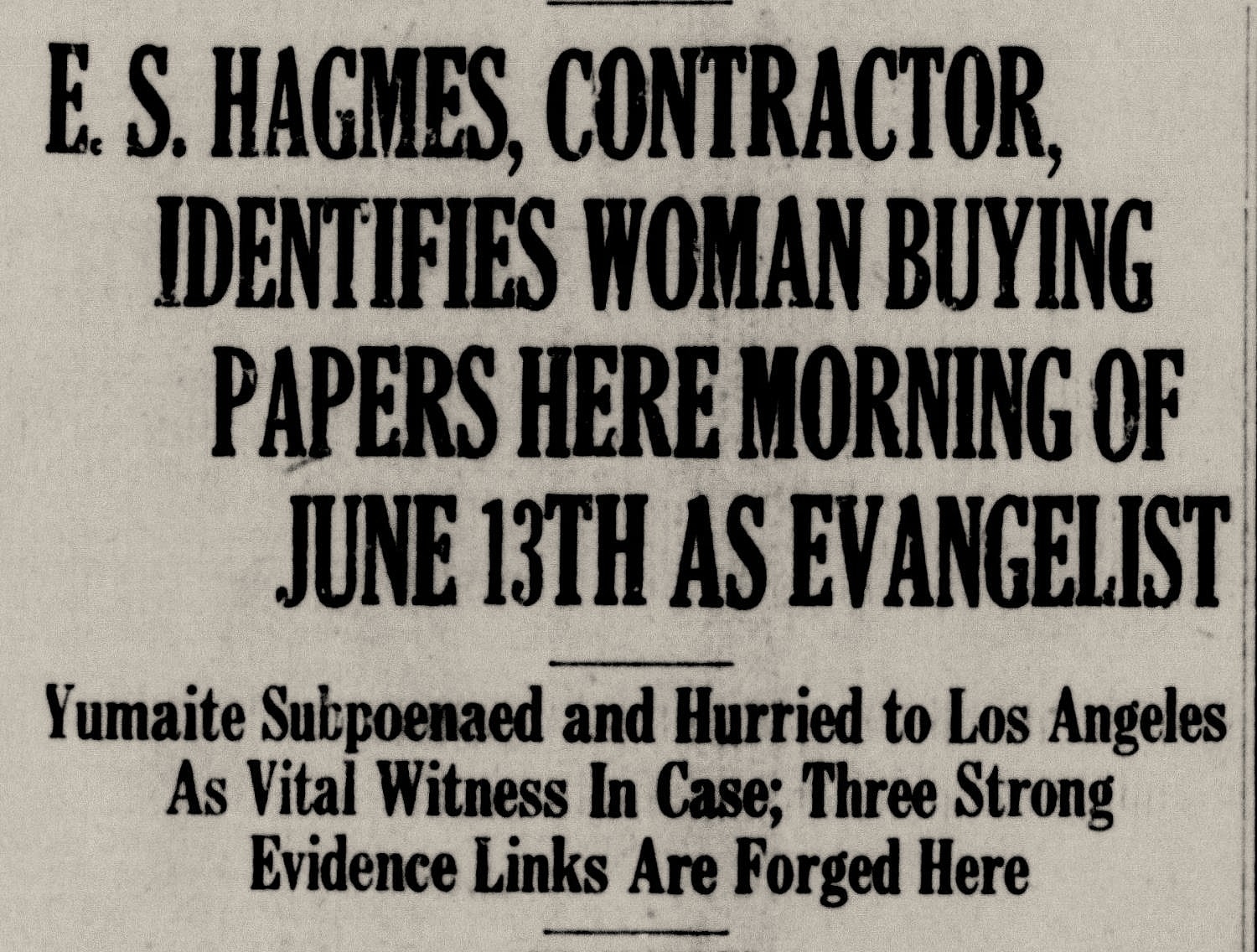
Two Yuma men testified at a preliminary hearing in Los Angeles that they saw Aimee Semple McPherson in Yuma on June 13, 1926—ten days before her reappearance in Agua Prieta. According to gas station attendant Joe Primrose and contractor E.S. Hagmes, Aimee was in an automobile driven by a man matching the description of Kenneth Ormiston. Hagmes claimed that he overheard Aimee asking for copies of out-of-town Sunday newspapers.
The preliminary hearing followed a grand jury hearing which did not result in charges. However, the Los Angeles County District Attorney, Asa Keyes, was determined to prosecute Aimee McPherson and her mother Minnie Kennedy. On November 3, 1926 the women were bound over for trial in Superior Court on charges of “criminal conspiracy to commit acts injurious to public morals and to prevent and obstruct justice.”
The district attorney lined up numerous witnesses to support his “hoax” theory, but contradictory and recanted witness accounts led Asa Keyes to ask for a dismissal of all charges on January 10, 1927. Aimee Semple McPherson escaped a legal penalty, but according to biographer Daniel Mark Epstein, Sister Aimee was a changed woman after enduring the investigation and hearings, along with the constant, sensational press coverage: “Aimee was hurt, angry, and profoundly disillusioned . . . She had been pulled down on the the ground to fight, and got dirty.”
Sister Aimee’s Yuma Elopement—Sept. 13, 1931

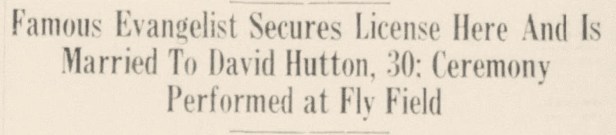
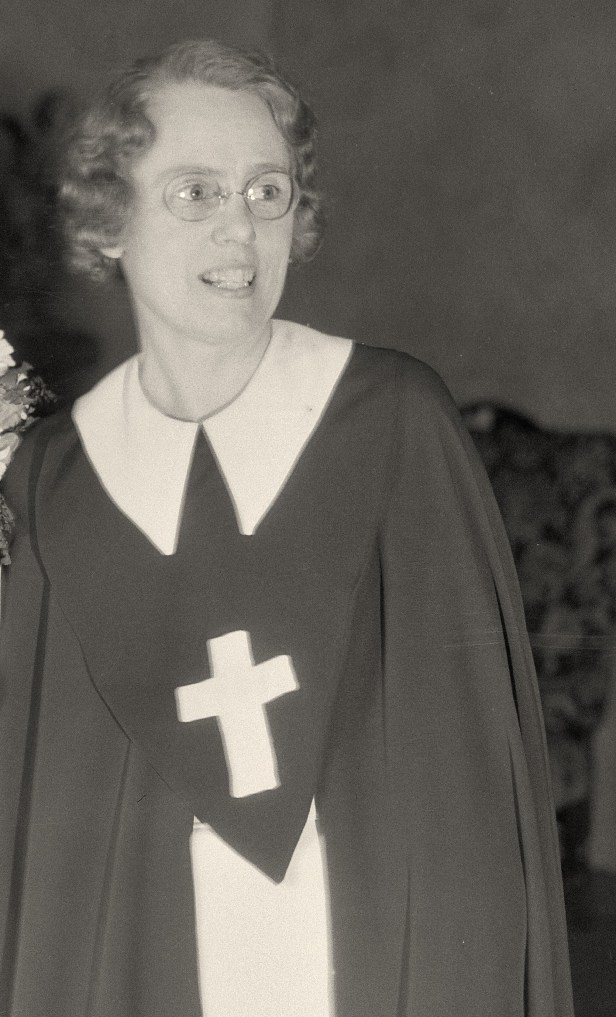
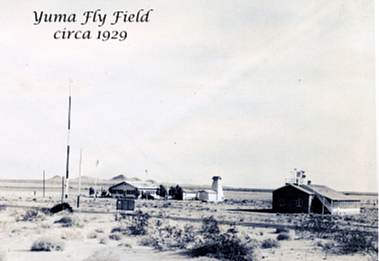
Aimee Semple McPherson and David Hutton eloped to Yuma by airplane at 4:00 a.m. on Sunday September 13, 1931. Sister Aimee’s son Rolf and daughter-in-law Lorna were also in the elopement party which briefly lounged at the San Carlos Hotel while waiting for court clerk Donald Wisener to arrive with a marriage license application. The group, which also included Harriet Jordan, dean of the Angelus Bible college, returned to Fly Field where Rev. Jordan married the couple as they stood near their airplane in a light rain. The pilot then rushed the newlyweds back to the Angelus Temple in time for Aimee to lead the Sunday services.
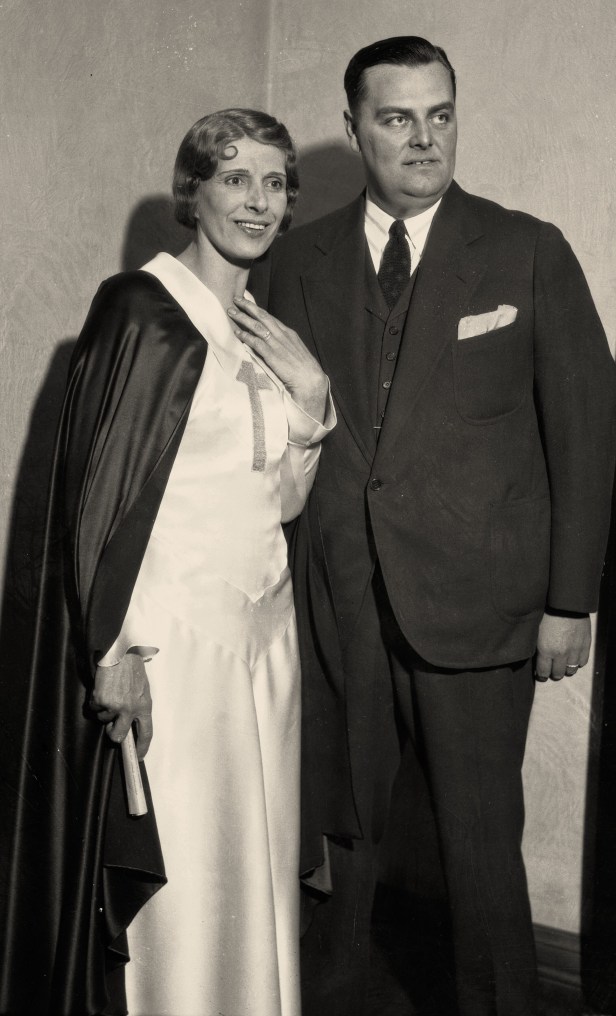
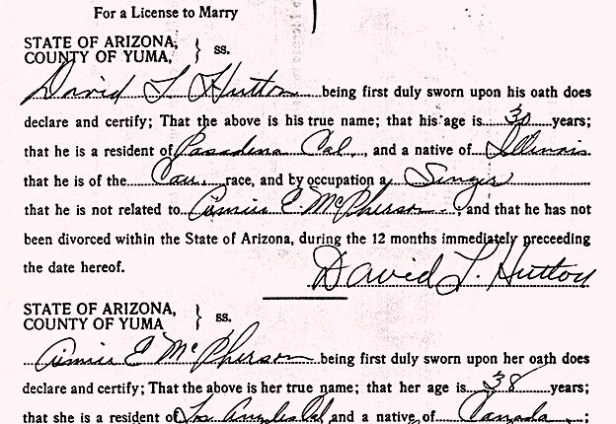

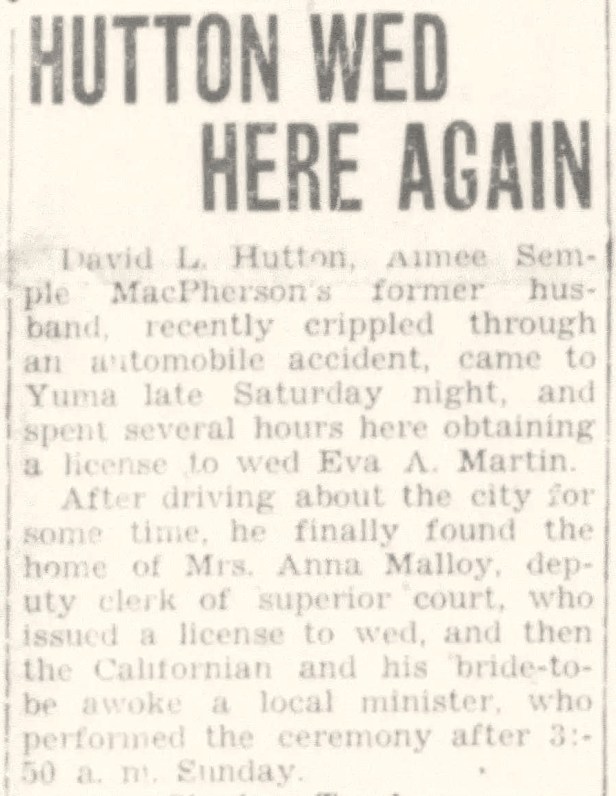
On May 2, 1937 David Hutton again eloped to Yuma–this time by automobile–to marry Eva Martin, a piano teacher from Pasadena. The couple was married by Rev. R.C. Acheson at the Presbyterian parsonage.
Later Years
Following the kidnapping saga, Sister Aimee’s life and ministry experienced dramatic highs and lows. A rift developed between Aimee and her mother Millie Kennedy which became permanent. Aimee experienced physical and mental health problems that required her to sometimes rely on others to fill her pulpit. And she was drawn into some questionable business deals that resulted in lawsuits against the Temple. As indicated, Aimee’s marriage to David Hutton turned into a bitter disappointment. Throughout her life Aimee Semple McPherson was sustained by her opportunities to minister to others, and that was especially true of her later years.

The Angelus Temple Commissary opened in 1927 to provide food and clothing to needy persons of the community—with “no questions asked.” It is estimated that the Commissary fed 1.5 million individuals during the Depression.
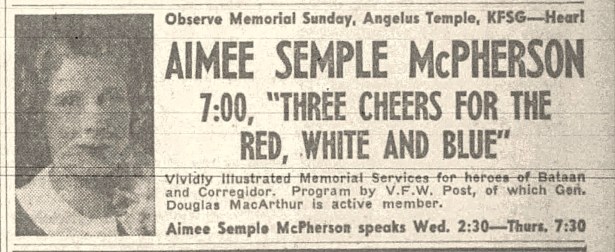
As the above sermon title indicates, Sister Aimee was a strong supporter of the U.S. war effort during World War II, and she proudly took part in several war bond rallies.
The Yuma Foursquare Church
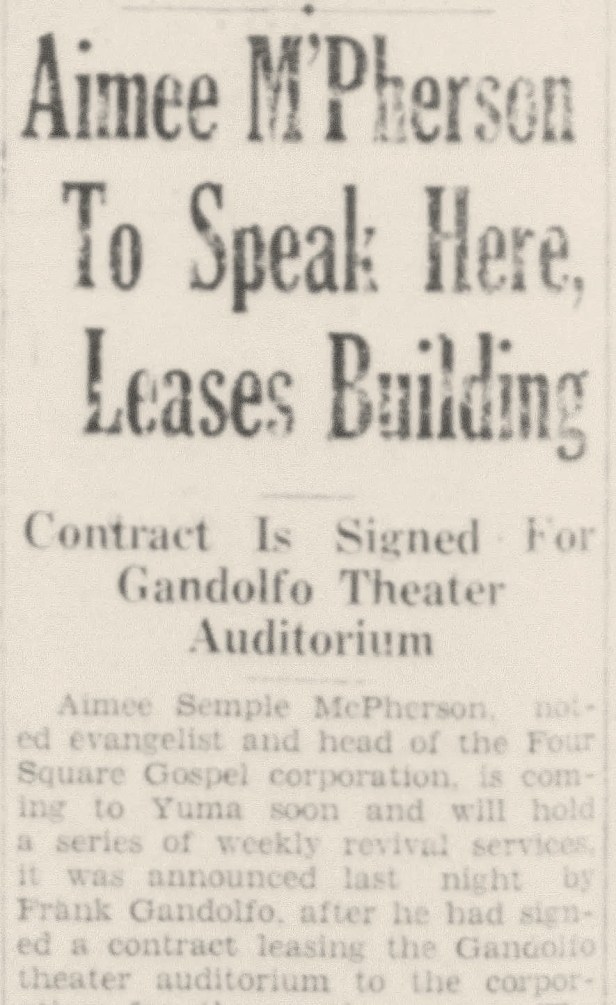

The article on the left refers to a series of Four Square Gospel revival services held at the Gandolfo Theater in June 1929. Aimee Semple McPherson was unable to attend the Yuma revivals which were led by other pastors from Sister Aimee’s Angelus Temple. It took several more years, but on April 20, 1935 the Yuma Foursquare Church began holding regular services in a building of its own—a former Masonic Hall on First Avenue. The notice on the right refers to Yuma’s newest church as “The Church With The Smile.”
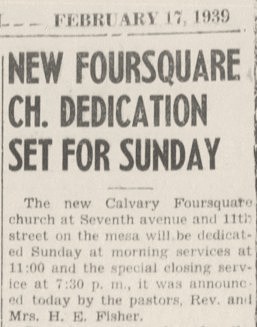

In February 1939 Yuma’s Foursquare congregation began meeting at a newly constructed church building at 1104 Seventh Avenue. The Foursquare church continued at that location for the next 75 years. In later years there were some name changes (Oasis Fellowship, Kings Orchard Foursquare, and Victorious Church International), but these churches remained affiliated with the Foursquare denomination. Yuma no longer has a Foursquare church, but the location is still home to an active Spanish-language church.
Legacy
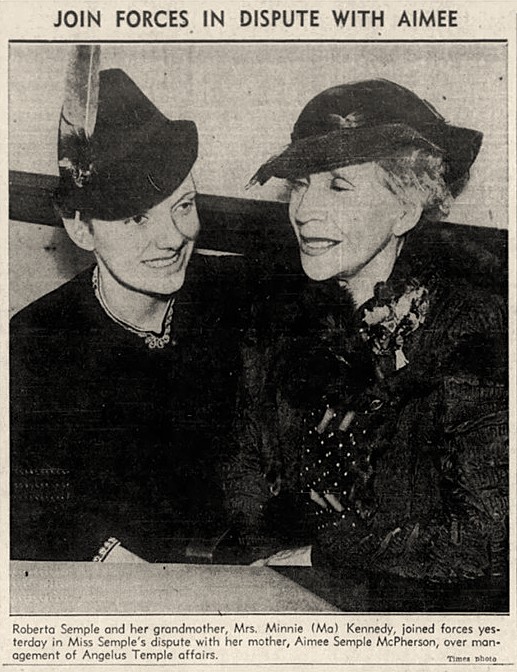
When Roberta Semple sued the Angelus Temple attorney for slander, her mother Aimee sided with the attorney, resulting in a permanent estrangement of mother and daughter. Aimee’s mother, Minnie Kennedy, had been removed from the church’s administration—and from Aimee’s life—a few years earlier.
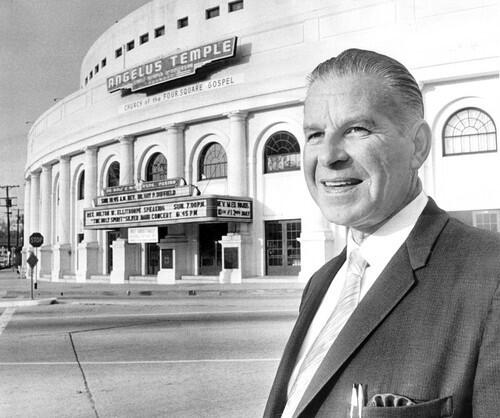


Claire Hoffman’s recent biography, Sister, Sinner quotes Minnie “Ma” Kennedy from a magnanimous interview given after she and Aimee had their painful falling out: “There is no one in the world who can equal [Aimee]. She is a changed woman when on the platform. She is wholly spiritual, magnetic and beautiful. Off the stand she has traits, the same as others have.” Despite her faults and contradictions, Aimee Semple McPherson lived a brave life of tireless, faithful service to others. Aimee (and her loved ones) sometimes paid a heavy price for her unwavering drive to reach her goals. But what Sister Aimee achieved, and what she overcame, continues to amaze and inspire those who learn her story.
Recommended Reading

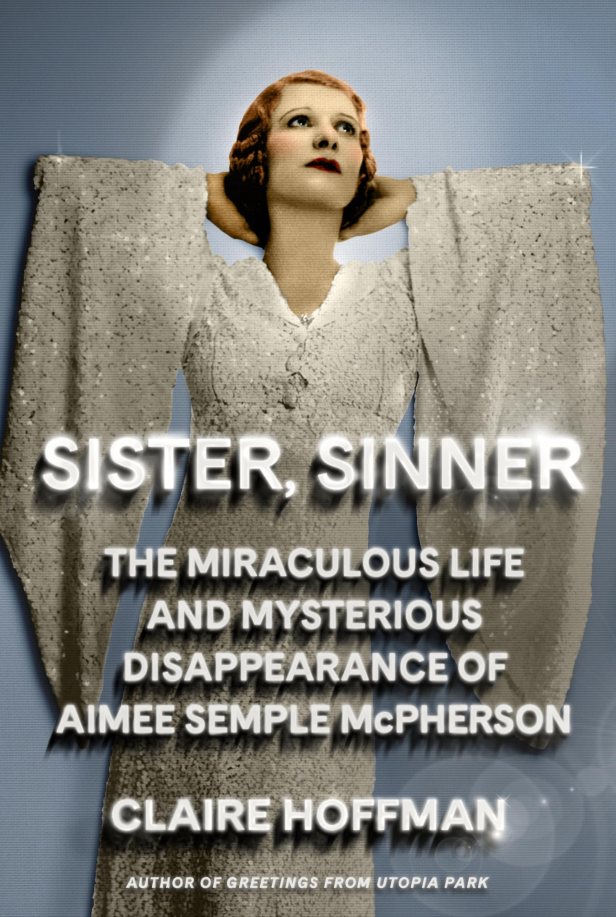

Recommended Viewing
There are many online videos and documentaries concerning Sister Aimee. A good place to start is this brief overview from the Foursquare Church which includes a wealth of striking images, as well as samples of Aimee Semple McPherson speaking from the pulpit.
 Yuma History Guy