
In 1927 a remarkable German Shepherd dog named Rin Tin Tin came to Yuma to make a movie at the Laguna Dam. At the time he was one of Hollywood’s biggest stars, and his movies were so popular that he became known as “the dog who saved Warner Brothers.” Most of Rin Tin Tin’s films were silent movies, and only six of these have survived to the present day. Fortunately, “Tracked by the Police” (1927), his Yuma movie, is one of the survivors. But before I discuss Rin Tin Tin’s Yuma filming of “Tracked by the Police,” I will briefly outline the real-life adventures of this legendary “wonder dog” and his inseparable owner and trainer, Lee Duncan.

Rescued by Corporal Lee Duncan
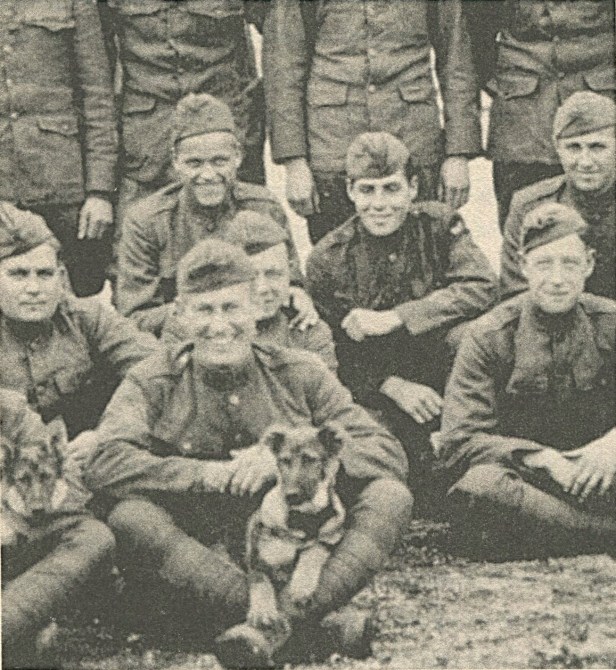
Rin Tin Tin’s own story is as inspiring as any of his movies. Near the end of World War 1, an American soldier serving in France came upon a German Shepherd and her five newborn pups in a bombed out animal kennel. Lee Duncan was a gunnery corporal with the 135th Aero Squadron. When Duncan boarded a ship to New York at the conclusion of the war, he had two of the rescued pups as his companions.

Corporal Duncan named his dogs Rin Tin Tin and Nanette after a pair of good luck dolls that were popular in France during the war. The tiny dolls were frequently given to soldiers as good-luck charms. Sadly, the first Nanette contracted pneumonia and died shortly after arriving in the United States. A second Nanette became Rin Tin Tin’s lifelong mate and movie co-star.
Hollywood Superstar

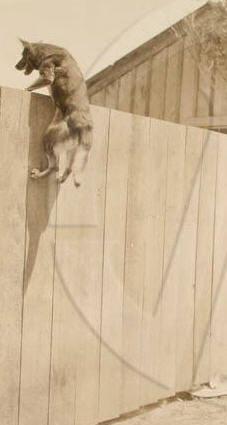
Lee Duncan and Rin Tin Tin traveled by train to California where Lee spent countless hours training his young German Shepherd. He realized that Rin Tin Tin had special talents when the dog was able to jump over an 11½ foot wall at a dog show. This gave Lee the idea of contacting Hollywood’s movie studios about using Rin Tin Tin in their films. (A movie dog named Strongheart, who was also a German Shepherd, had already achieved box office success.) Rin Tin Tin got his paw in the Hollywood door when Warner Brothers hired him for a small role playing a wolf in “The Man from Hell’s River” (1922). Leading roles, movie stardom, and big paychecks soon followed.
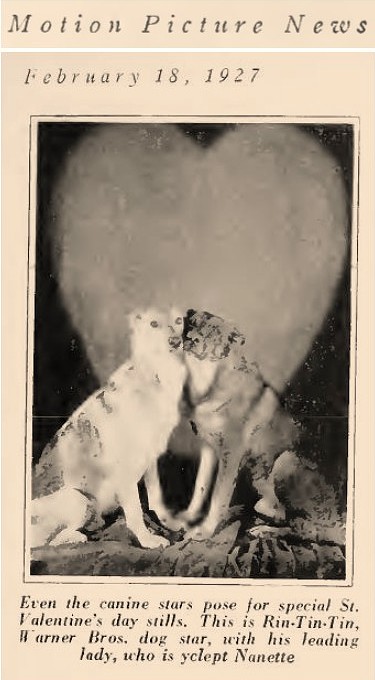
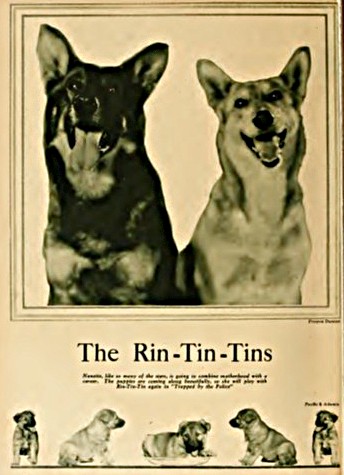

Rin Tin Tin is seen here with Al Jolson, Warner Brothers’ other superstar. Jolson’s “The Jazz Singer” came out in 1927, the same year as Rin Tin Tin’s Yuma movie. “The Jazz Singer” was Hollywood’s first talkie, and within a few years silent movies would be nearly eliminated, and Rin Tin Tin would be dropped by Warner Brothers.



Rin Tin Tin’s movies were popular around the world. Several years after it was released, “The Lighthouse by the Sea” was shown to a very special audience in Amsterdam. For her 13th birthday party, Anne Frank’s father Otto rented a movie projector and a copy of this 1924 Rin Tin Tin movie. In one of the first entries of her famous diary, Anne Frank noted, “The Rin Tin Tin movie was a big hit with my classmates.”
“Tracked by the Police” (1927) — Filmed in Yuma
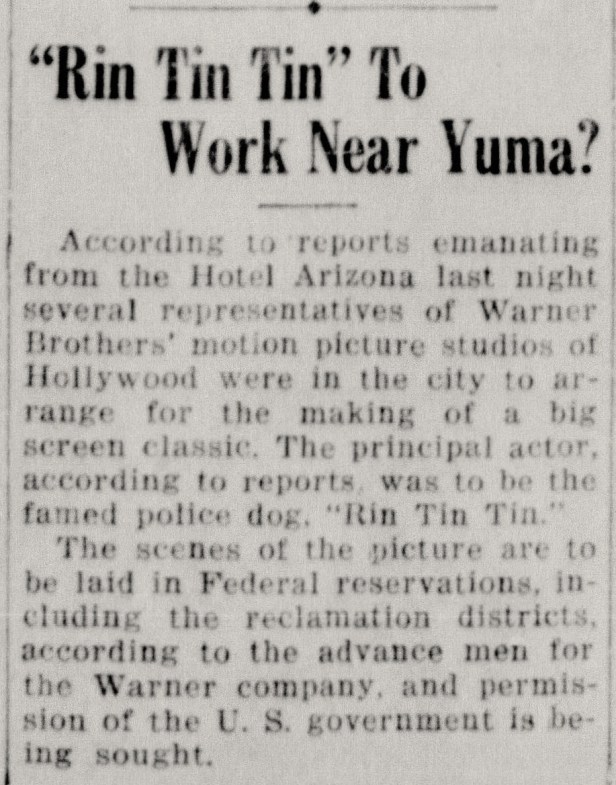
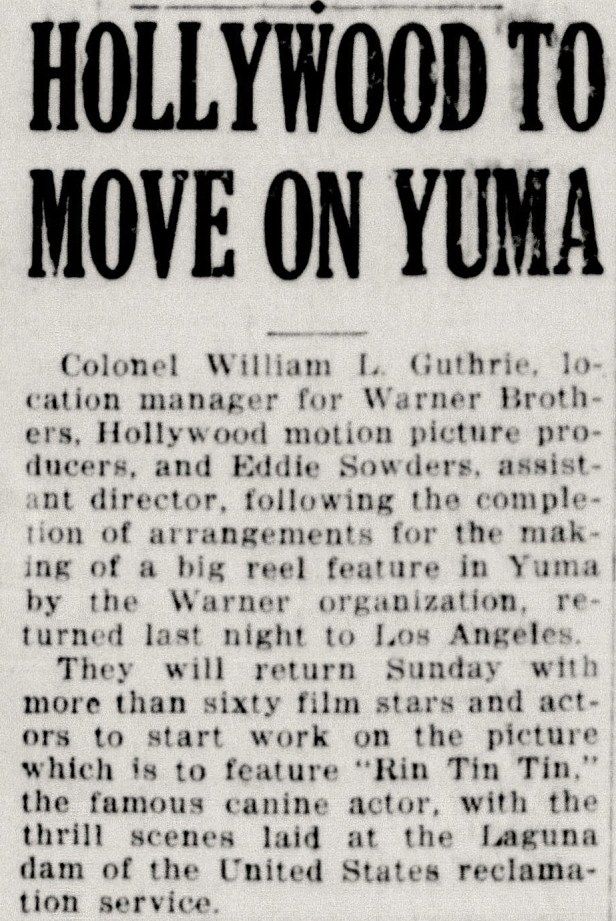
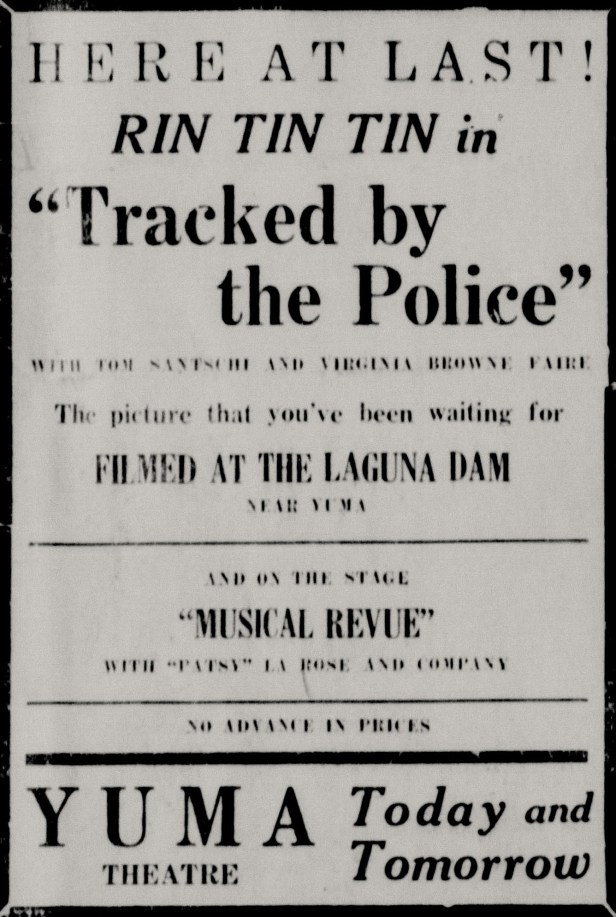
These articles report that Rin Tin Tin and over 60 cast and crew members from the Warner Brothers company were coming to Yuma to make a film at the Laguna Dam. The filmmakers requested permission from the Bureau of Reclamation to spend approximately 3 weeks at the dam.


The Laguna Dam was the first dam on the Colorado River, and its completion in 1908 marked the beginning of a new era for local agriculture, since water could now be diverted from the Colorado River for irrigation. Early Hollywood filmmakers soon began taking advantage of the dramatic possibilities offered by location filming at the Laguna Dam.

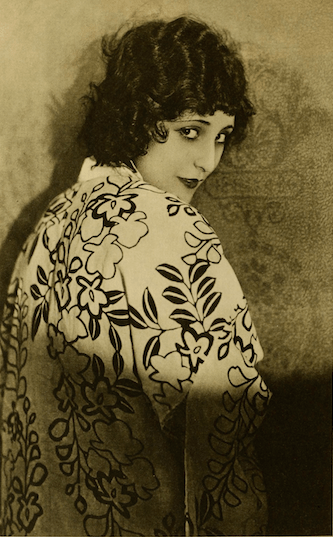
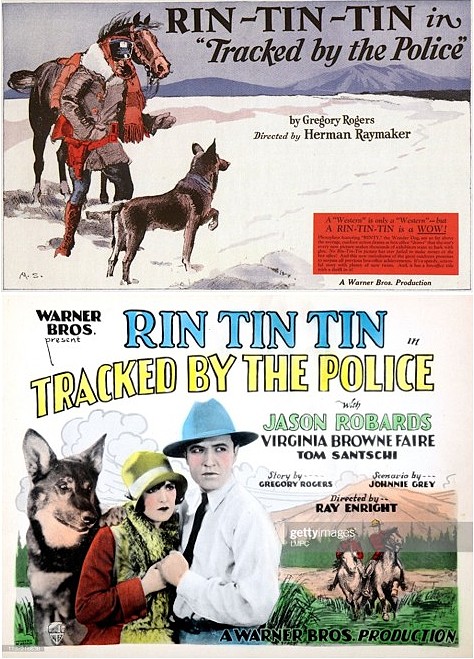
The film’s leading man, Jason Robards, had a long Hollywood career, but he has been overshadowed by his son, the acclaimed actor Jason Robards, Jr. The leading lady of “Tracked by the Police,” Virginia Browne Faire, is best remembered for her portrayal of Tinker Bell in the first film adaptation of “Peter Pan” (1924). But the movie posters below leave no doubt as to the film’s headliner and “top dog.”
The posters on the left inexplicably suggest that the movie has a northern setting. The posters also credit Gregory Rogers for the film’s story. In fact, Gregory Rogers was a pseudonym for Darryl Zanuck, future head of 20th Century-Fox studios.
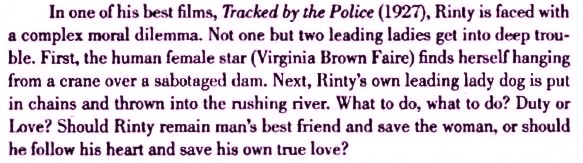

Silent Stars by noted film historian Jeanine Basinger includes an admiring profile of Rin Tin Tin. In the above excerpt, Basinger describes the “love or duty” dilemma faced by Rin Tin Tin in “Tracked by the Police.” The heroic Rinty chose duty, of course, and he was relieved to discover that his “leading lady dog” Nanette survived her ordeal, as well.

The New York Times movie review of “Tracked by the Police” quibbled about the plausibility of some of Rin Tin Tin’s super-canine feats: “His exploits in determining the levers that close the locks seems like asking almost too much of any animal.”



On February 24, 1927 Lee Duncan, accompanied by his German Shepherds, Rin Tin Tin and Nanette, was a guest of the Yuma Masons. After Lee Duncan recounted the story of his rescue of Rin Tin Tin from a World War I battlefield, the Masons were treated to a half hour of Rin Tin Tin’s “tricks and stunts.”
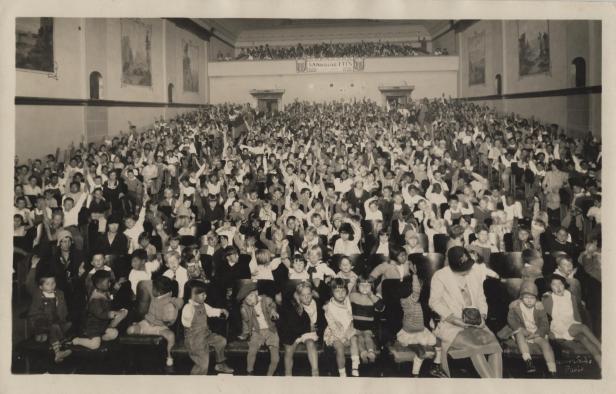
On Friday April 15, 1927—two weeks after completing the filming at the Laguna Dam—Lee Duncan and Rin Tin Tin stopped off at the Bard, California school to give candy Easter eggs to the schoolchildren who had greeted Rin Tin Tin each morning of the filming as Lee Duncan drove past the school on his drive from Yuma to the Laguna Dam.
Duncan vs. Duncan: “All he cared about was Rin Tin Tin.”
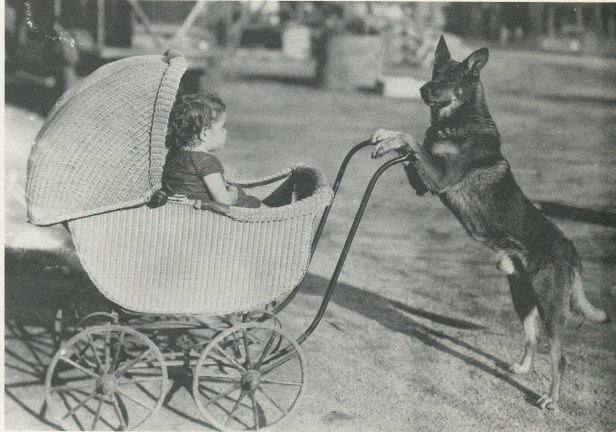
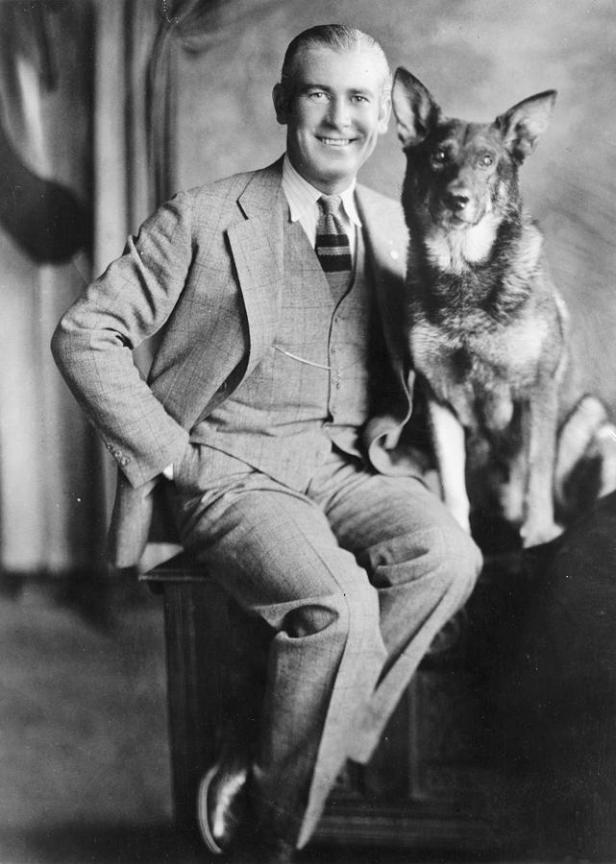

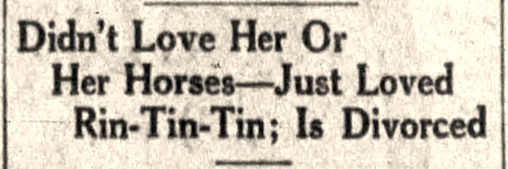
There was a time when Lee Duncan was a wealthy man, but his devotion to Rin Tin Tin was so all-consuming that it frequently resulted in financial and personal setbacks for Duncan right up to his death in 1960. When his first wife, Charlotte, filed for divorce in 1927, she named Rin Tin Tin as a co-respondent. She told the Los Angeles Times , “All he cared about was Rin Tin Tin.” And, years later, when Lee Duncan’s daughter, Carolyn, was asked if she ever experienced a sibling rivalry with her father’s dogs, she replied, “No, there was no rivalry. The dogs came first.”
Where’s Rinty?

In her acclaimed bestseller about Rin Tin Tin, author Susan Orlean shares an unsubstantiated Hollywood rumor claiming that in 1929 Rin Tin Tin received the most votes for the Academy Award for Best Actor. As the story goes, the executives of Hollywood’s major studios vetoed the voters’ selection of Rin Tin Tin, choosing instead to award the first Oscar to the two-legged actor, Emil Jannings.
Rin Tin Tin, radio star?
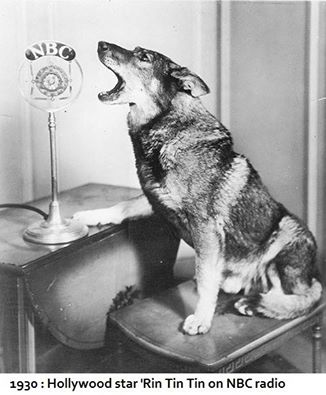
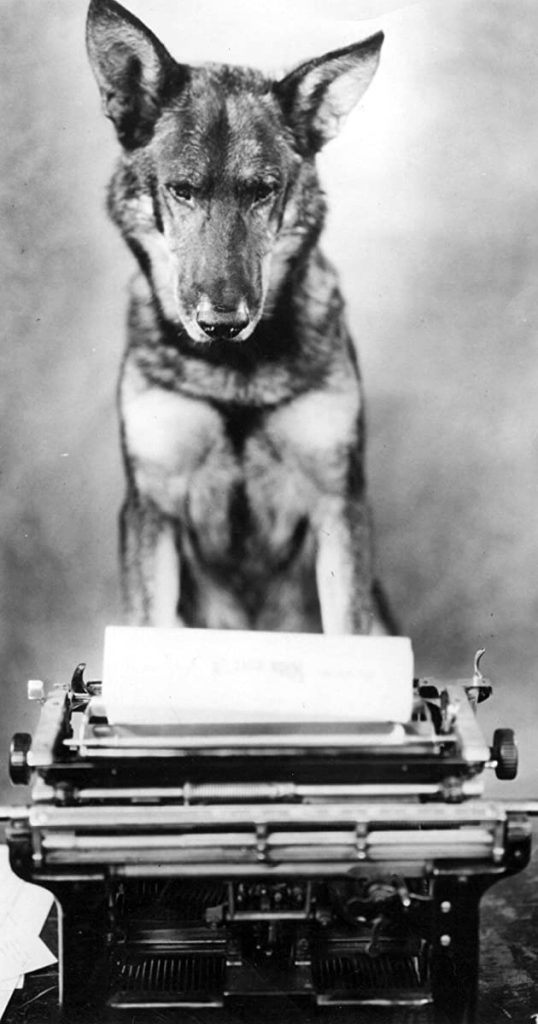
You can teach an old dog new tricks—if that dog is the great Rin Tin Tin. As his film career was fading, Rinty became an unlikely radio star. But despite claims that he voiced his own “lines” for these shows, it was usually a human voice imitating Rin Tin Tin.
The Death of a Hollywood Hero


Rin Tin Tin’s death on August 10, 1932 received front-page coverage in newspapers across the country. The emotional tributes were reminiscent of those published when matinee idol Rudolph Valentino died a few years earlier. Although his income had fallen when he left Warner Brothers, Rin Tin Tin remained a beloved hero for movie fans of all ages.
A Hard Act to Follow
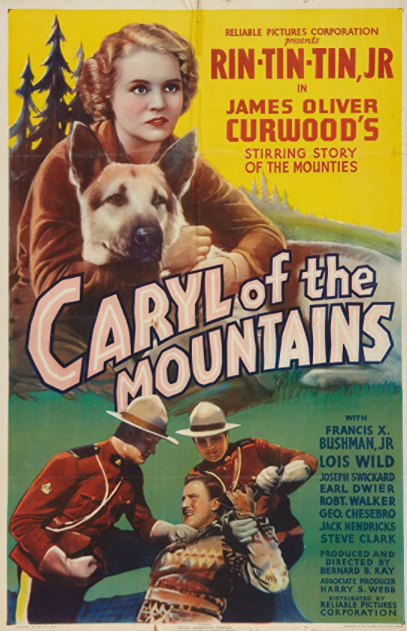
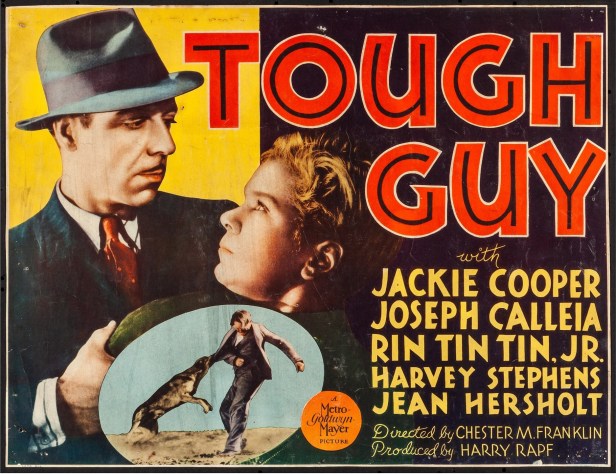
Rin Tin Tin would have been a hard act for any dog to follow, but especially for one like Rin Tin Tin, Jr. who apparently was not cut out for acting. It was a series of other German Shepherds who actually performed in the movies released under Junior’s name.
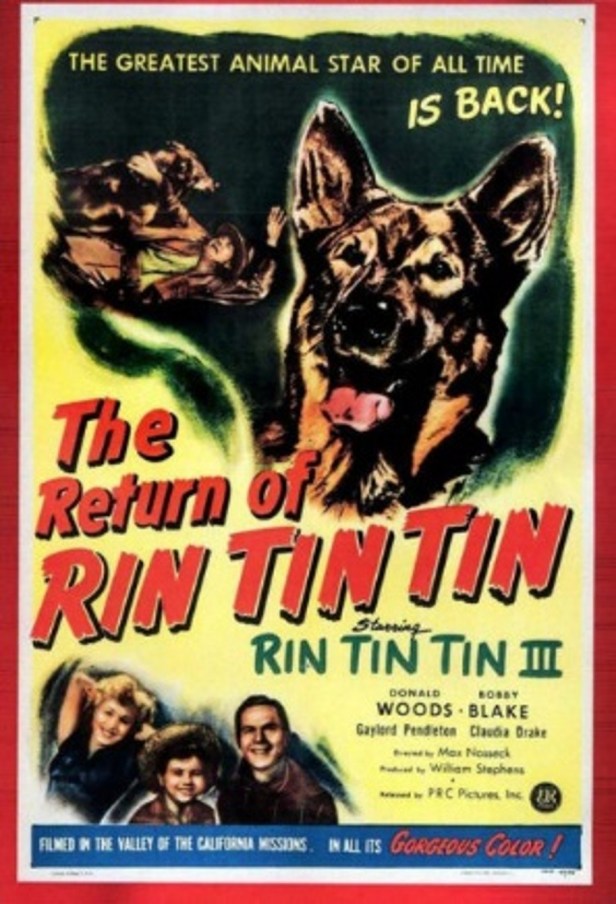

Rin Tin III, a grandson of the original dog, was billed as the star of “The Return of Rin Tin Tin” from 1947. The boy in the film was played by “Bobby” Blake, who would later become infamous as actor Robert Blake. During World War II, Rin Tin Tin III was used to recruit volunteers for the “Dogs for Defense” program. Lee Duncan, who had served in World War I, trained hundreds of the dogs who were donated for this effort.
Rin Tin Tin, television star, 1954-1959
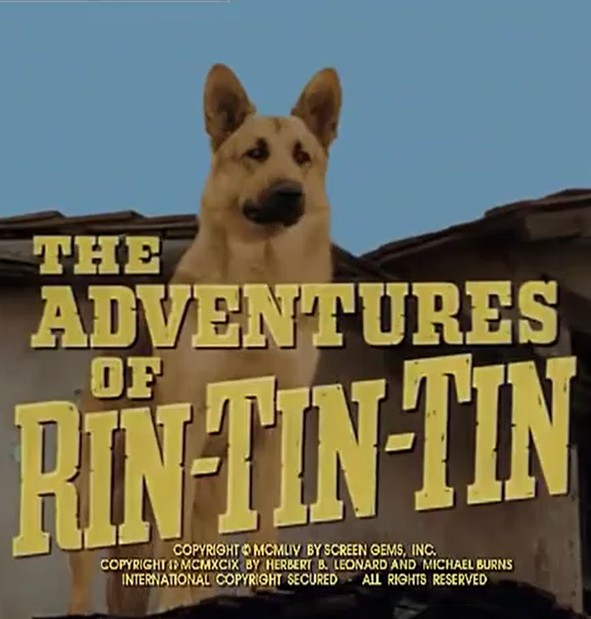

A new wave of Rin Tin Tin popularity began in 1954 with the premier of the television series, “The Adventures of Rin-Tin-Tin.” Although Rin Tin Tin IV was reportedly one of the German Shepherds used in the program, Lee Duncan’s involvement was minimal. (Duncan died in 1960 at age 67.) Lee Aaker, who portrayed an orphan boy named Rusty, was 11 years old when the series began its five-year run. Like many former child stars, Aaker struggled with addictions as an adult, and when he died in Phoenix in 2021 at age 77, Lee Aaker was listed as being “indigent.”
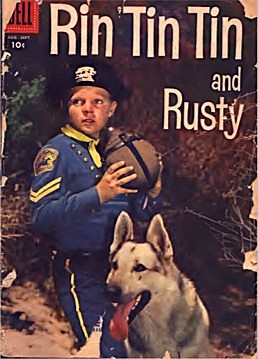

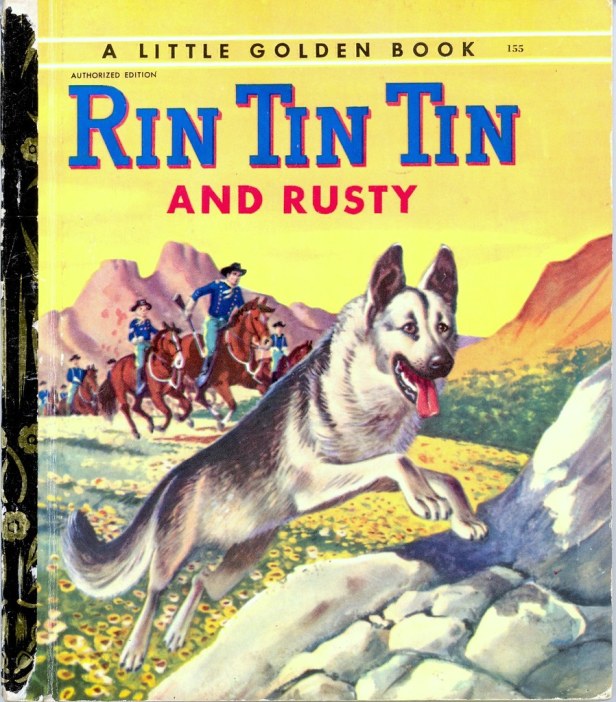
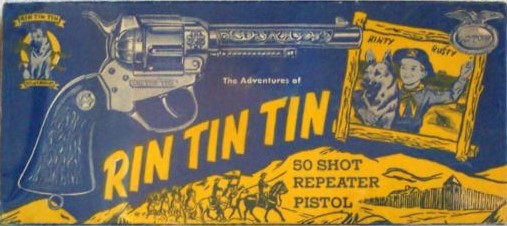
The television program’s popularity was boosted by an unprecedented merchandising campaign which included books, comics, recordings, and toys—all of which are highly prized as collectibles today. (See below.)


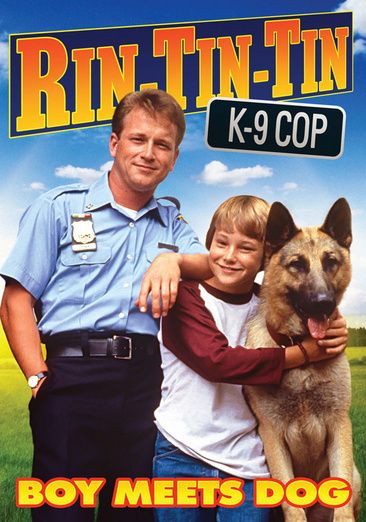
Recommended Reading
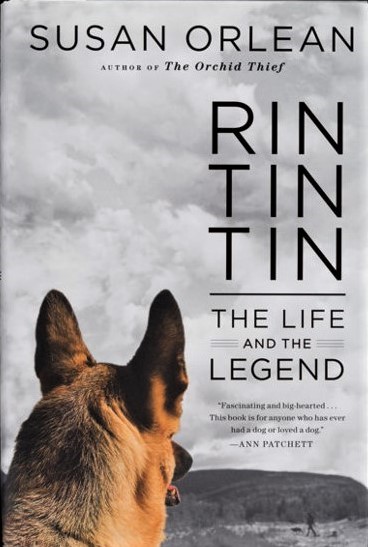
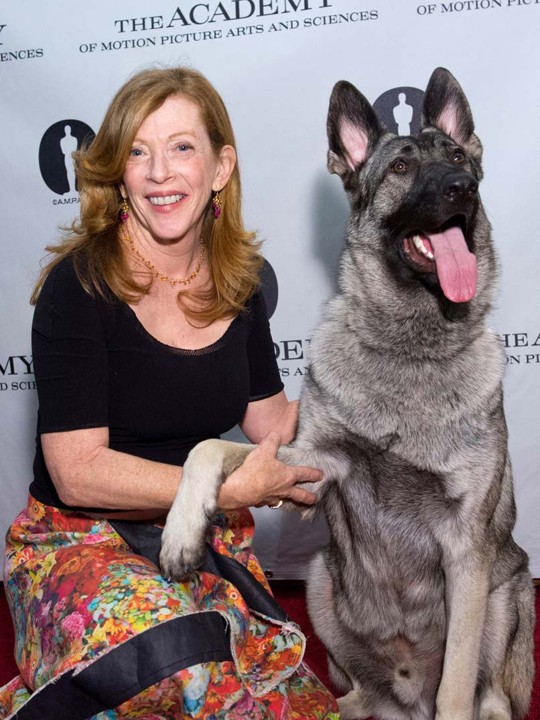
Recommended Viewing
The Internet Archive has a downloadable version: https://archive.org/details/TrackedByPolice1927USAhttps://archive.org/details/TrackedByPolice1927USA
 Yuma History Guy