Throughout its history Yuma has been the home for several minor league and spring training baseball teams, but the first of these ballclubs did not arrive until 1950. Nonetheless, baseball was also very popular in Yuma in the first half of the 20th century, for both participants and spectators. Barnstorming teams who scheduled games in Yuma typically opposed squads comprised of local ballplayers. However, many of the exhibition games held at Yuma High School’s Doan Field included two Major League teams facing off against each other. When Major League teams concluded their spring training on the West Coast, they sometimes stopped off in Yuma to play exhibition baseball games before resuming their journey homeward by train.
September 12, 1908—Boston Bloomers vs. Yuma
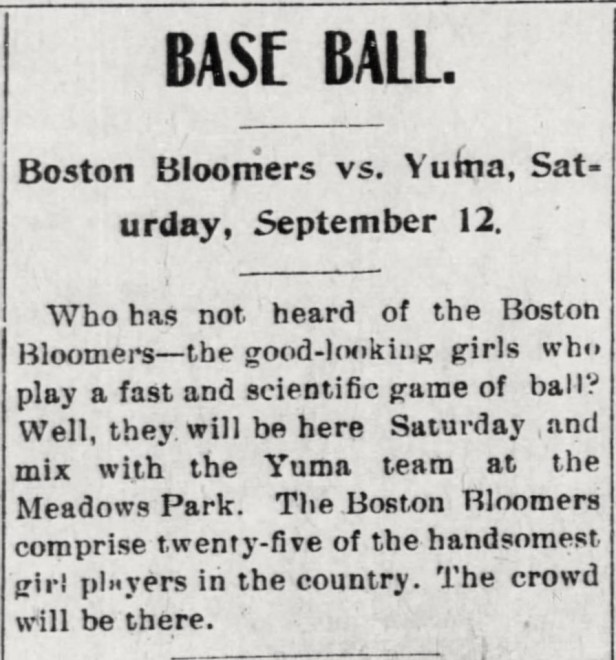
The Boston Bloomers made their first of two stops in Yuma on September 12, 1908. The Arizona Sentinel article refers to the “fast and scientific” style of baseball played by the “good-looking girls.” Note that the Pullman railroad car below identifies the team as the “Boston Bloomers Ladies’ Base Ball Club”—not as Bloomer Girls.
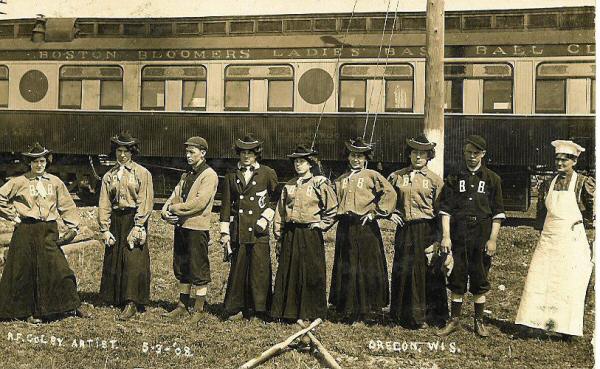
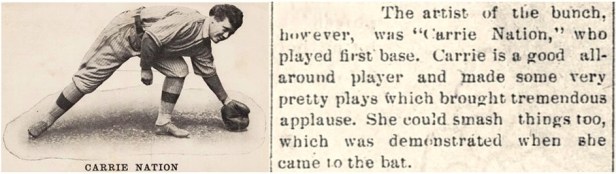
The Yuma team defeated the Boston Bloomers 4-3. For several years the star of the Boston team was Mae Arbaugh, who adopted the name of a well-known, hatchet-wielding temperance radical, “Carrie Nation.” (They were two different women.) Carrie Nation, the ballplayer, had a 33-year career in which she played an astonishing 6,486 games.
Athletic Park
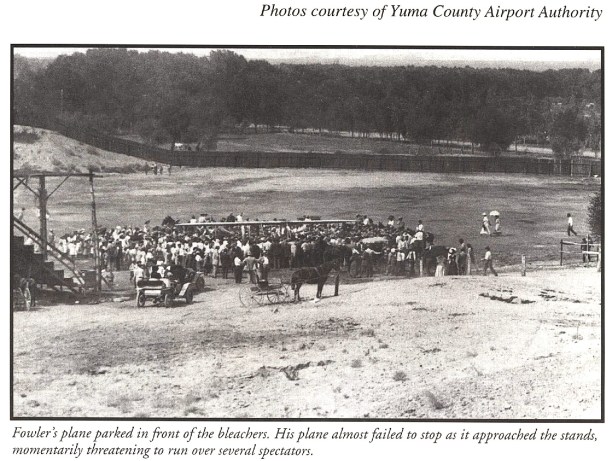
The Boston Bloomers’ September 1908 game was played at Meadows Park located at 1st Street and 8th Avenue. Other local games were held on the Fort Yuma Indian School grounds. But beginning around 1909 Yuma’s most popular baseball venue was Athletic Park, located along 4th Avenue in the 100 and 200 blocks. Athletic Park was also the site of Robert Fowler’s historic Yuma landing on October 25, 1911—the first airplane to land in Arizona:
March 30, 1909—Chicago White Sox vs. Yuma
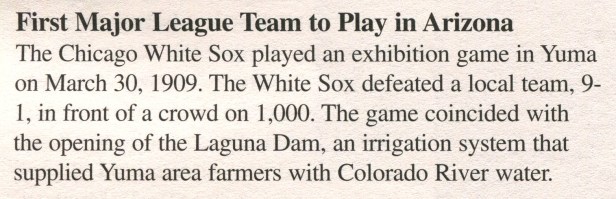
Baseball was very popular in early Yuma, and the White Sox game was highly anticipated. But at the time, the historical significance of the game—which featured the first major league team to play in Arizona—does not seem to have been a topic of discussion. The completion of the Laguna Dam, on the other hand, was perceived as a milestone achievement for Yuma, one which was worthy of a three-day celebration. While the White Sox-Yuma game attracted around 1,000 spectators on March 30, 1909, the following day’s grand opening ceremonies at the Laguna Dam drew over 3,000 attendees, including numerous railroad travelers from Phoenix and Los Angeles.
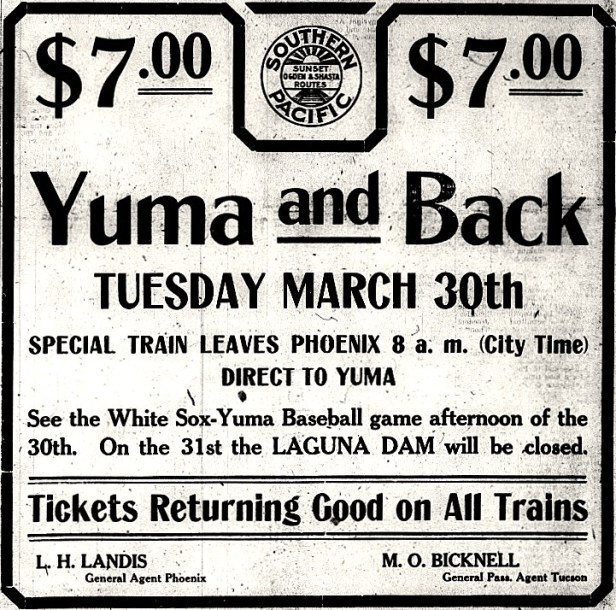
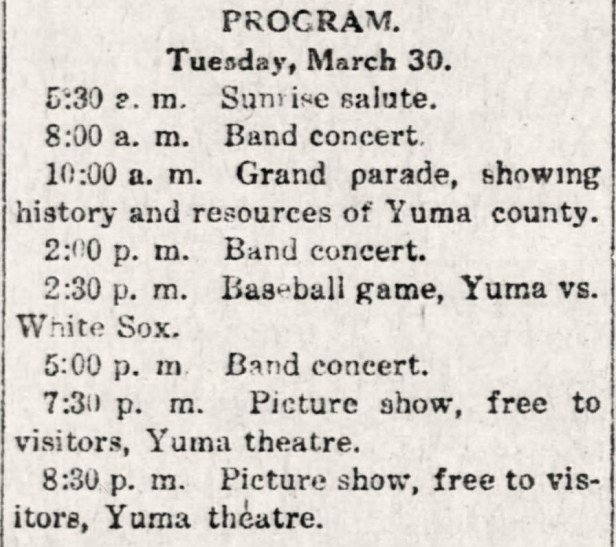
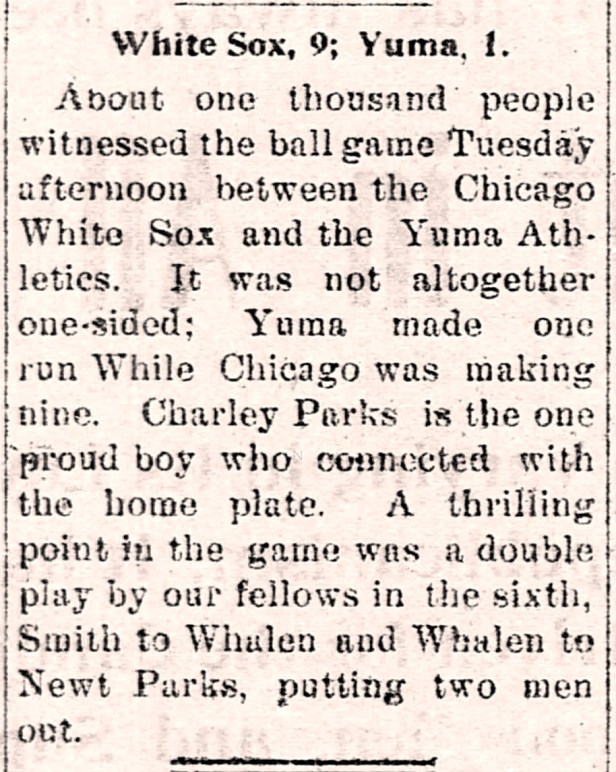
The big ballgame, which was scheduled between two band concerts, resulted in the White Sox defeating the Yuma team 9 to 1 in windy conditions at Athletic Park. Yuma managed only 2 hits against Chicago’s starting pitcher, Jim “Death Valley” Scott. The Arizona Sentinel writer managed to file a positive report on the obvious mismatch: “It was not altogether one-sided.”
December 2, 1909—Boston Bloomers vs. Yuma
On their second visit to Yuma, the Boston Bloomers played the Yuma team to a 7-7 tie at Athletic Park. The women’s team needed to catch their train, so the game did not continue into extra innings. The Yuma Morning Sun writer chose not to give credit to the Boston team: “Our boys were chivalrous and let them off easy, hence the score.”
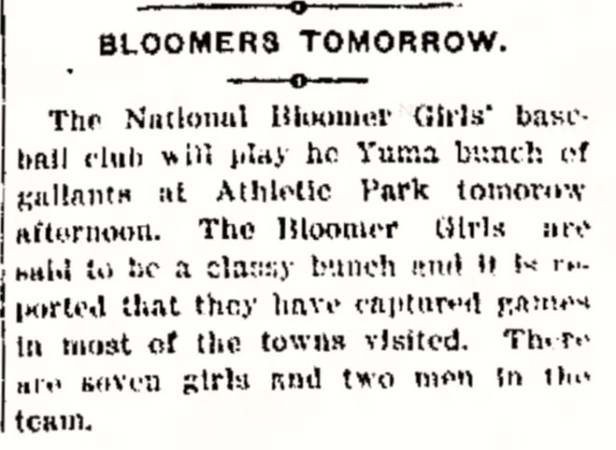
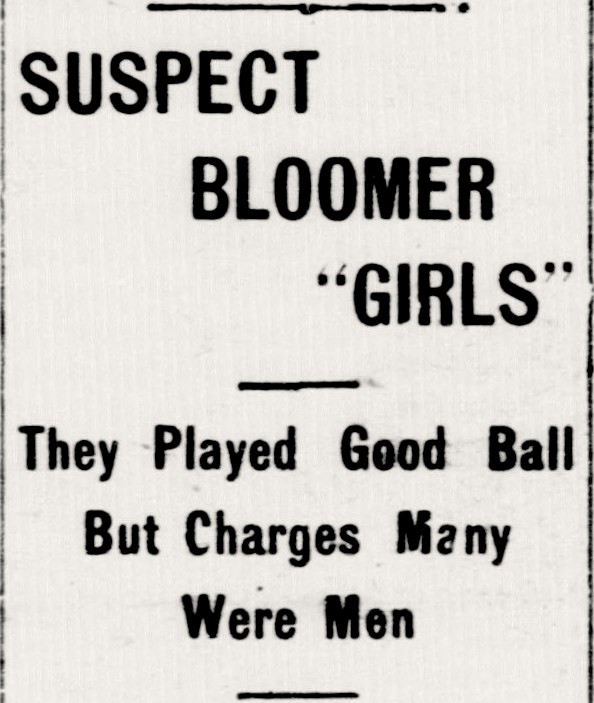
“Bloomer Girl” teams typically included a few male ballplayers, a fact that was openly stated in most newspaper articles promoting the games. The headline from the Tombstone paper refers to a series of three games played between the Boston Bloomers and the Phoenix Stars, following the game in Yuma. That the Bloomers won 2 of the 3 games seems to have prompted their opponents’ complaints: “In the opinion of the nine Stars who were walloped to the queen’s taste, they were playing against real men and not girls.”
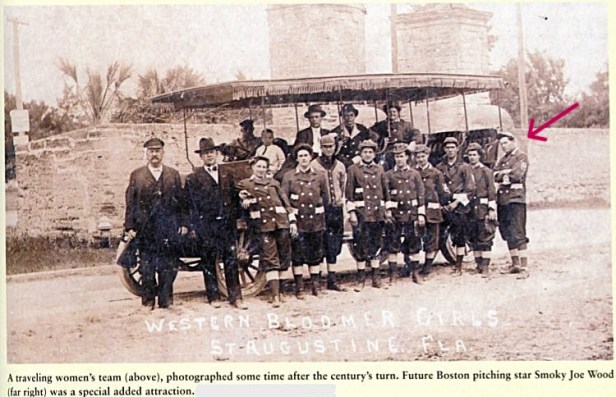
Smoky Joe Wood, a member of the 1911 Boston Red Sox team which played in Yuma, was one of a handful of major leaguers, including the great Rogers Hornsby, who were one-time members of “bloomer girl” teams. It turns out that some of the “bloomer boys” wore wigs . . .
Smoky Joe Wood—Western Bloomer Girls
As a teenager, future Red Sox pitching star Smoky Joe Wood spent a summer as a member of Kansas City’s “Western Bloomer Girls.” In the classic baseball book, The Glory of Their Times, Joe Wood—interviewed nearly 60 years later—stated (repeatedly) that although he played for the Bloomer Girls, he “never wore a wig.” Click below to hear a brief audio excerpt:
March 28, 1910—Chicago White Sox vs. Yuma
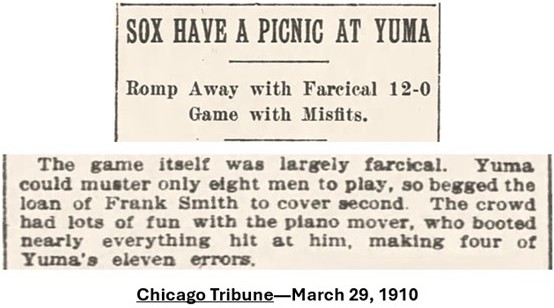
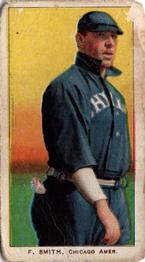
On March 28, 1910 the White Sox defeated the Yuma team 12-0 behind the two-hit pitching of future Hall of Famer “Big Ed” Walsh. Frank Smith, who was loaned to the Yuma team to play second base, was a pitcher—not an infielder. Not surprisingly, he committed four of Yuma’s eleven errors! Frank Smith’s nickname, the “Piano Mover,” was an accurate one. Early ballplayers typically held off-season jobs to supplement their modest baseball salaries. Frank Smith was in the moving business during his off-seasons, as well as in his post-playing days.
March 27, 1911—Boston Red Sox vs. Yuma
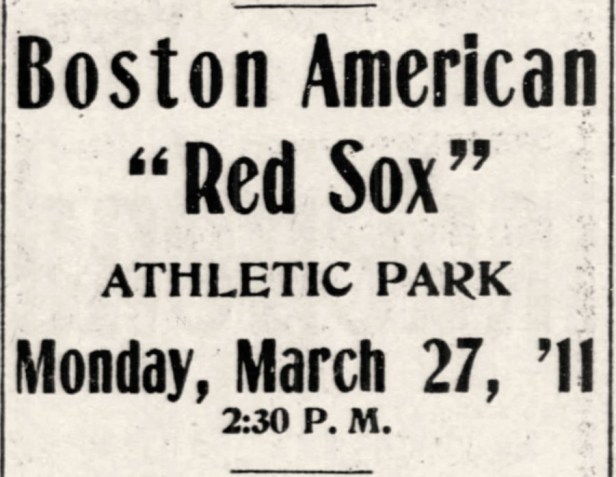
The Boston Red Sox game in Yuma was the first of several exhibition contests staged in towns along the team’s return route to Boston from Redondo Beach, California where the Red Sox held spring training in 1911.
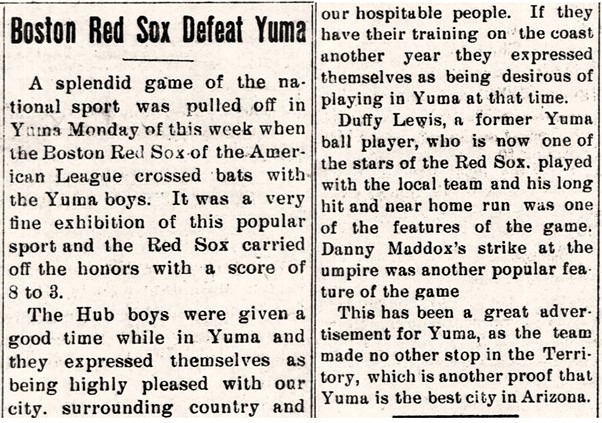
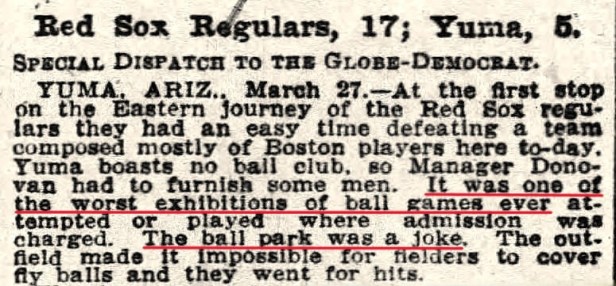
The local and out-of-town newspapers gave strikingly different accounts of the Red Sox–Yuma game. The Yuma paper described “a splendid game of the national sport,” noting that the Red Sox defeated the local team 8–3. The Boston Post reported the final score of the “alleged ball game” as 17–5. Boston’s outfielders included future Hall of Famers, Tris Speaker and Harry Hooper, as well as Duffy Lewis, who was loaned to the Yuma team for the exhibition. Yuma baseball fans were familiar with Duffy Lewis, since a year earlier he had played on Yuma’s team in the Imperial Valley winter league.
April 16, 1911—Chicago Ladies’ Baseball Club vs. Yuma
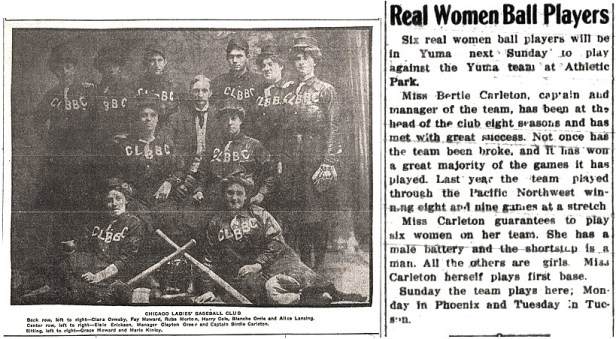
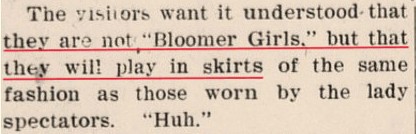
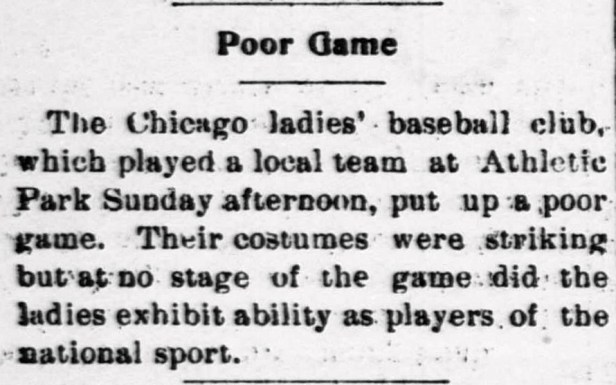
The Chicago team’s game with Yuma was bookended by games at El Centro and Tucson. The newspapers in those towns made a point of emphasizing the uniforms that would be worn by the women ballplayers.
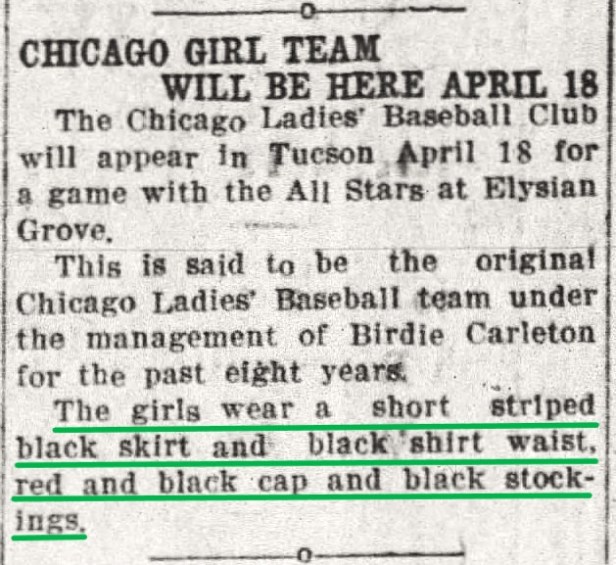
Yuma’s Arizona Sentinel noted of the visiting team that “their costumes were striking,” but the paper didn’t report any actual details of the “poor game.”
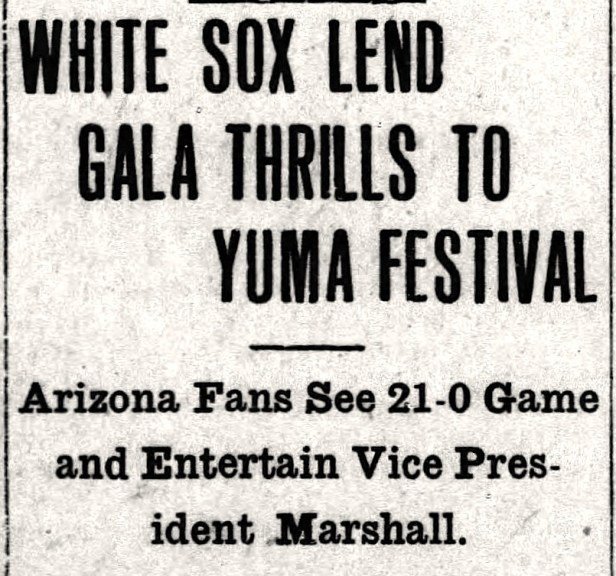
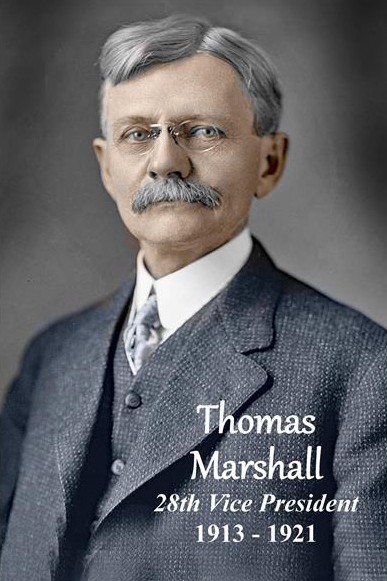
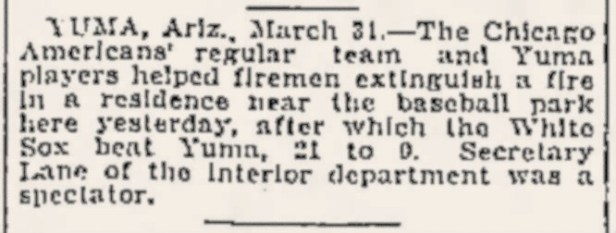
March 31, 1913—Chicago White Sox vs. Yuma
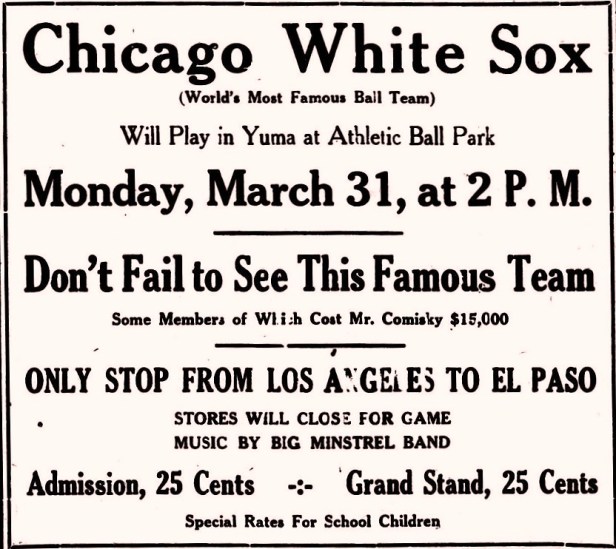
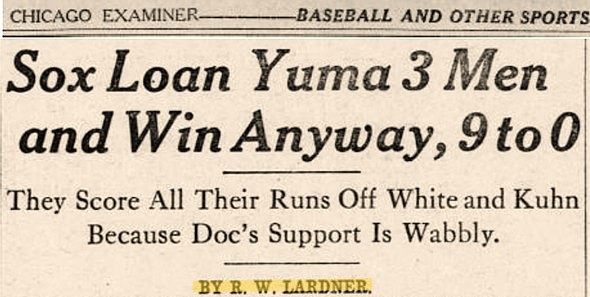
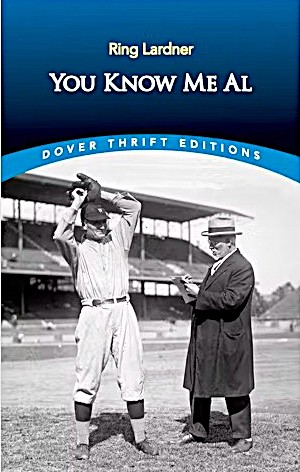
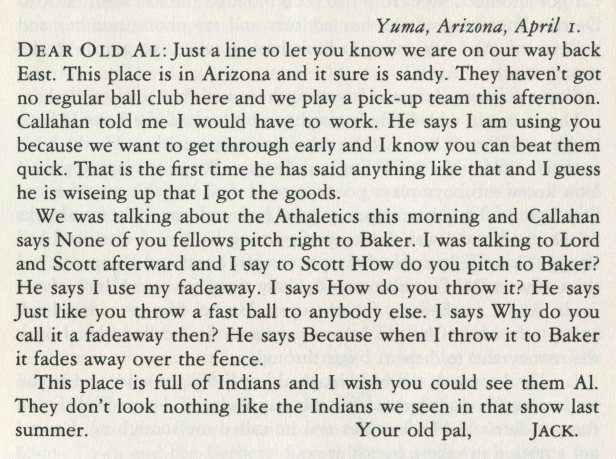
Ring Lardner was a Chicago sportswriter who traveled with the White Sox and covered their 1913 game in Yuma.
When he published You Know Me Al a few years later, Ring Lardner’s unflattering impressions of Yuma became immortalized in a classic baseball novel:
March 15, 1914—“Chinese University of Hawaii” vs. Yuma
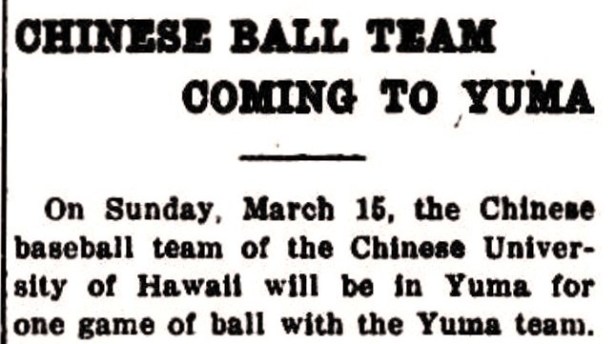
The visitors’ train from Los Angeles arrived in Yuma an hour late, so the Sunday afternoon game, which was won 9-3 by the “Travelers,” was shortened to 4 innings due to darkness.
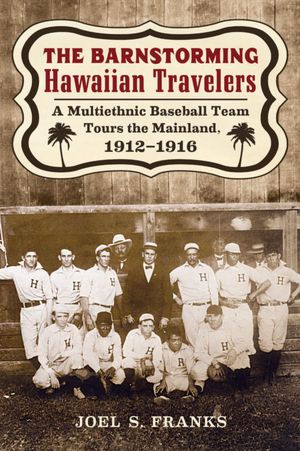
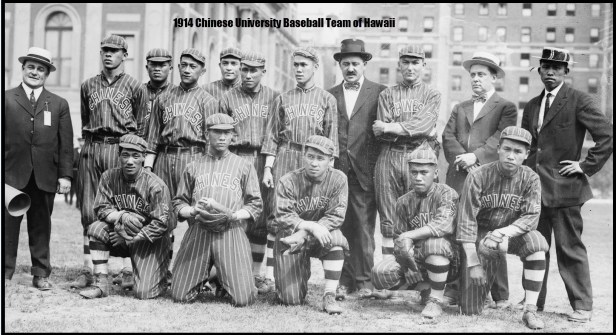
Joel Franks writes that the Hawaiian team which visited Yuma on March 15, 1914 was so talented that they defeated several U.S. collegiate teams, including the University of Arizona. But, in reality, they were not affiliated with the Chinese University of Hawaii: “There was no such institution. It was a concoction by one or more of the Hawaiian promoters of the trip.”
March 30, 1914—Chicago White Sox vs. Yuma
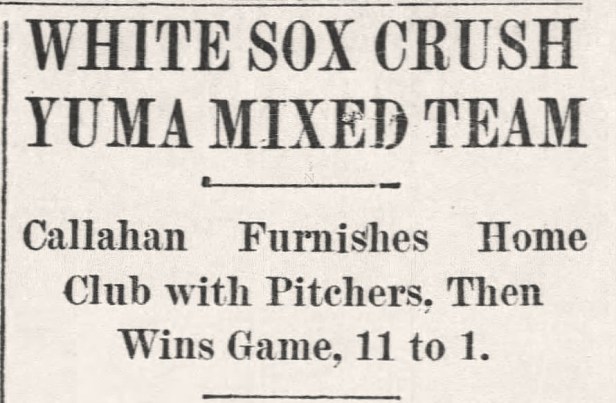
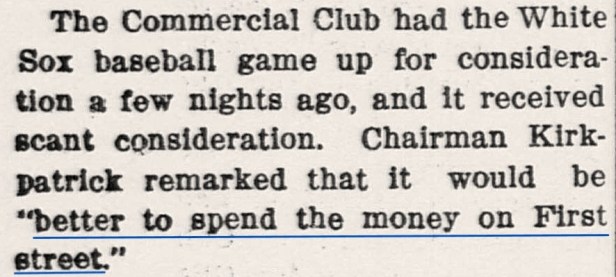
As the above headline notes, the short-handed Yuma team borrowed 2 pitchers from the visiting White Sox. Veteran Chicago hurler Ed Walsh served as the game’s umpire, so he did not pitch for either squad. The White Sox required a $250 guarantee to play in Yuma, and the chairman of the Commercial Club expressed a minority opinion that it would be “better to spend the money on First street.”
March 30, 1915—Chicago White Sox vs. Yuma
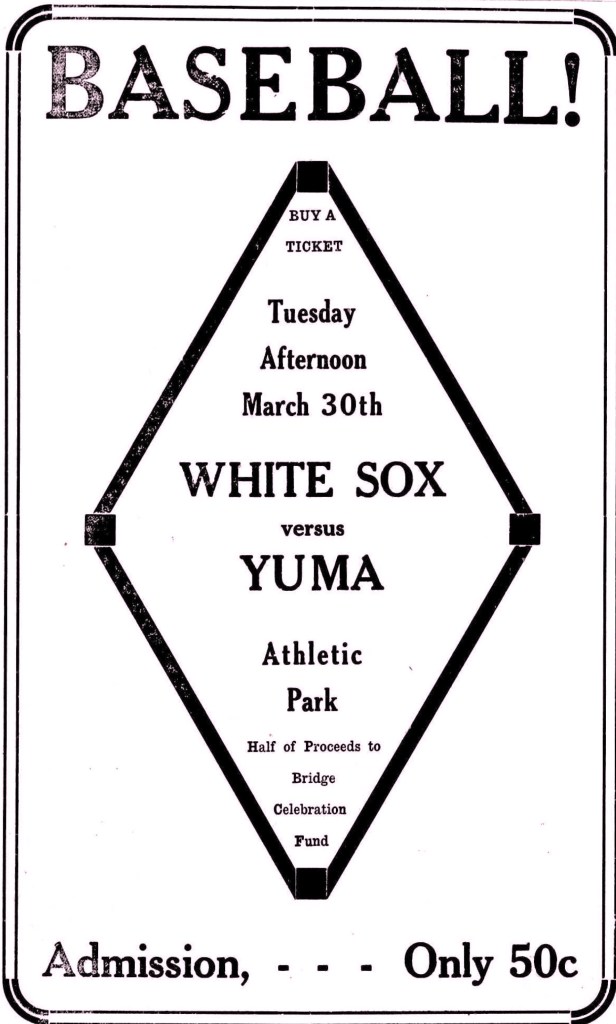
“Black Sox” in Yuma, 1910-1915
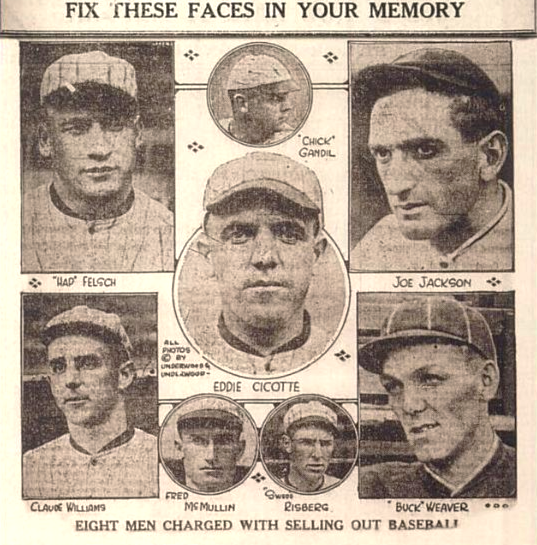
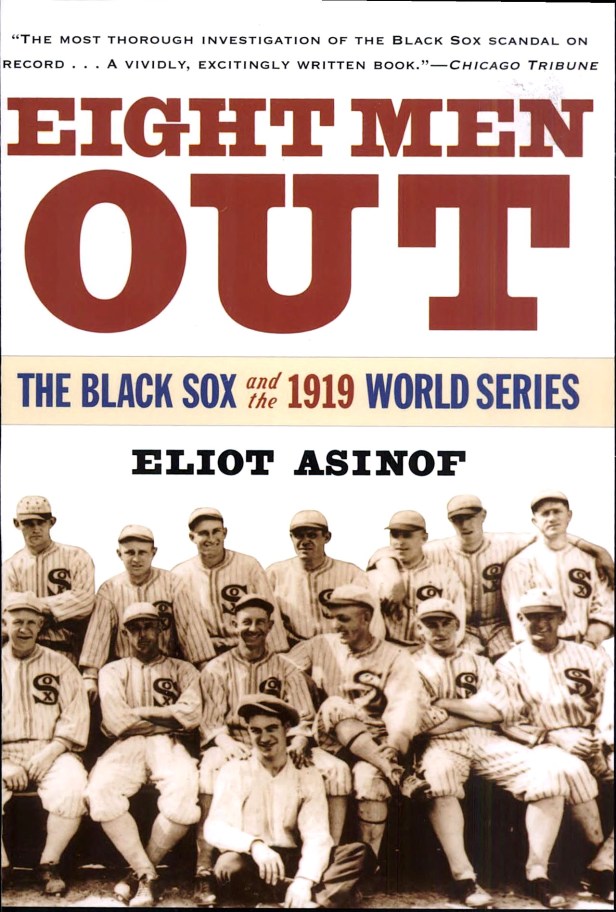
The infamous “Black Sox” were the eight members of the 1919 Chicago White Sox team who were permanently banned from baseball for taking money in exchange for intentionally losing the World Series to the Cincinnati Reds. Four of the eight men appeared in early Yuma exhibition games: Chick Gandil (1910), Eddie Cicotte (1911, as a member of the Boston Red Sox), Buck Weaver (1913, 1914), and “Happy” Felsch (1915). By the time the other four players, including “Shoeless” Joe Jackson, joined the White Sox, the team was holding its spring training in Texas rather than California. This meant that for the next several years, the White Sox did not appear in Yuma.
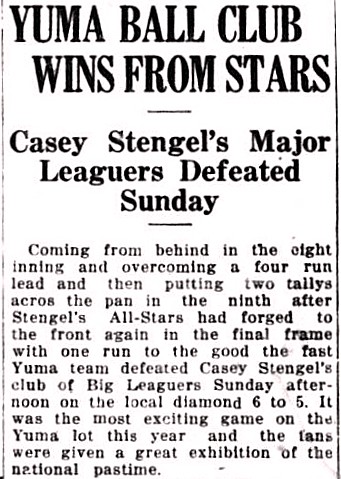
November 11, 1919—Casey Stengel’s All-Stars vs. Yuma
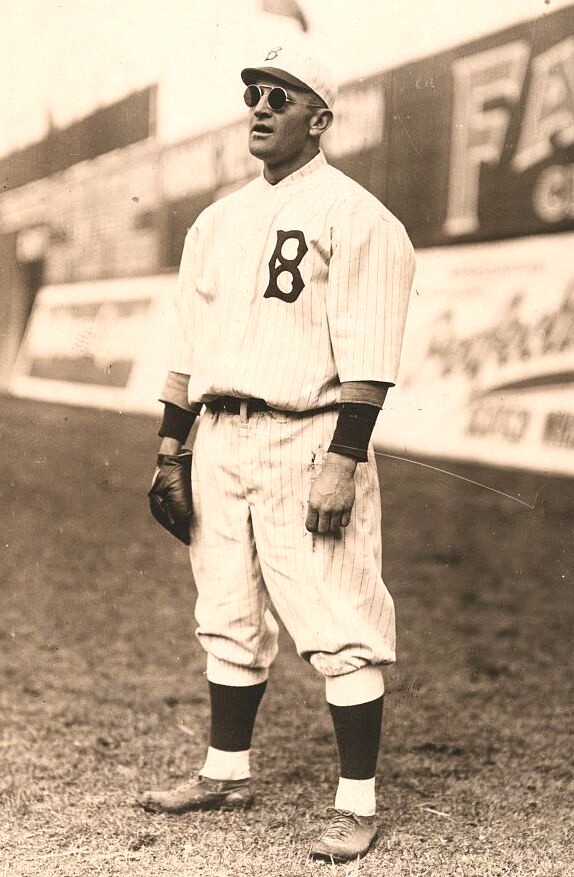
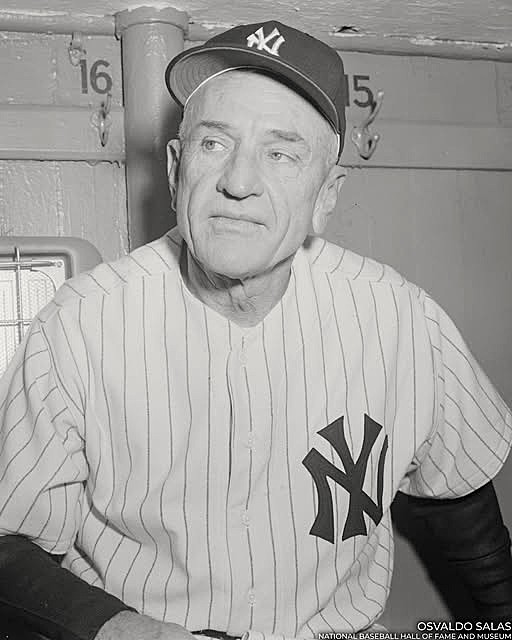
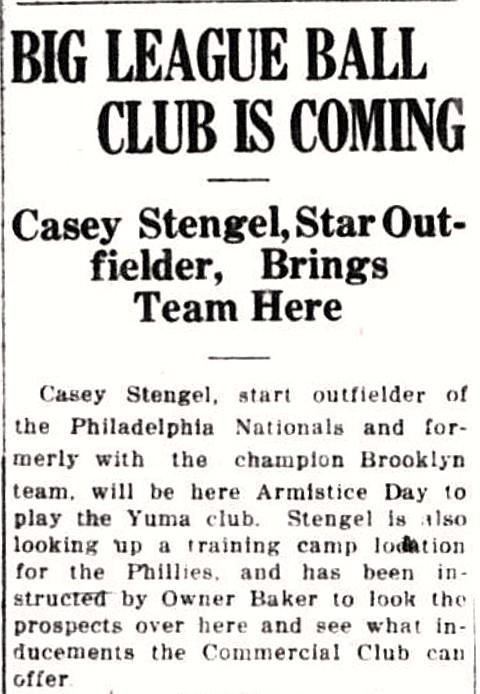
Yuma’s American Legion post sponsored the town’s first annual commemoration of Armistice Day on November 11, 1919. The festivities included a parade, a program at Sunset Park, and a baseball game at Meadows Park. Casey Stengel, who had been recently traded to the Philadelphia Phillies, organized a barnstorming team of “all-stars” that played several Arizona teams prior to reaching the players’ West Coast winter ball destinations. Biographer Robert Creamer described this squad, which Yuma defeated in the first of two contests, as a “ragtag team of semipros and ex-minor leaguers.”
October 1922—Yuma turns down Babe Ruth!
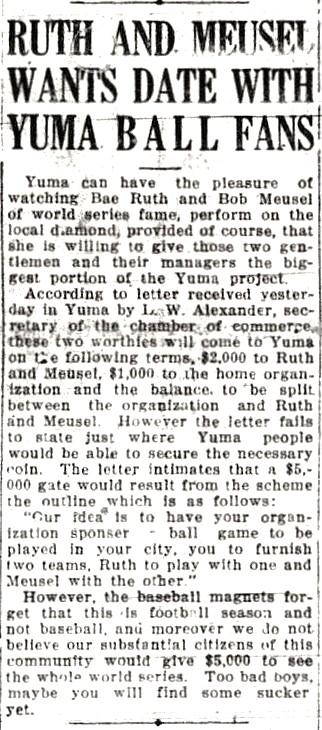
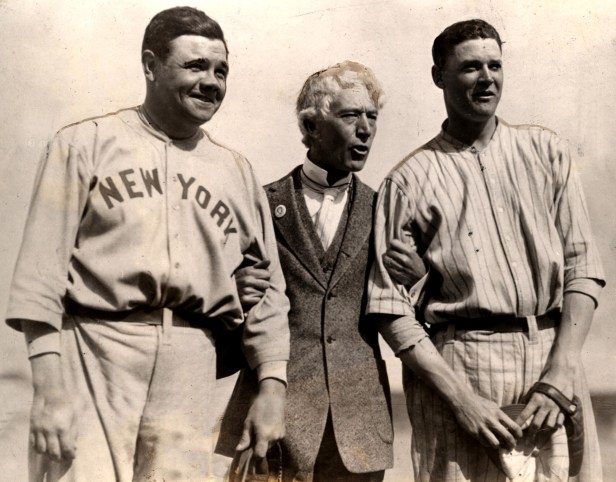
In October 1922 Yankees superstar Babe Ruth, along with teammate Bob Meusel, offered to play an exhibition game in Yuma. Babe Ruth—or more likely his business agent, Christy Walsh—asked for a minimum payment of $2000, plus half of any additional gate receipts. According to the Yuma Chamber of Commerce, Babe Ruth’s representatives anticipated Yuma ticket sales of $5000, a wildly optimistic estimate which led Yuma to decline the Babe’s offer. The Yuma newspaper made its opinion on the matter very clear: “Too bad boys, maybe you will find some sucker yet.”
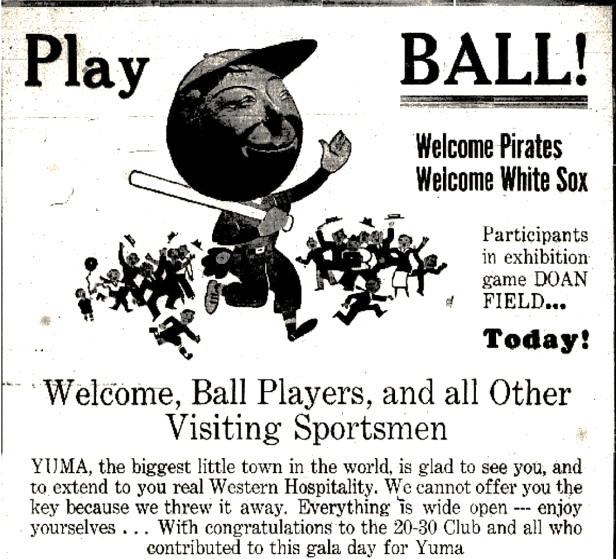
April 3, 1934—Chicago White Sox vs. Pittsburgh Pirates
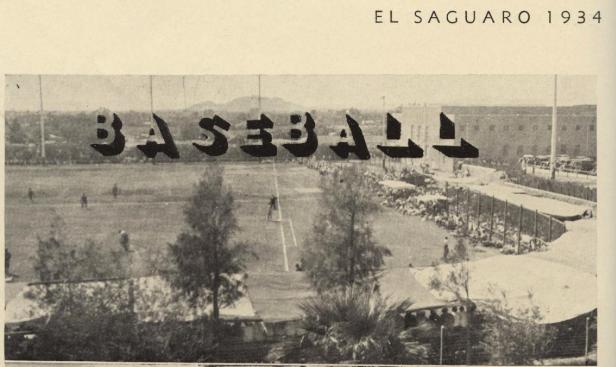
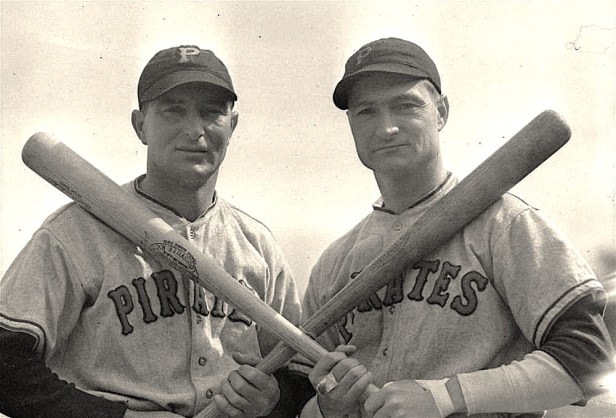
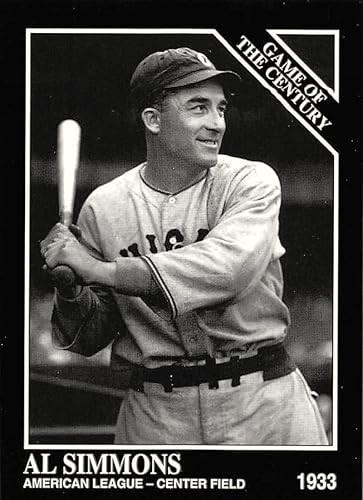
The first of an annual series of Major League exhibition games at Doan Field was a star-studded event. The two rosters included a total of 9 future Hall of Famers, including both starting pitchers, Ted Lyons of the White Sox and Waite Hoyt of the Pirates. The other Hall of Fame ballplayers in the Yuma game were Luke Appling, Al Simmons, Paul Waner, Lloyd Waner, Arky Vaughan, Pie Traynor, and Freddie Lindstrom. The game, which reportedly drew 2,000 fans, was won 10-2 by the White Sox. Pittsburgh pitcher Waite Hoyt uncharacteristically gave up 7 of Chicago’s runs.
March 27, 1935—Chicago White Sox vs. Pittsburgh Pirates
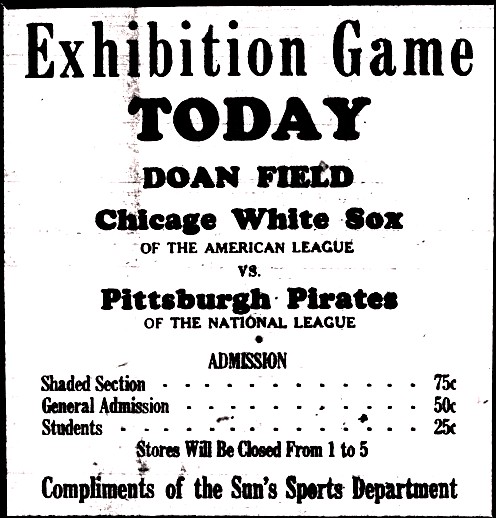
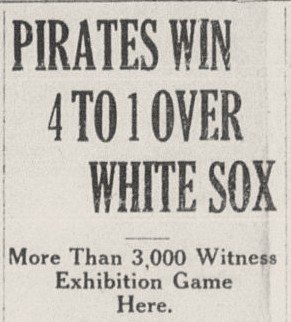
The March 27, 1935 exhibition game at Doan Field was a repeat of the previous year’s matchup between the Chicago White Sox and the Pittsburgh Pirates. The attendance of 3,000 was very impressive for a town of 5,000 residents. The White Sox had recently completed spring training at Pasadena, California, while the Pirates had trained in San Bernardino.
May 22, 1935—Detroit “Colored Giants” vs. Yuma Cubs
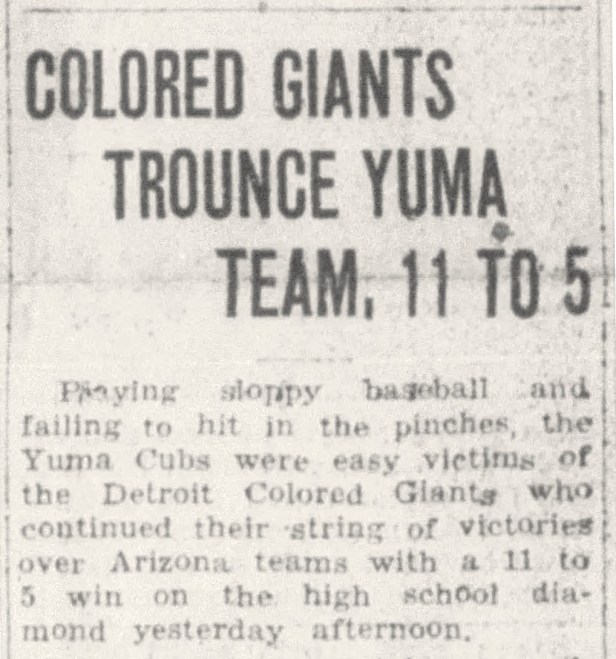
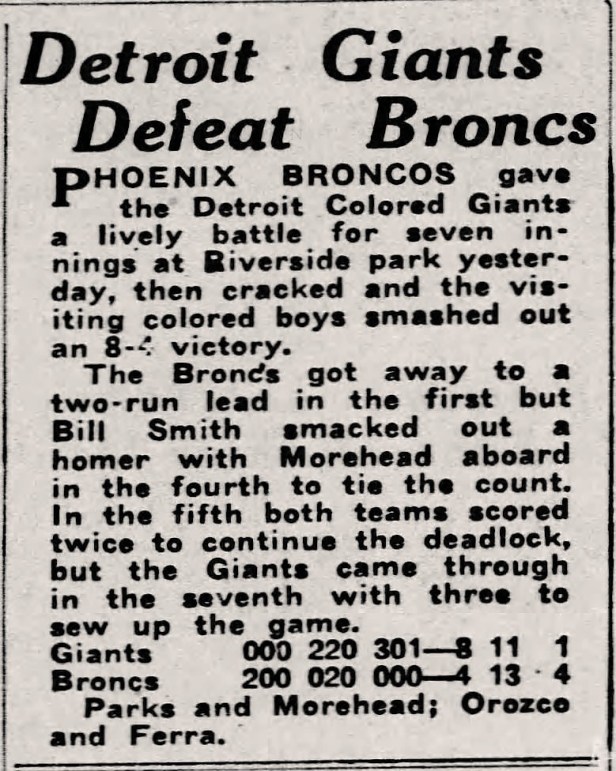
The Yuma Cubs won the Arizona State Baseball championship in August 1935, earning a trip to the national semi-pro tournament in Wichita. The following year the Arizona state title was won by the Phoenix Broncos. In May 1935 both Arizona teams were outmatched by the Detroit “Colored Giants,” a barnstorming team of talented black ballplayers who had also defeated the Yuma team a year earlier.
March 23, 1936—Chicago White Sox vs. Yuma
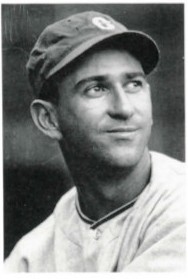
Though the team finished in fourth place in 1936, Luke Appling had his greatest season, finishing second to Lou Gehrig in the Most Valuable Player voting.
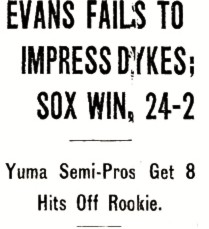
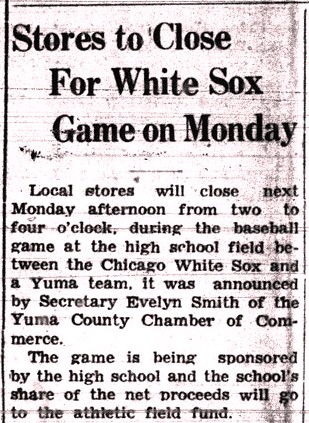
Several of the Yuma players facing the White Sox had been members of the previous year’s Arizona state champion semi-pro team. Rookie pitcher Red Evans of the White Sox gave up 8 hits in 5 innings to the Yumans, but, as expected, the major leaguers dominated in a 24-2 contest.
March 31, 1936—Tokyo Giants vs. Yuma Merchants
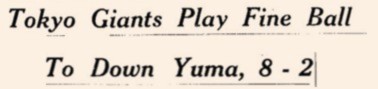
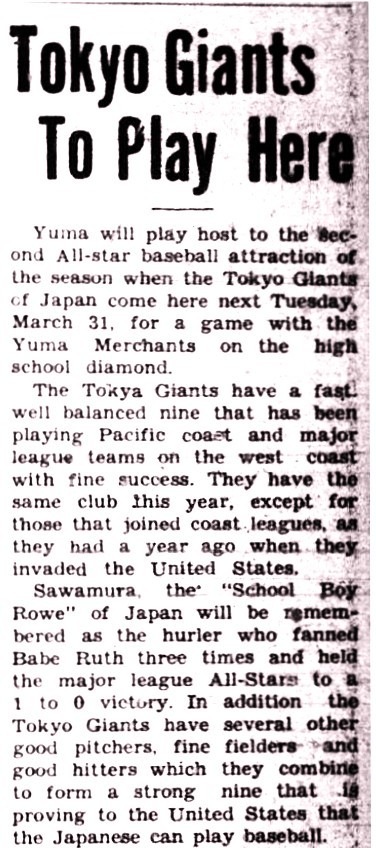
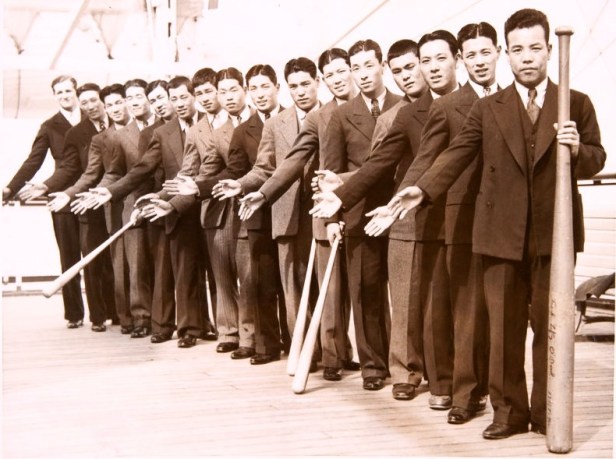
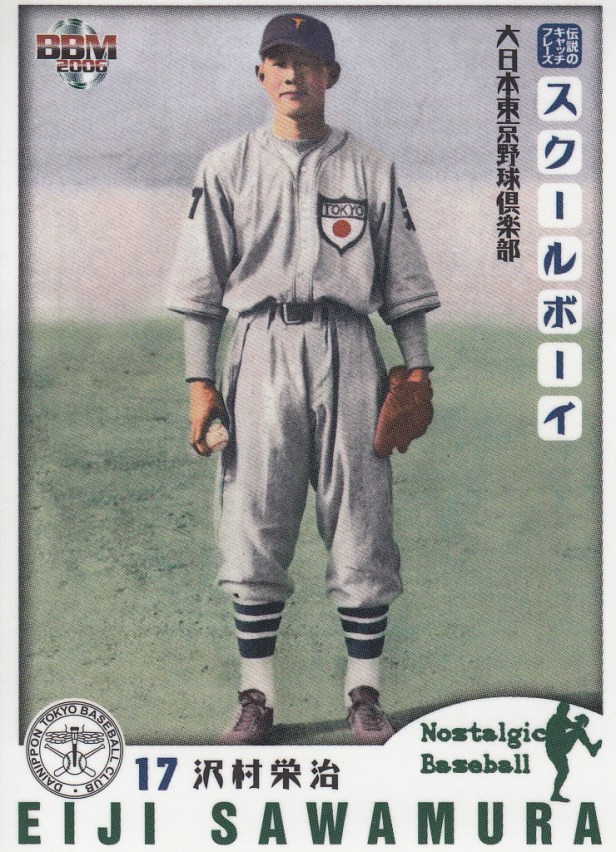
After playing several Pacific Coast League teams in early 1936, the Tokyo Giants embarked on a goodwill cross-country tour, displaying their baseball skills and sportsmanship in both small towns and large cities of the United States. Two years earlier an all-star U.S. squad, including Babe Ruth, Lou Gehrig, and Jimmie Foxx had visited Japan. Eiji Sawamura, the teenage pitching sensation mentioned in the article, did not play in the Yuma exhibition game, but the Yuma Merchants team (formerly the Yuma Cubs) still only managed to get four hits in an 8 to 2 loss. A day earlier the Tokyo Giants were defeated 9 to 6 by a team of El Centro “all stars,” and the day after the Yuma game, the Japanese ballclub won a 9 to 2 contest in Phoenix.
World War II brought an abrupt end to “goodwill baseball” between the two nations. Among the war’s casualties was Eiji Sawamura, who was killed in combat on December 2, 1944. Since 1947 the Sawamura Award has been given annually to the top pitcher in the Nippon Professional Baseball league.
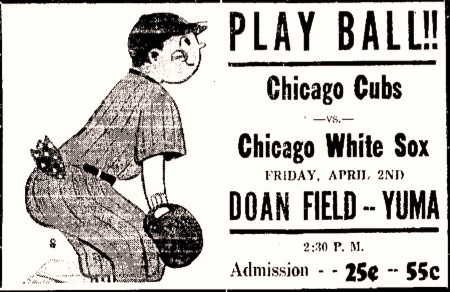
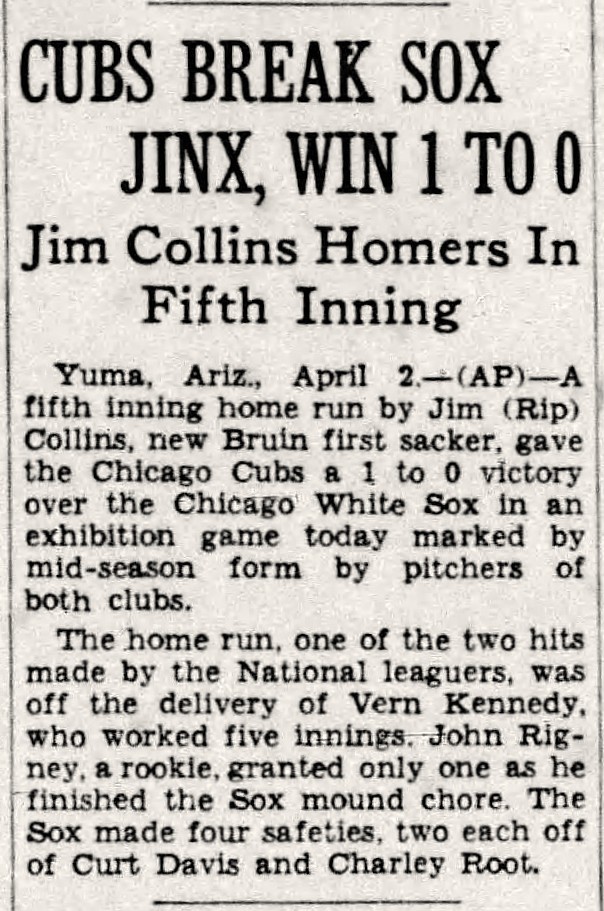
April 2, 1937—Chicago White Sox vs. Chicago Cubs
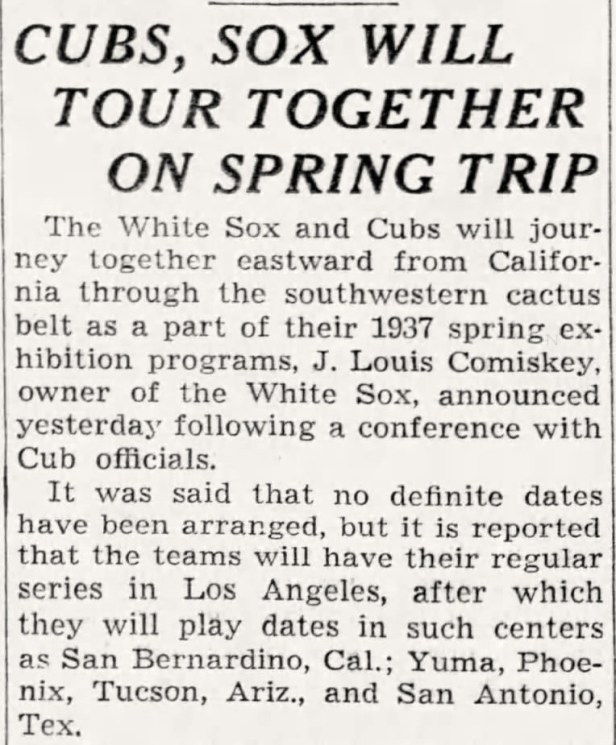
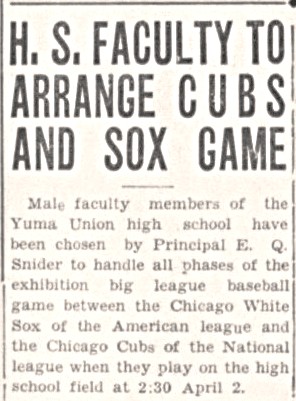
April 1, 1938—Chicago White Sox vs. Chicago Cubs
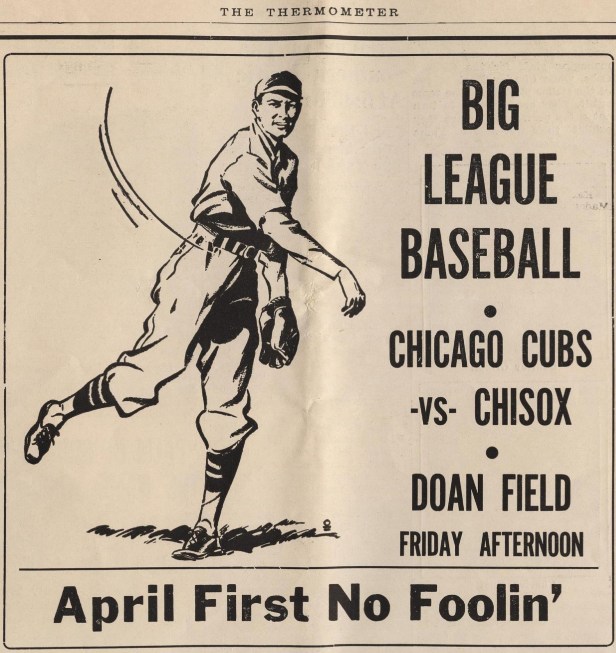
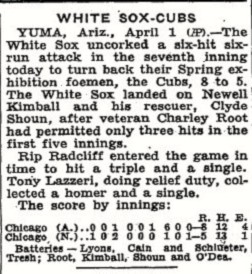
The White Sox won the April 1, 1938 exhibition game against the Cubs, 8-5, but the Cubs would go on to win the National League pennant in 1938, falling to the New York Yankees in the World Series. The White Sox finished in 5th place in the American League.
March 31, 1939—Chicago White Sox vs. Chicago Cubs


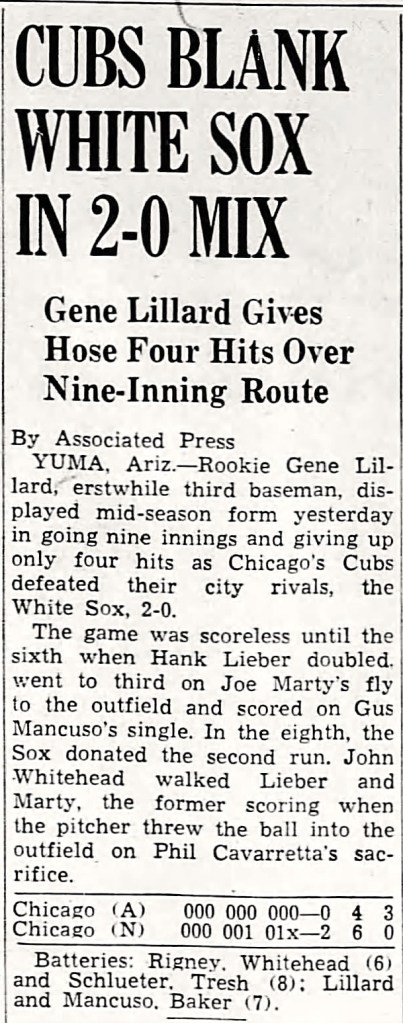
On March 31, 1939 rookie pitcher Gene Lillard of the Cubs shut out the White Sox 2-0 before a “capacity crowd” at Yuma High School’s Doan Field. This was undoubtedly Lillard’s best pitching performance in a 20-year career spent mostly in the minor leagues—and mostly as a third baseman. In 1935 Gene Lillard had led the Pacific Coast League with 56 home runs!
The Yuma headline above notes that Hank Leiber was the hitting star, scoring both Cubs runs. As I related in an earlier article, on December 30, 1940 Hank Leiber was married in Yuma to Betty Proctor of Tucson. The couple stopped off at the Yuma courthouse on their way to the Rose Bowl football game in Pasadena.
March 29, 1940—Philadelphia Athletics vs. Pittsburgh Pirates
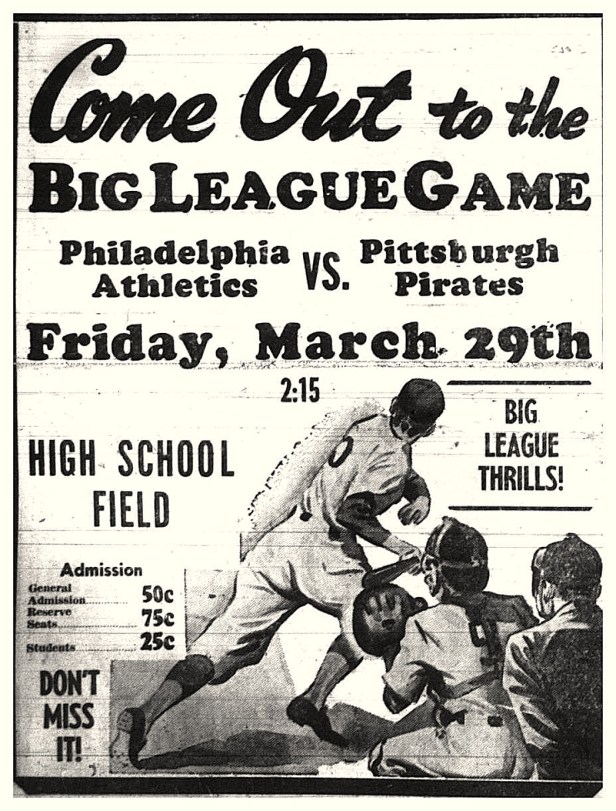
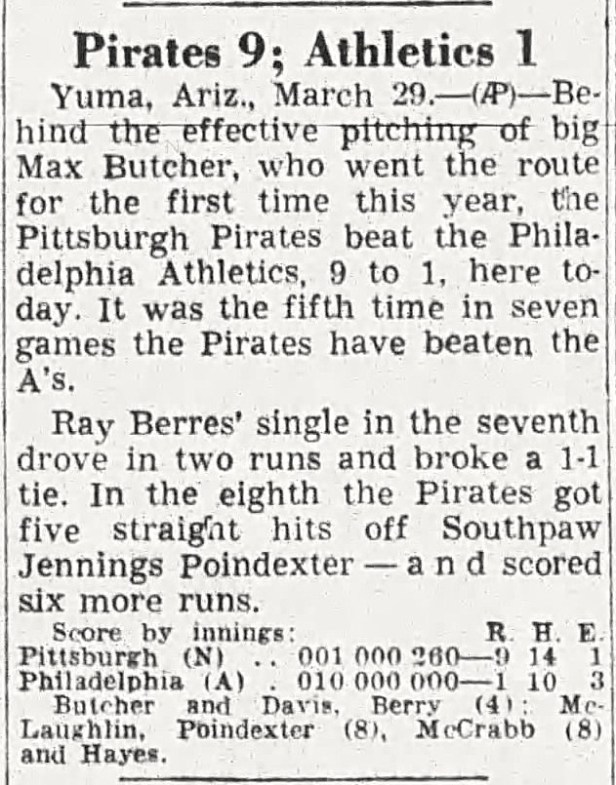
On March 29, 1940 a “fair-sized crowd” watched the Pittsburgh Pirates defeat the Philadelphia Athletics 9 to 1 at Doan Field. Pittsburgh’s 4th place 1940 season was the team’s final year with longtime superstar Paul Waner. Philadelphia was destined for another last place finish in the American League. Al Simmons, who had starred for the powerful A’s teams of the 1920s, returned in 1940 at the age of 38, but, like the team, his glory days were in the past.
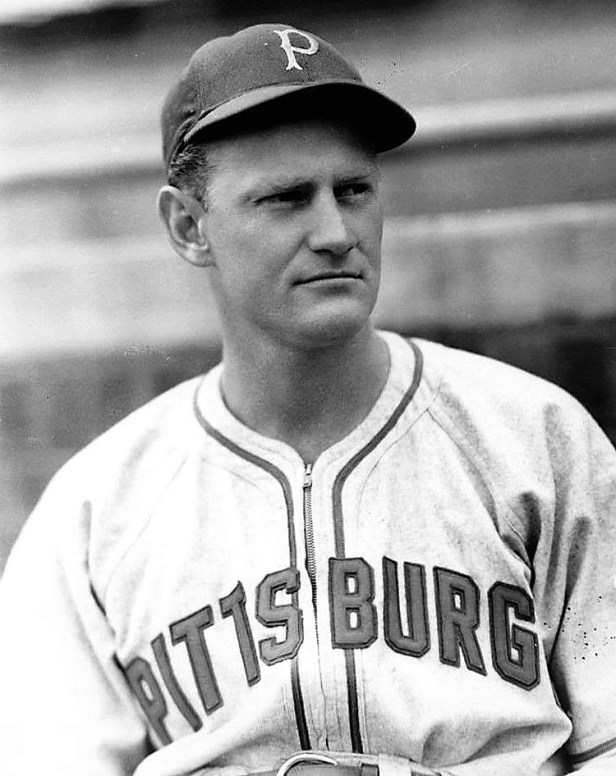
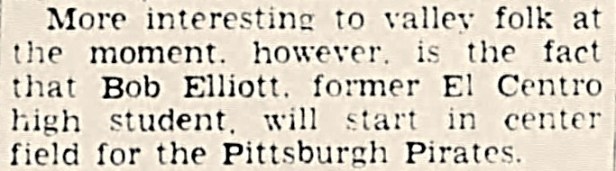
1940 was the first full Major League season for Bob Elliott of the Pirates. The former El Centro high school star had played in Yuma numerous times prior to his appearance with the Pittsburgh squad at Doan Field. Bob Elliott’s distinguished career was highlighted by his Most Valuable Player selection in 1947 as a member of the Boston Braves.
April 3, 1941—Philadelphia Athletics vs. Chicago Cubs
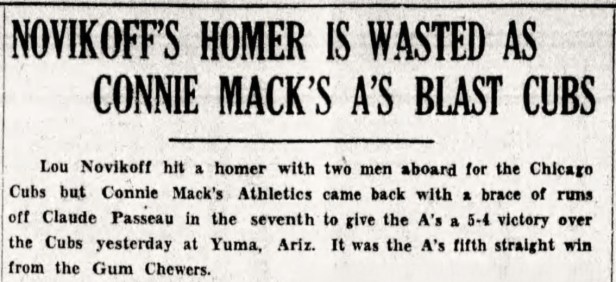
The article mentions that the Athletics’ 5-4 victory over the Cubs in Yuma was the fifth straight time Chicago had lost to the A’s. Both teams would suffer poor 1941 regular seasons. The Athletics finished last in the American League, while the Cubs finished 6th in the National League. Lou Novikoff, who homered for the Cubs, would make his official Major League debut on opening day, April 15, 1941. Throughout his career, Novikoff, the son of Russian immigrants, had to endure the sportswriters’ nickname, the “Mad Russian.”
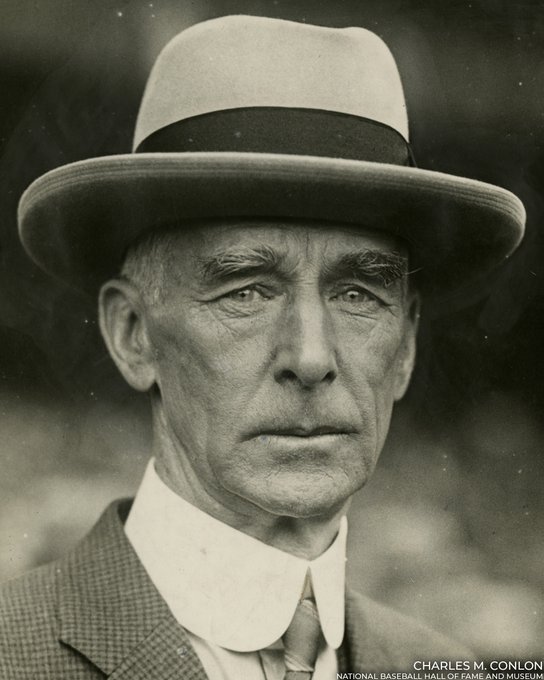
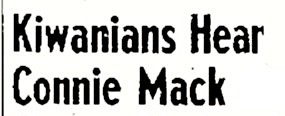
Prior to the ballgame at Doan Field, legendary Athletics manager, Connie Mack, was a guest speaker at the Kiwanis Club luncheon at Yuma’s Clymer House. Mack, who was 78 years old at the time, would continue managing the team through the 1950 season.
April 2, 1942—Chicago White Sox vs. Pittsburgh Pirates
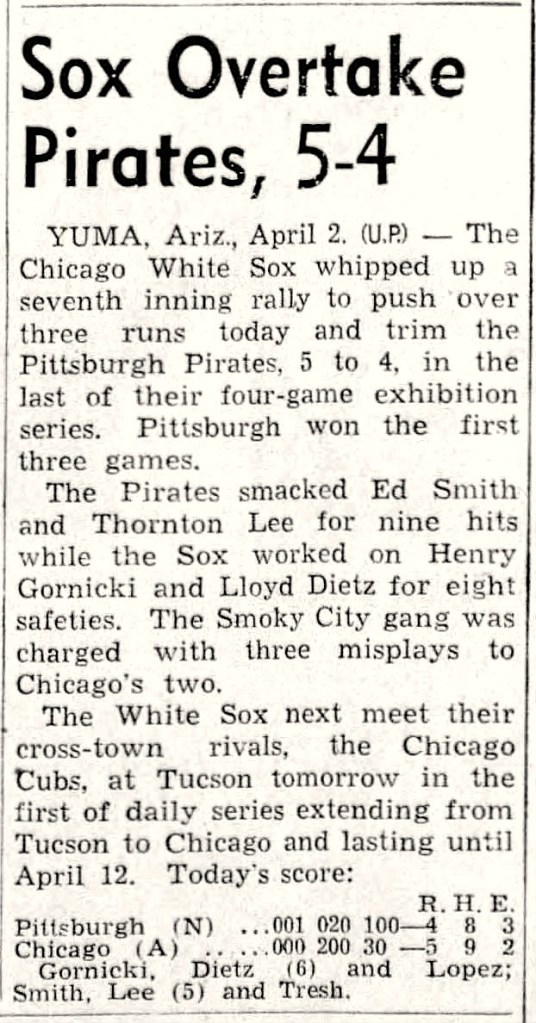
The April 2, 1942 game between the Chicago White Sox and the Pittsburgh Pirates was the last major league exhibition game in Yuma until 1950. The White Sox defeated the Pirates 5 to 4 behind the solid pitching of starter Eddie Smith. During the 1942 regular season, Smith would lose 20 games for the 6th place Chicago team. Pittsburgh finished in 5th place in the National League after trading shortstop Arky Vaughan, the Pirates’ best player, during the off-season.
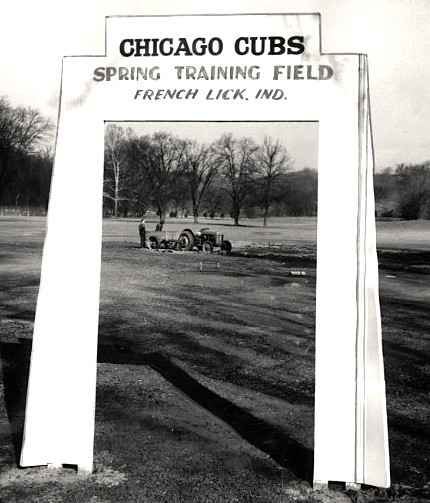
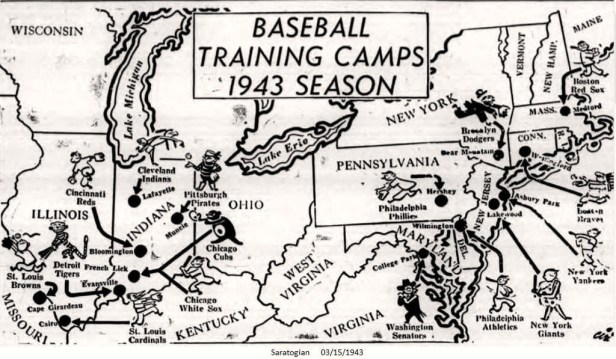
The U.S. entry into World War II impacted all facets of American life, including professional sports. Travel restrictions resulted in the Chicago Cubs and White Sox conducting spring training in French Lick, Indiana from 1943-1945. The Pirates, who normally trained in San Bernardino, California, shifted their wartime spring training to Muncie, Indiana. Many major leaguers either enlisted or were drafted into the armed forces, resulting in patchwork team rosters of older players and those with 4-F medical status. Needless to say, Major League teams were not available to play exhibition games in Yuma during the war years.
January 24-25, 1948—Vince DiMaggio’s “Major League All Stars” vs. Yuma
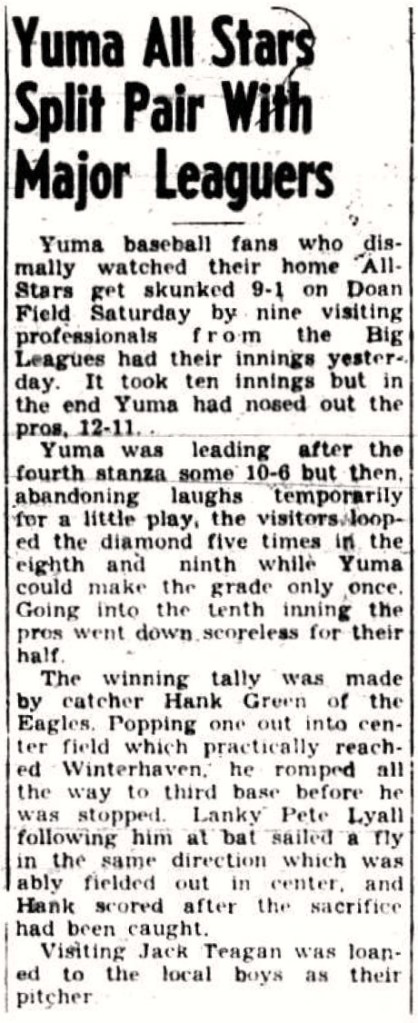
Vince DiMaggio had a 10-year Major League career that included two All Star selections. He also held the dubious honor of leading the National League in strikeouts six times. The team of “Major Leaguers” who played a pair of games in Yuma in January 1948 did not actually contain any current Major Leaguers. Catcher Joe Stephenson had played 16 games with the 1947 White Sox, but he was never called back up to the Majors. (He did become a long-time scout for the Boston Red Sox.) Vince DiMaggio’s last Major League action was in 1946. The other players were minor leaguers, including Birmingham pitcher Jack Teagan, who was loaned to the local team for the second game, which was won by Yuma in ten innings.
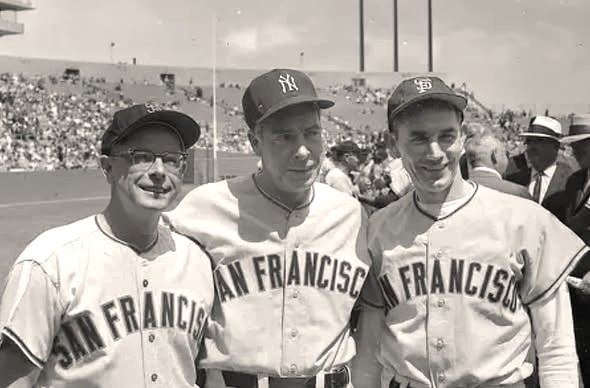
The photo below shows the famed DiMaggio brothers at a 1962 old-timers’ game. The Yuma team that faced Vince DiMaggio’s “All Stars” included the brother tandem of Hank and Jim Green, as well as the local trio of Doten brothers: Bill (“Pigeon”), Hubert (“Chili”), and Albert.
March 29, 1950—Chicago White Sox vs. St. Louis Browns

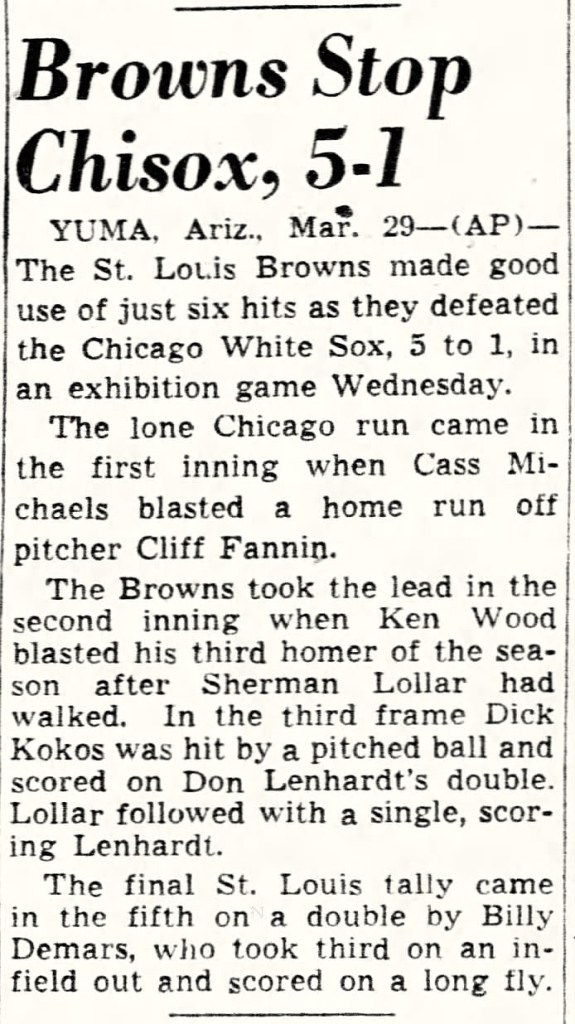
The Browns, whose top players were catcher Sherm Lollar and pitcher Ned Garver, finished the 1950 regular season in 7th place, just behind the 6th place White Sox. The Chicago roster was undergoing a changing of the guard in 1950 as 22-year-old second baseman Nellie Fox was beginning to demonstrate his Hall of Fame talent, while, conversely, 43-year-old Luke Appling was no longer the productive infielder he had been throughout his long White Sox career.
The March 29, 1950 game between the White Sox and Browns was the 10th and final Major League exhibition game held at Yuma High School’s Doan Field, an annual tradition—interrupted by World War II— which began in 1934. But the Browns (renamed as the “Orioles”) would return to Yuma in 1954 . . .

Browns owner Bill Veeck contracted with city officials for the team to hold 1954 spring training in Yuma—shortly before selling the team to an ownership group from Baltimore who moved the franchise, changing the name to the Orioles. Since the new owners preferred training in Florida, the 1954 Yuma training camp was a one-time arrangement.
Yuma Municipal Baseball Park
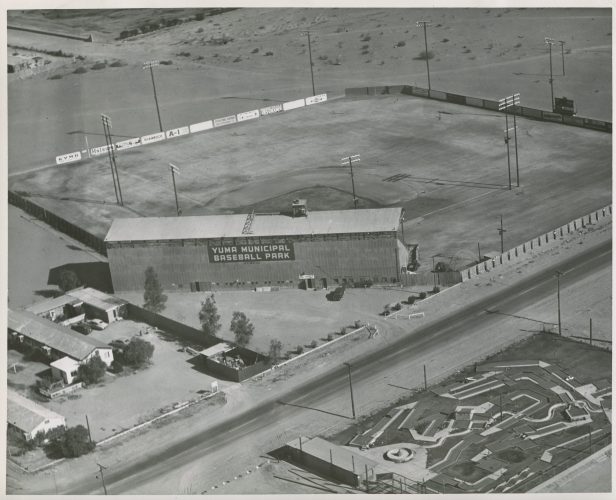
On April 21, 1950 Yuma began a new baseball era with the introduction of the town’s first minor league team, the Panthers, a member of the Class C Sunset League. The ballpark pictured below was called Panther Field during the team’s three-year existence. The park, located along 16th Street just west of 1st Avenue, had formerly been the location of a race track and fairgrounds. Once Yuma had its own team—and there would be a succession of teams—barnstorming / exhibition games in Yuma were scheduled much less frequently than they had been during the first half of the century.
 Yuma History Guy