Introduction—Location Filming at the Colorado River/Laguna Dam
Since 1909 the Yuma area has provided filming locations for dozens of Hollywood movies. The most popular of these settings has been the Imperial Sand Dunes, but the Colorado River has also been a frequent filming site, particularly at the Laguna Dam which was completed in 1909. That year saw the filming of the first Yuma-made motion picture, “The Road Agents.” Gilbert “Broncho Billy” Anderson produced, directed, and starred in this early silent film which used the Laguna Dam as one of its locations.
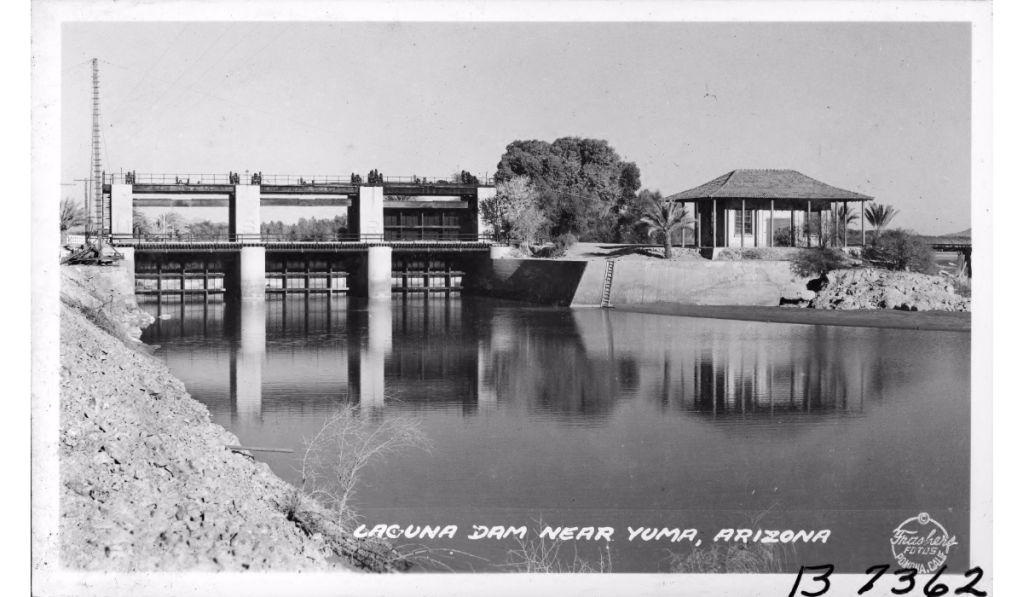
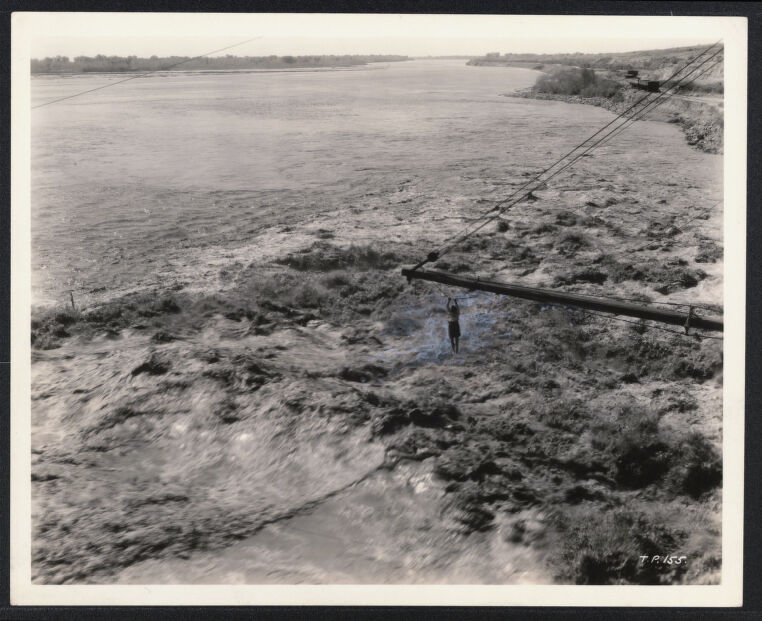
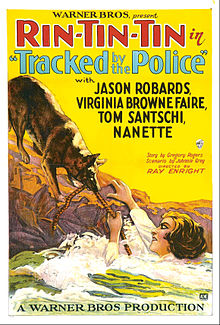
The placid Colorado River shown in the above photo contrasts with the scenes of treacherous rapids favored by the early filmmakers who came to the Laguna Dam. The photo below is from the 1927 Rin Tin Tin movie, “Tracked by the Police.” The movie’s leading lady, played by Virginia Browne Faire, is dangling precariously over the raging river prior to a dramatic rescue by Rin Tin Tin.
Popular singing cowboy Gene Autry filmed “Red River Valley” in Yuma in 1936. The Red River of Texas was depicted by the Colorado River, and in the movie the villains attempt to blow up the (Laguna) dam.

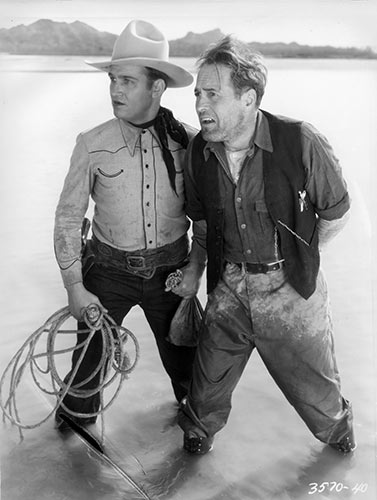
“The Big Trail,” starring 22-year old John Wayne, began its multi-state filming odyssey along the Colorado River near Yuma.
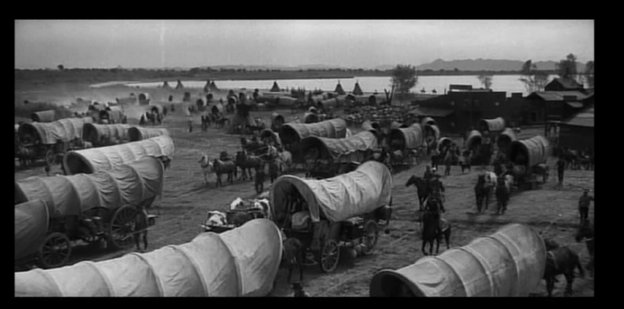
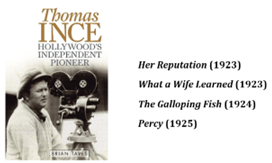
Thomas Ince was an early Hollywood movie mogul who has been called the “father of the studio system.” His 1916 film “Civilization” is considered a landmark of the silent era. But at the time of Ince’s Laguna Dam filming, his popularity and influence had waned. Each of the four movies listed below contained dramatic flood scenes filmed at the Laguna Dam, and two stuntmen lost their lives during the filming of these Thomas Ince productions.
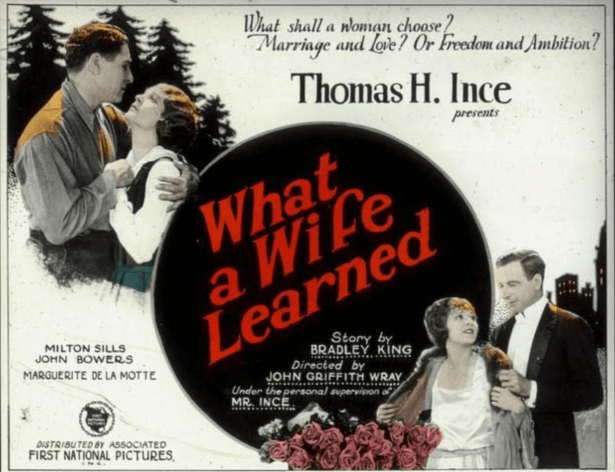
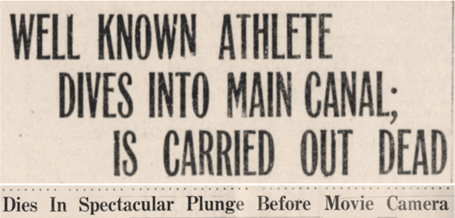
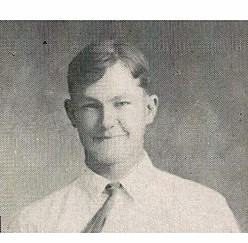
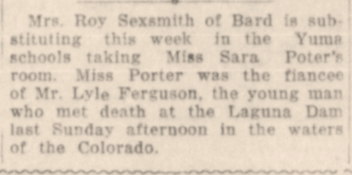
On Sunday November 20, 1921 the Thomas Ince film company was at the Laguna Dam to shoot the climactic scenes of its latest melodrama, “What a Wife Learned.” To simulate the destruction of the dam, the filmmakers constructed a temporary dam and filmed it being destroyed by raging waters released from the Laguna Dam. A 26-year-old Yuma man named Lyle Ferguson, along with his brother Frank, had been hired to do stunt work for the film. A month earlier Lyle had done stunts at the dam for the Robertson-Cole production, “The Call of Home.” Both stunt assignments involved a dangerous dive from the headgate of the Laguna Dam into rushing water, but tragically the November 20 dive resulted in a fatal accident when Lyle Ferguson struck his head on concrete. According to the newspaper, “hundreds of people” had gone to the dam to watch the filming. Lyle was a well-known graduate of Yuma High School who was managing his mother’s ranch at Laguna while earning extra income for his upcoming marriage to Yuma teacher Sarah Porter. The Yuma Morning Sun noted that “it was for the purpose of his impending happiness that he was doing stunts for the movie people.”
Lyle Ferguson and the Ferguson family
In 1885 Walter and Emeline Ferguson moved from Ontario, Canada to San Diego where their first two children, Clara and Lyle were born. In 1895 the family moved to Picacho, California where the youngest child, Frank, was born. Today Picacho is a ghost town located 30 miles north of Yuma, but at the turn of the 20th century it was a thriving gold mining camp. Picacho even had a school of about 90 students who were taught by Walter and Emeline Ferguson. According to Clara Ferguson Townsend’s 1954 reminiscence, her parents also operated a general store, a restaurant, and a boarding house. In addition, Emeline served as the camp’s postmistress! When Picacho’s gold had been depleted around 1910, the town quickly disappeared as well. It was around this time that Walter and Emeline divorced, and Emeline moved the children to a ranch near Laguna, located northeast of Yuma. (Walter remarried in 1912 and settled in Louisiana as a strawberry farmer.)
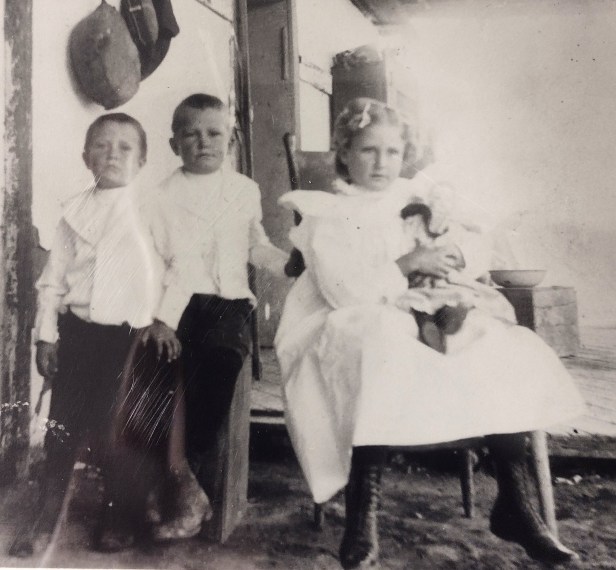
Picacho, California
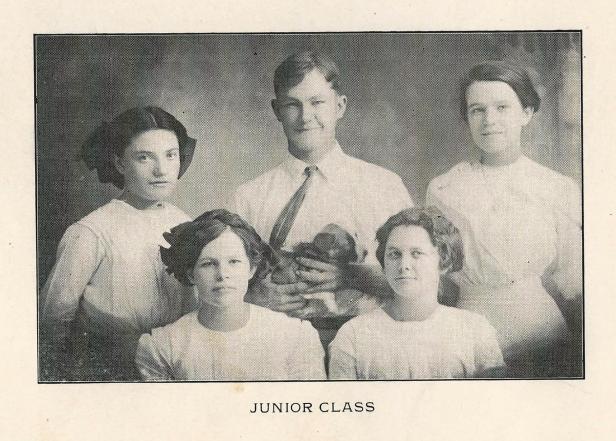
Lyle Ferguson was an original Yuma High School Criminal. He was a member of the final graduating class which attended classes at the old Arizona Territorial Prison from 1910-1913. The photo below shows Lyle with his 11th grade classmates.
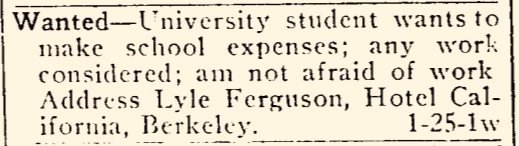
Lyle Ferguson worked his way through college, so it took him more than four years to obtain a degree in Agriculture from the University of California, Berkeley in May 1921. Note the “work wanted” ad below which Lyle sent from the Hotel California!
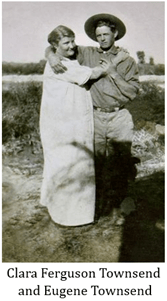
In 1915 Lyle Ferguson’s older sister Clara married Wade Ramsey, a U.S. Reclamation Service employee at the Laguna Dam who later became a farmer and rancher. Sadly, Wade died at age 35, leaving Clara with six young children to support. She and second husband Eugene Townsend became stalwarts of the North Gila Valley agricultural community, along with Lyle and Clara’s younger brother, Frank Ferguson, and his wife Beatrice. Ferguson and Townsend descendants remain in the area to this day.
Miss Sarah Porter
After graduating from Yuma High School in 1915, Sarah Porter embarked on a career as an elementary school teacher. Her first jobs were at the Rood school on Somerton Avenue and at the elementary school in Winterhaven, California. When the Fourth Avenue Grammar School opened in 1921, Miss Porter was hired to teach sixth grade. Sarah Porter and Lyle Ferguson had planned to get married in May 1922, so we will never know if Sarah’s teaching career would have continued, nor will we know precisely what direction Lyle’s career would have taken, since he died only a few months after earning his degree from the University of California.

For a female teacher in Yuma in the1920s, getting married was a risky career move. When she joined the inaugural faculty of Fourth Avenue Grammar School, Miss Porter worked with several married women teachers, but if she had gotten married the following spring as planned, teaching at the high school level might not have been an option for her. In 1924 the Yuma High School board adopted a controversial policy of official discrimination against married women teachers.
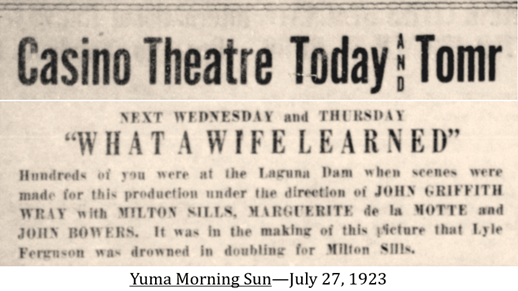
One can only imagine the emotions experienced by Sarah Porter and the Ferguson family when the movie “What a Wife Learned” finally appeared in Yuma theaters nearly two years after Lyle’s death. Newspaper ads and articles about the film made a point of mentioning the details of the Laguna Dam filming tragedy.
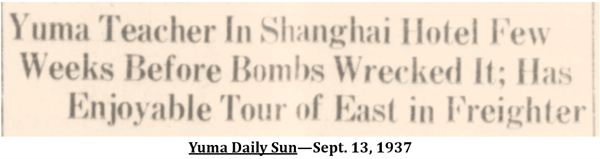
Sarah Porter enjoyed traveling during her summers off from teaching. She took several trips with her sister and niece in California, but in 1937 Sarah alone booked passage in San Francisco on a freighter to the Orient. Miss Porter’s three-month expedition would have been memorable under normal circumstances, but the timing of Sarah’s trip nearly placed her in the middle of the Second Sino-Japanese War! As the headline indicates, Sarah Porter had stayed at the Palace Hotel in Shanghai just weeks before the August 14 (“Bloody Saturday”) bombing. Following her safe return to Yuma, Miss Porter was invited by several local civic groups to talk about her “enjoyable” Asian travels.
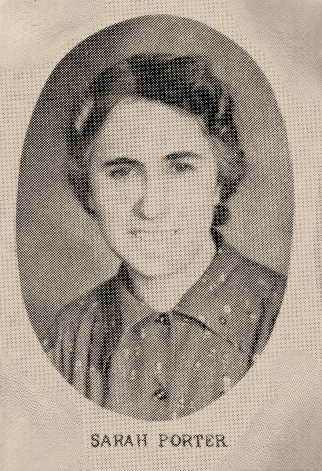
Sarah Porter had been a teacher for over 20 years when this photo was taken in 1939, and she would teach for 20 more years, retiring in 1959. Hundreds of students were taught by Miss Porter, primarily at Fourth Avenue Grammar School (later Fourth Avenue Junior High School). She was well known in Yuma due to her membership at St. Paul’s Episcopal Church, as well as her participation with the Eastern Star, Delta Kappa Gamma, and other organizations.
Sarah Porter died on April 10, 1984 at the age of 89, sixty-three years after the death of her fiancée Lyle Ferguson.
Postscript—October 19, 1924: A Tragic Sequel
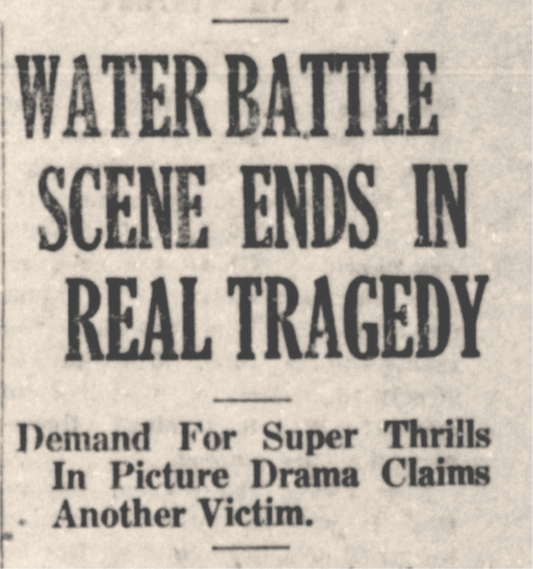
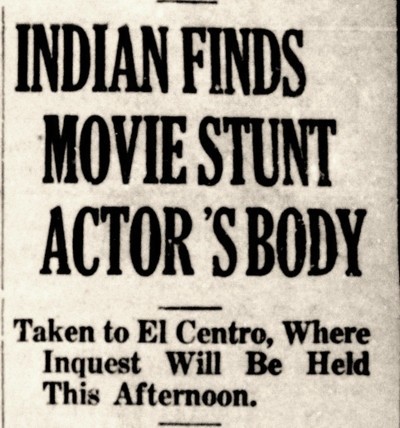
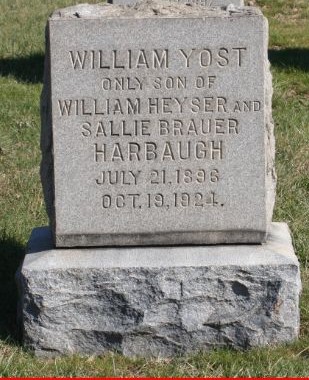
William Harbaugh, a former traveling salesman of household goods, had recently moved to Hollywood from Richmond, Virginia when he was hired to do stunt work for the Thomas Ince film company. Just as Lyle Ferguson’s fatal accident occurred on a Sunday afternoon in front of many spectators, William Harbaugh’s drowning at the Laguna Dam happened on Sunday October 19, 1924. A crowd of onlookers had gathered to watch the filming of a fight scene in the water between two stuntmen doubling for the film’s leading actors. William Harbaugh was doubling for actor Victor McLaglen, who was just beginning his long career in motion pictures. Newspaper accounts indicate that Harbaugh’s safety rope came loose in the second take of the fight scene, causing him to get swept into a whirlpool. Rescue efforts failed, and William Harbaugh’s body was not recovered until several days later.
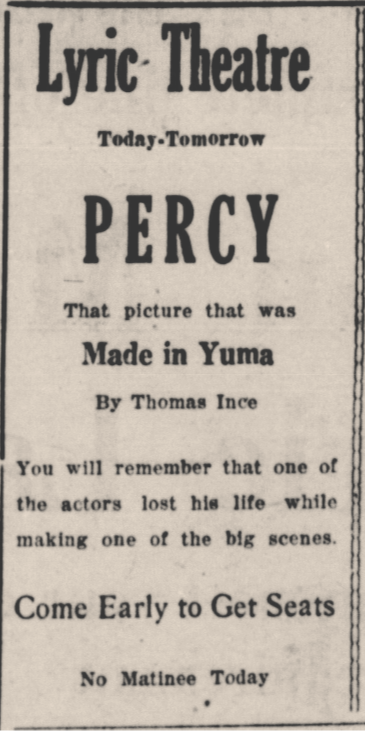
The Yuma newspaper did not temper its outrage over the death of William Harbaugh: “The insatiable demand for the super-thrill in the motion picture drama claimed another victim.” The Ince company made no more films at the Laguna Dam, because exactly one month after William Harbaugh’s tragic death, Thomas Ince died at the age of 44. When the completed film, “Percy,” finally appeared at the Lyric Theatre in January 1926, newspaper readers were reminded that “one of the actors lost his life while making one of the big scenes. Come early to get seats.”
 Yuma History Guy
A great article. Lyle Ferguson is my great uncle and I was named after him.
LikeLike
Thanks very much for the comment. It was an interesting project for me, and I’m glad you enjoyed it.
Jim
LikeLiked by 1 person
Fun to see this blog about Yuma Arizona! Interesting to see that William Harbaugh’s former job as a traveling salesman of household goods – it takes some hustle to make that work!
LikeLike