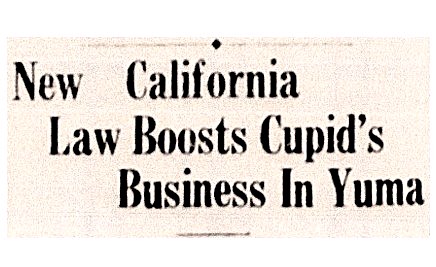
In the years following California’s “gin marriage” law of 1927, a marriage industry emerged in Yuma to take advantage of the town’s unique and unexpected opportunity. Thirty years later that opportunity disappeared, along with the marriage industry it had given rise to.
Just as the original Gretna Green in Scotland became a wedding haven in the 1750s when neighboring England imposed more restrictive marriage requirements, Yuma became a destination for California couples wishing to avoid their state’s new three-day waiting period. It was the twin happy accidents of legislation and location—plus a lot of ingenuity and hard work—that combined to make Yuma the “Gretna Green of the Southwest” where over 300,000 marriages occurred between 1928 and 1957. In this article I will detail some of the events, accomplishments, and individuals involved in the business of marriage during Yuma’s “wedding chapel era.”
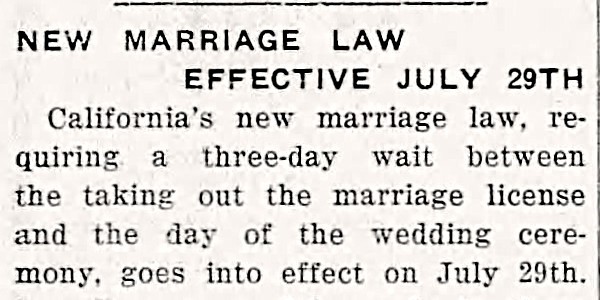
California’s “Gin Marriage” Law—Effective July 29, 1927
Reformers during the Prohibition era wanted to prevent couples from making hasty, alcohol-impaired marriage decisions. California was one of several states to pass what were referred to as “Gin Marriage” laws. Since the California law required marriage license applicants to serve a 3-day waiting period before getting married, the impact on the bordering town of Yuma was immediate. Arizona did not require a waiting period . . .
In 1926, the year before California’s new marriage law, only 274 marriages took place in Yuma County. This figure grew to 774 in 1927 and 1,769 in 1928. These numbers grew each year, reaching a staggering all-time high in 1942 of 22,486 marriages.
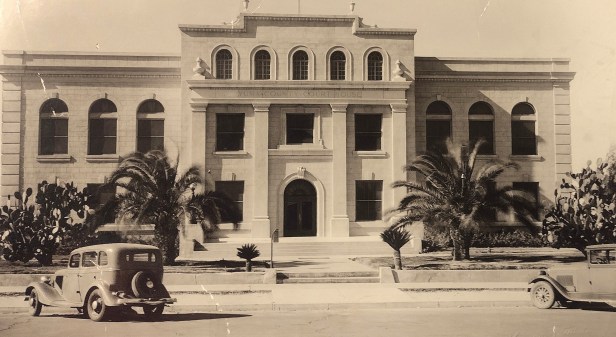
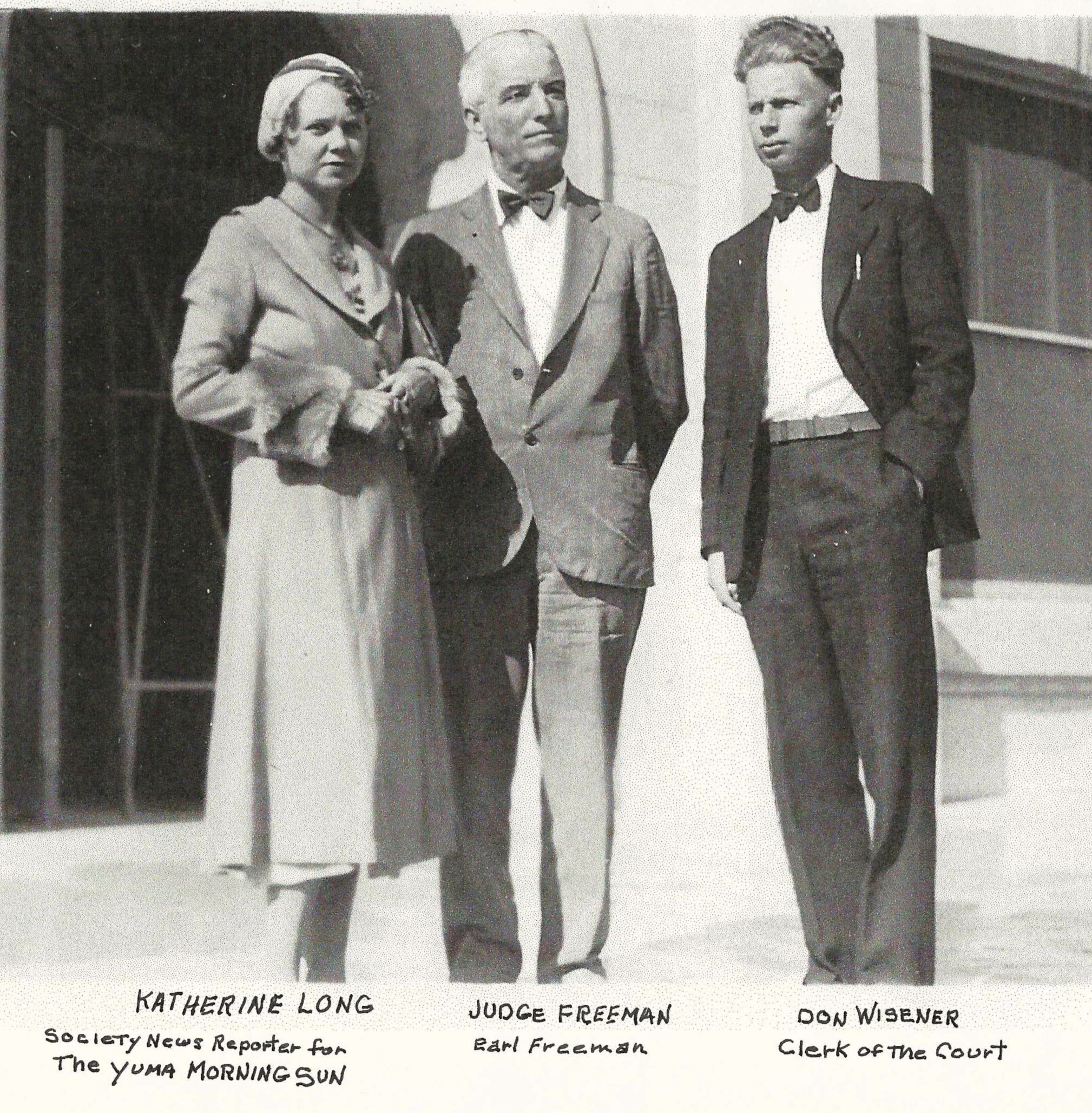
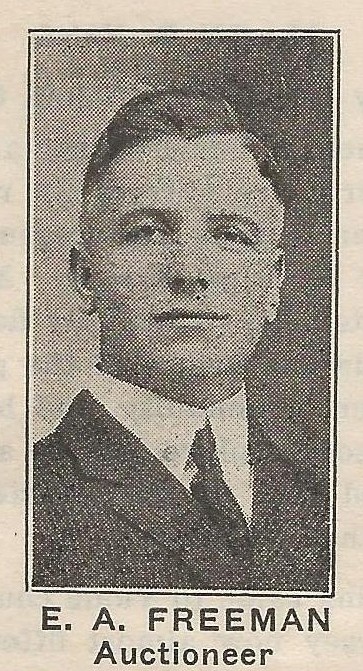
When Earl Freeman was elected Justice of the Peace in 1926, the former auctioneer from Ohio could not have envisioned that in the next 10 years he would marry some 26,000 couples—including dozens of Hollywood stars—and that he would become nationally known as “Yuma’s Marrying Judge.” Several years before Yuma’s well-known wedding chapels opened, the Freeman residence at 661 Orange Avenue had a monopoly on after-hours marriages.
Earl Freeman worked closely with court clerk Donald Wisener and the newspaper’s society reporter, Katherine Long. Wisener issued marriage license applications to couples, while Long documented nearly every celebrity couple that eloped to Yuma.

Earl Freeman, an unlikely celebrity
Love is in the air
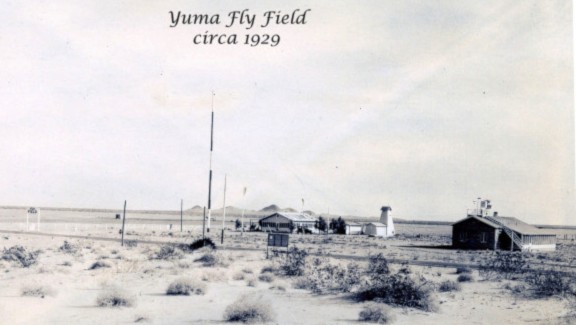
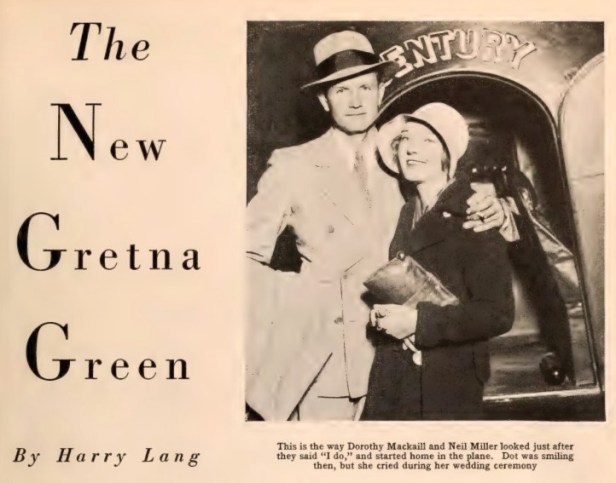
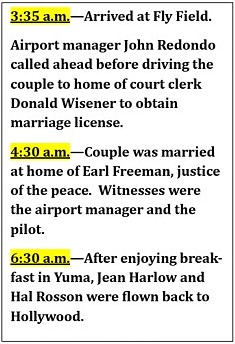
In the early 1930s it became fashionable for Hollywood stars to elope by air to Yuma—often in the middle of the night. For example, here is the October 15, 1933 elopement itinerary of actress Jean Harlow and cameraman Hal Rosson:
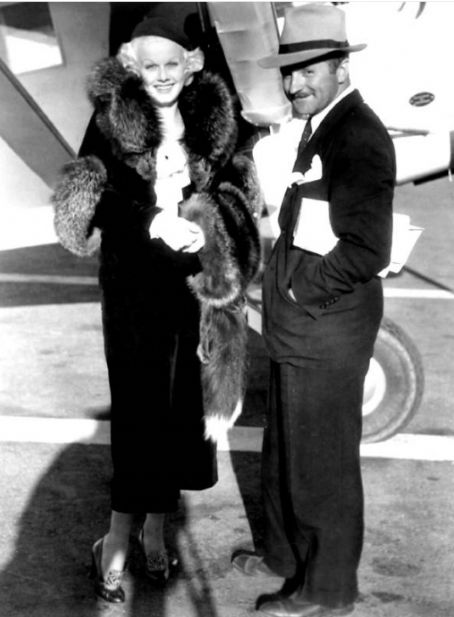
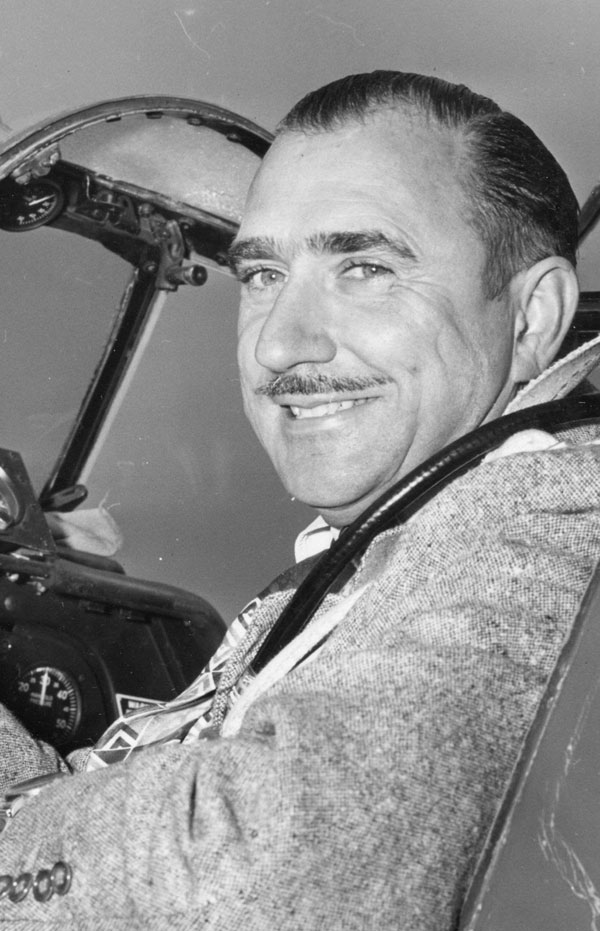
Paul Mantz’s “Honeymoon Express” was the best known of several charter air services which flew California couples to Yuma for marriage.
Charter flights from Paul Mantz’s Burbank hanger to Yuma cost between $105 and $140. Flight time on his “fast plane” was around 1 hour and 20 minutes. In 1947 Paul Mantz noted that he rarely flew to Yuma anymore: “Nowadays we fly more people to Reno to get a divorce. They’re not in such a rush to get hitched anymore—but they sure want to get it over with in a hurry.”
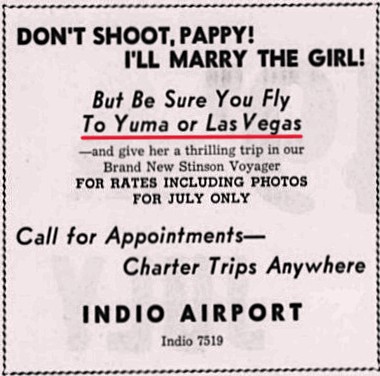
Other charter air companies also offered flights to Yuma, and it wasn’t only movie stars who used these services. This ad for Indio airport charter flights is from July 1946.

The L.A. Times article reported that retiring Justice of the Peace Earl Freeman “is said to have accrued a sizeable fortune in fees.” No evidence was cited in the article beyond rumors of Hollywood stars paying Freeman up to $1000 for his services.
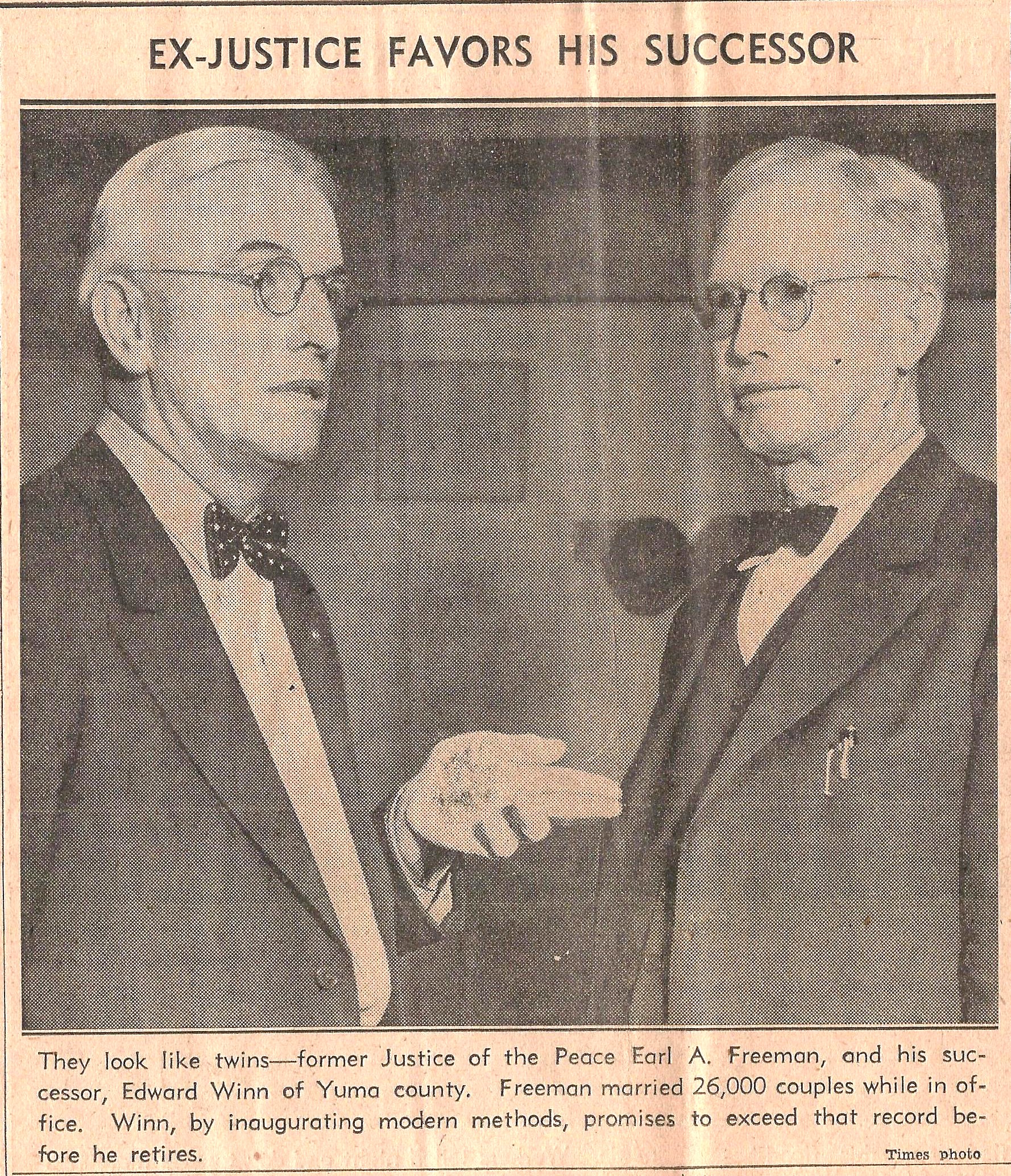


It cannot be a coincidence that Justice of the Peace Ed Winn suffered a nervous breakdown several months after installing an electric sign at his residence announcing his all-night wedding services.
“Solicitation” of Wedding Couples

Justice of the Peace Ed Winn with two of his “solicitors”. (The one on the right is Winn’s daughter.)
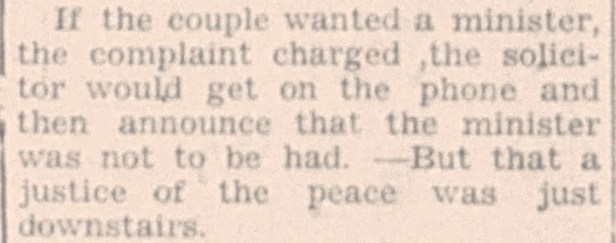
A complaint to the Board of Supervisors was filed by Rev. Pulliam charging that Ed Winn’s “solicitors” were dissuading couples from seeking a minister while directing them instead to the office of the Justice of the Peace for their marriage ceremonies.


Henry Kelly was Yuma’s Superior Court Judge from 1931 to 1959. His opposition to Ed Winn’s marriage solicitors was stridently expressed in a January 25, 1937 letter to the County Supervisors:
” . . . the public nuisance existing in the Yuma County Court House by the disgraceful and dishonorable conduct of the new Justice of the Peace, Hon. Ed Winn, connived and abetted by Mr. J.G. Livingston, the Clerk of our Superior Court, with reference to the degrading and filthy capping of parties arriving here on the legitimate business of contracting marriage. I call upon you to take appropriate action to clear away the stench thrown upon us all by the outrageous acts of these two derelict and greedy officers.”
In fact, Judge Kelly himself was a prime player in Yuma’s marriage industry, marrying thousands of couples in his chambers and at his residence. In an April 28, 1986 column, Bob Werley recalled how the judge’s lady friend, law librarian Fama Townsend, would act as a de facto solicitor for Judge Henry Kelly: “When not busy as a librarian, Townsend kept an eye on the clerk’s office . . . She’d sort of guide the just-licensed couple to the judge’s chambers.” Bob Werley also noted that Judge Kelly didn’t let his trial responsibilities curtail his marriage duties. According to Werley, Henry Kelly’s court clerks would pass secret notes to the judge when his matrimonial services were needed. Once notified, the judge would promptly call for a short recess in order to retreat to his chambers to conduct a discreet three-minute marriage ceremony.
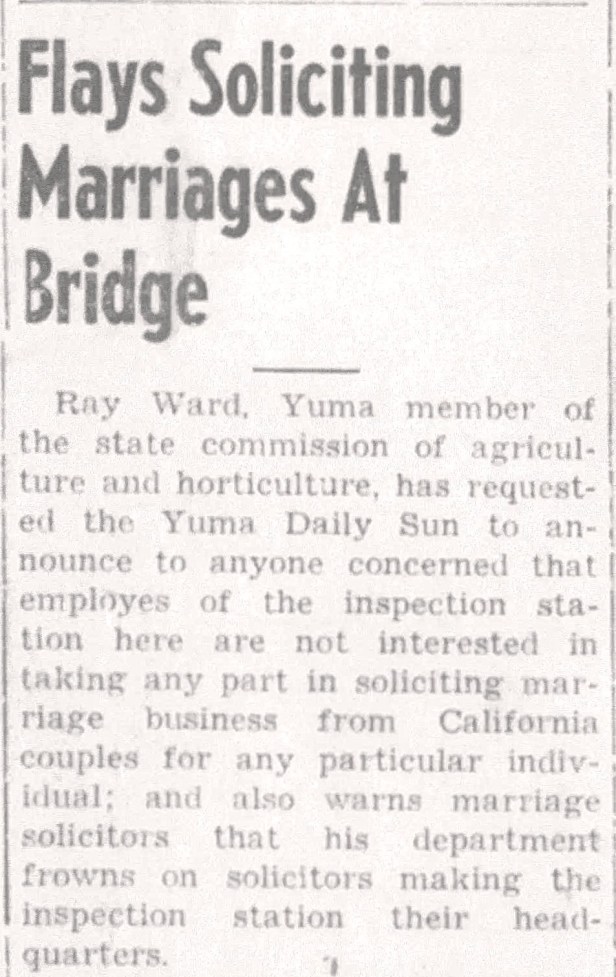
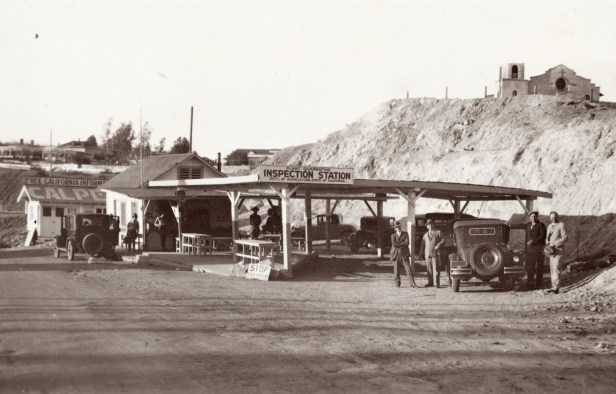
Just before motorists entered Yuma from California, they passed through the Agricultural Inspection Station. The article below quotes a state official complaining about “solicitors making the inspection station their headquarters.” He also made clear that the Inspection Station staff would not participate in any solicitation efforts: “We want no part in the whole matter . . . and that applies to preachers as well as to anyone else.”
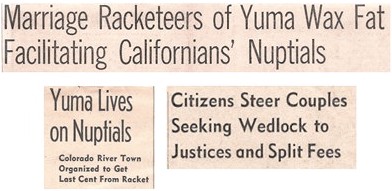
In January 1937 the Los Angeles Times published an exposé of Yuma’s quickie marriage “racket.” The series was heavy on indignation and rumor, while implying that the entire town of Yuma was trying to benefit financially from its marriage industry. (If there is a Headline Hall of Fame, the headline directly below deserves selection.)
“They want their cut of the fee they hope you’ll pay to the man who ties the knot. They are the wedding solicitors.”
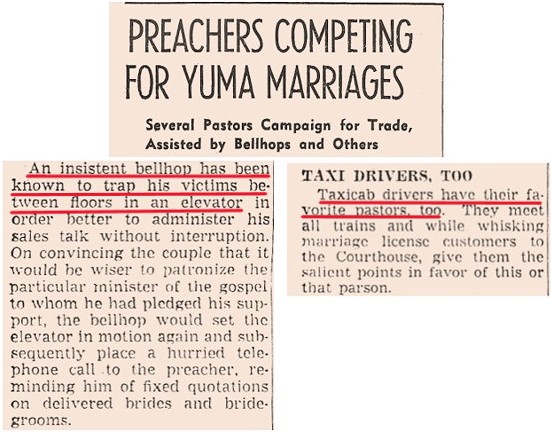
Memories of “hustling for couples”
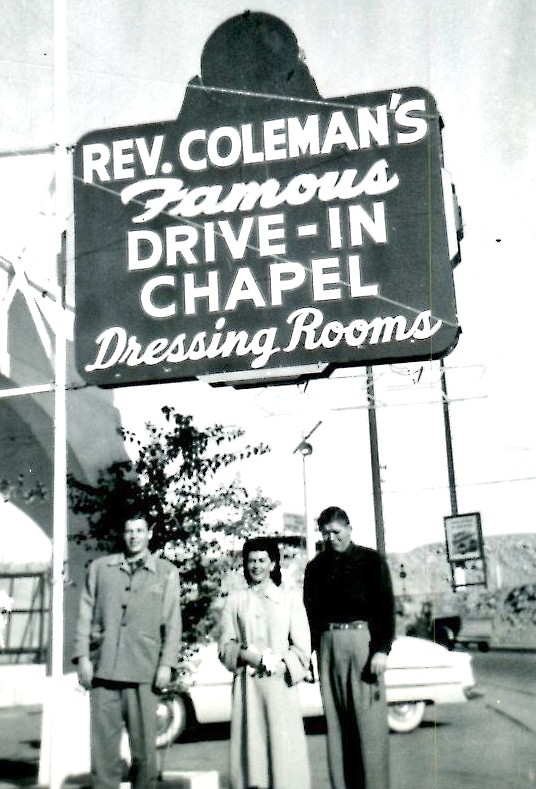

Motorists entering Yuma from California onto First Street encountered several wedding chapels located within a few blocks. Rev. James Coleman, who operated his “Famous Drive-In Chapel” from 1948-1954 had the first chapel on Yuma’s “chapel row,” while the second chapel in the above photo was owned by Justice of the Peace R.H. Lutes. Each of these chapels was a former auto service station, and Rev. Coleman continued to offer “auto laundry” service at his drive-in chapel. For more about James and Lucille Coleman, see my earlier article, “Rev. James Coleman’s Drive-In Wedding Chapel.”
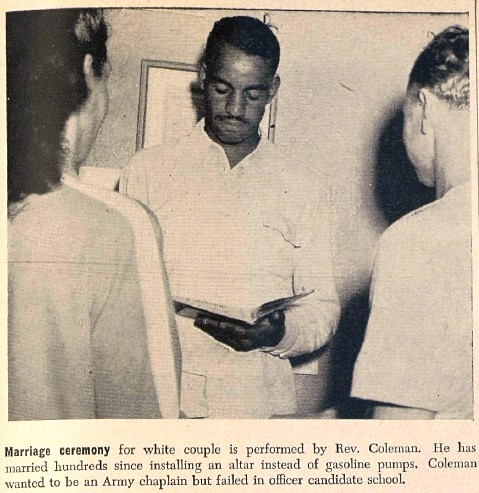
James Coleman estimated that he married around 9,000 couples in his chapel. In the article on the right Rev. Coleman, at age 70, reminisced about “hustling” couples for marriage during his wedding chapel days.
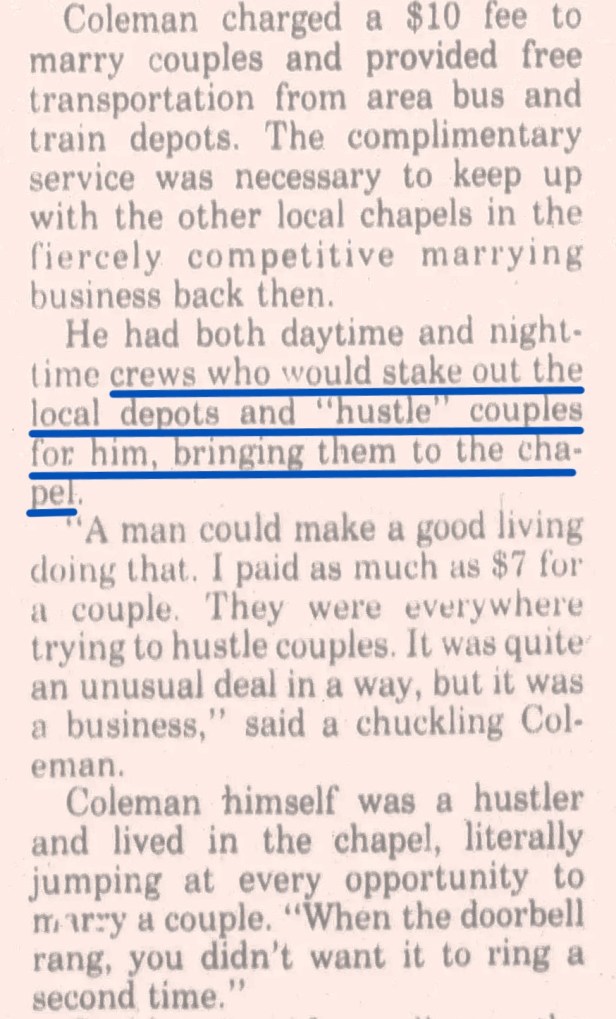

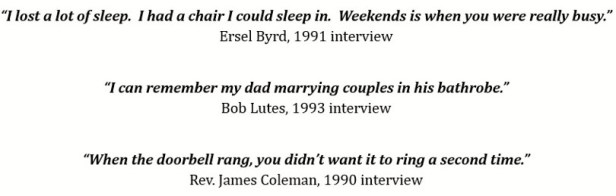
In a 1993 oral history interview Bob Lutes shared his memories of Yuma’s battling wedding chapels: “They used to hustle the couples, the service people, and they’d meet trains. The taxi cab people would meet the buses, and, if they brought a couple to one of the chapels, they would get a kickback for bringing people in.“
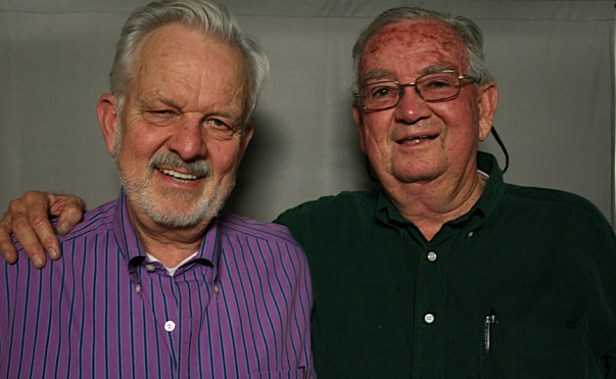
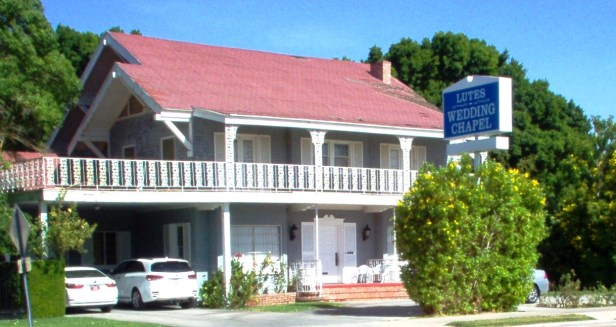
Following R.H. Lutes’ tragic death in 1962 at age 52, sons Bill and Bob helped their mother Georgia manage the Lutes Wedding Chapel pictured above. Today later generations of the family continue to operate the chapel at 500 W. 1st Street which first opened in 1956. Bill Lutes died at age 88 on January 23, 2026.
A 2022 Slate.com podcast titled, “One Year: 1942—The Year Everyone Got Married,” includes a very entertaining exchange between Bob and Bill Lutes about growing up in the wedding chapel business and working for their father at ages 5 and 7! [Click here to listen.]
Slate.com podcast excerpt:
Bill Lutes: So for a long time, Bob and I as little boys, we used to have to ride with these couples to the courthouse [to get their wedding license] to accompany them to be sure they got back to us.
Josh Levin: You were like the collateral?
Bill Lutes: Yeah, we were keeping the wolves away from them.
Josh Levin: That’s how the kids helped out during the day. At night they had a different job.
Bob Lutes: My dad would put me up in front of the wedding chapel, and he put a ping pong table out there, and I’d stay all night playing ping pong, waiting on the watch for people driving across from the river into Yuma, and I’d be on the watch for them to run ’em down.
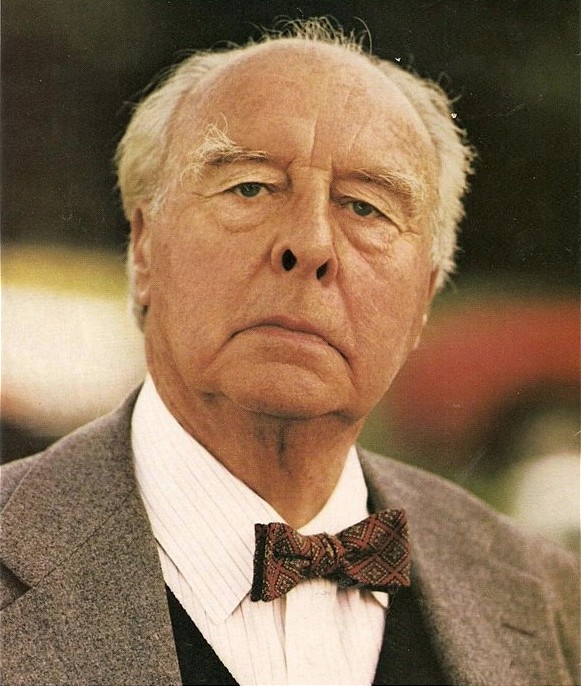
In his 1979 memoir, Front and Center, actor John Houseman snarkily recalled his December 1950 elopement to Yuma with actress Joan Courtney. The couple was accompanied by Aileen and Alan Napier. Each of the men would go on to play iconic television roles late in their careers: Professor Kingsfield (“The Paper Chase”) and Alfred the Butler (“Batman.”)

Advertising and Promotion

Rev. Brown’s card alerted eloping couples that his residence was located “opposite court house.”
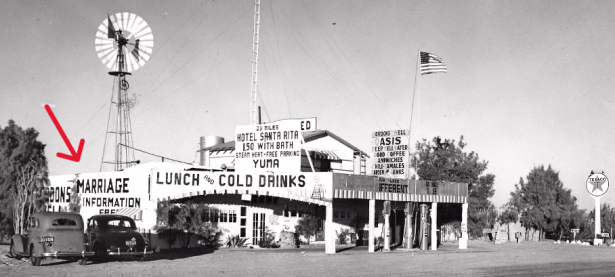
California couples traveling to Yuma on Highway 80 could stop at Gordon’s Well for free “marriage information.” Quite possibly, couples would be referred to a particular Yuma wedding chapel that was allied with the Gordon’s Well proprietors. Ministers, including Rev. J.B. Brown, provided business cards to the court clerk’s office as resources for couples seeking a minister of a particular denomination to conduct their wedding.

“Gaudy, multi-colored lighted signs on the western approaches to Yuma beckon California elopers to marriage chapels.”
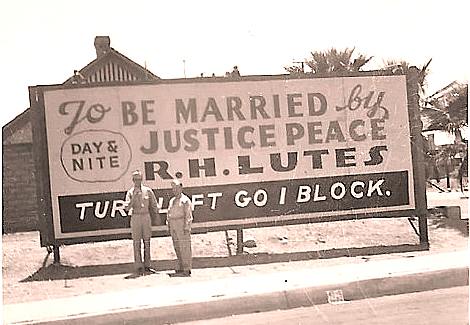

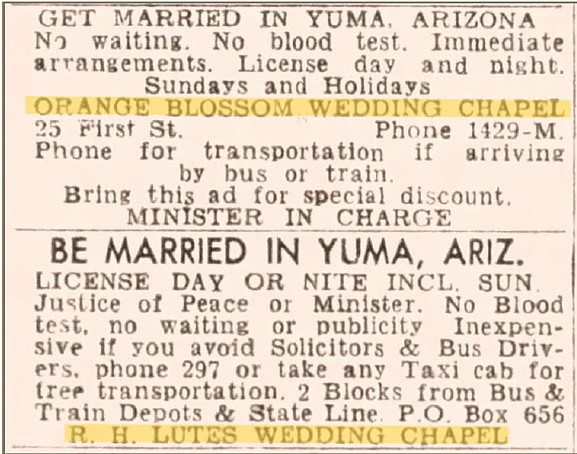
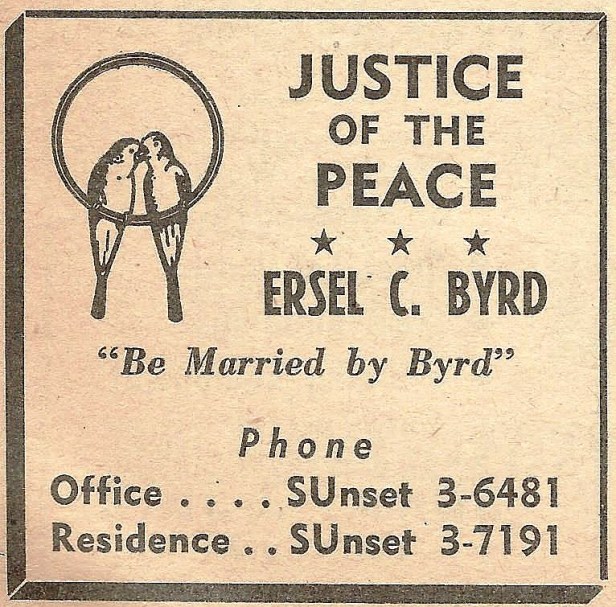
Yuma chapel owners routinely placed ads such as these in California newspapers. R.H. Lutes also advertised his chapel in numerous out-of-town telephone directories.
24 Hours a Day
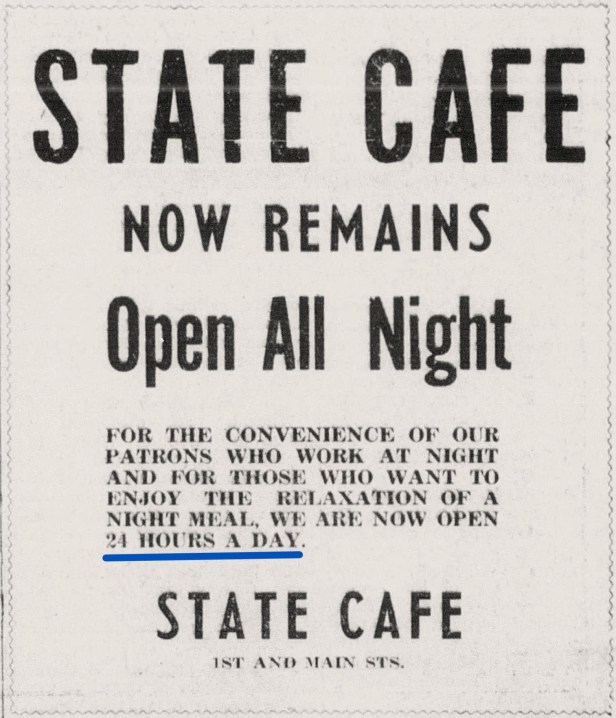
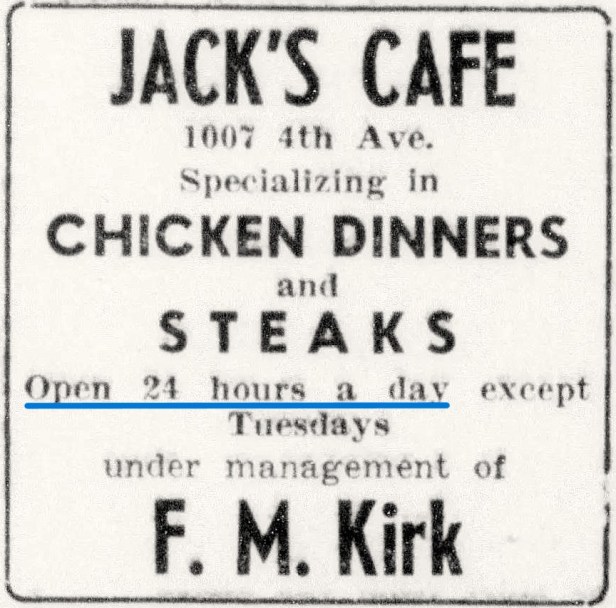
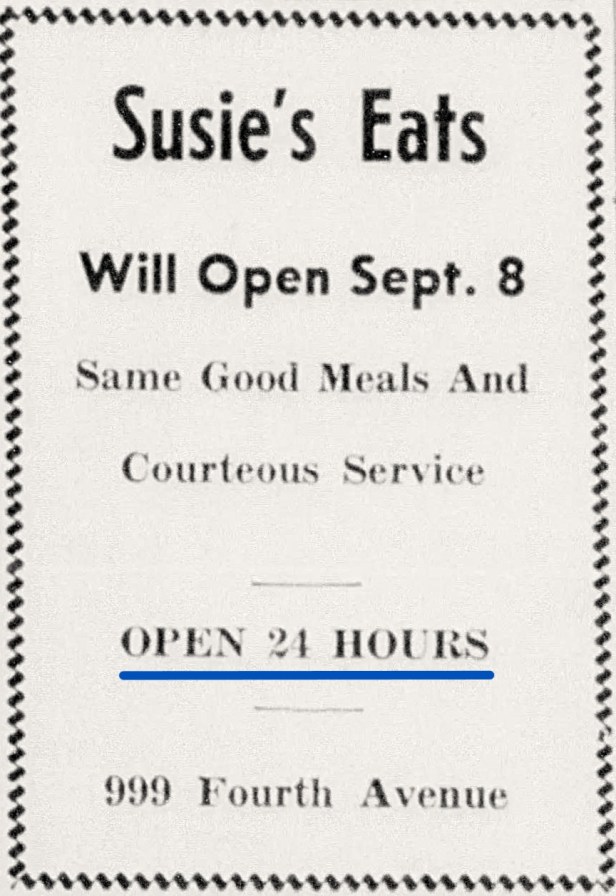
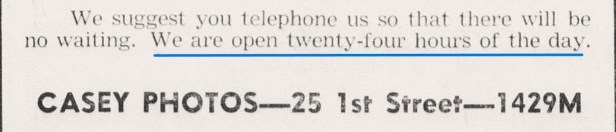
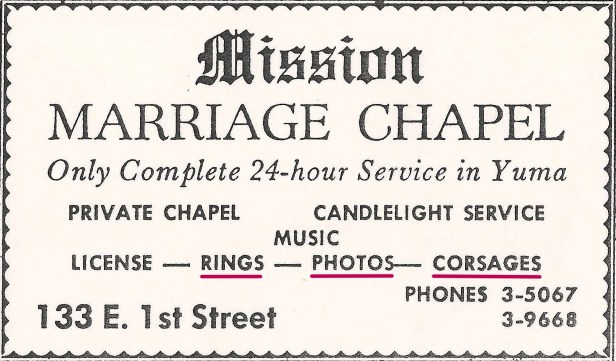
Yuma’s 24-hour wedding services led other local merchants to stay open all night, particularly restaurants, bars, taxi companies, and auto service stations. But a 24-hour photo shop? Casey Photos must have felt the need to match the hours of the wedding chapels—some of which offered photos, as well as rings and corsages.
R.H. Lutes—Justice of the Peace, 1941-1950
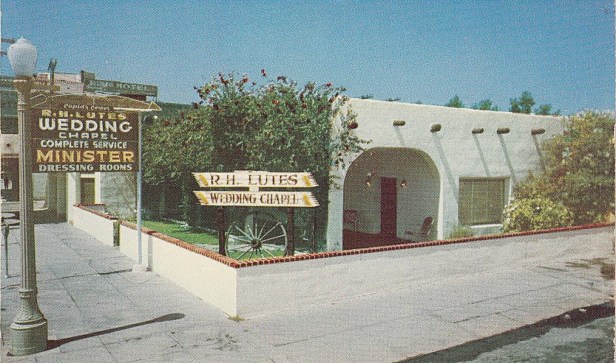
In the 1940 election, Earl Freeman sought to regain his old position as Yuma’s Justice of the Peace. However, Freeman was upset by R.H. Lutes who had come to Yuma from Calexico in 1930 and opened a soda fountain called the Green Spot Sweet Shop. (R.H. Lutes and wife Mary, aka “Georgia,” had been married by Earl Freeman on January 14, 1934.) About the time he took office as Justice of the Peace, R.H. Lutes opened his first wedding chapel at 861 1st Street before moving to the chapel pictured below.
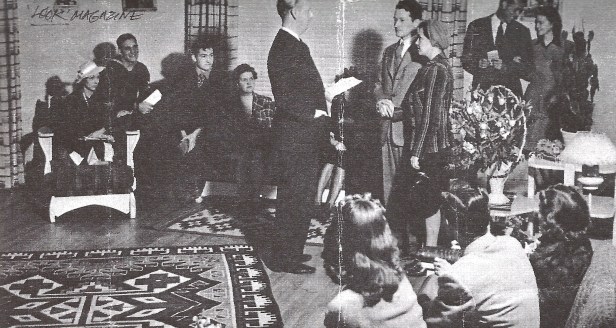
The above photo–reportedly from Look magazine–shows R.H. Lutes conducting a marriage ceremony while other couples wait their turns. One of the grooms is wearing a Navy uniform. The war years saw countless West Coast soldiers and sailors elope to Yuma for quickie marriages before being deployed. In total, Lutes claimed to have married nearly 60,000 couples as Justice of the Peace.
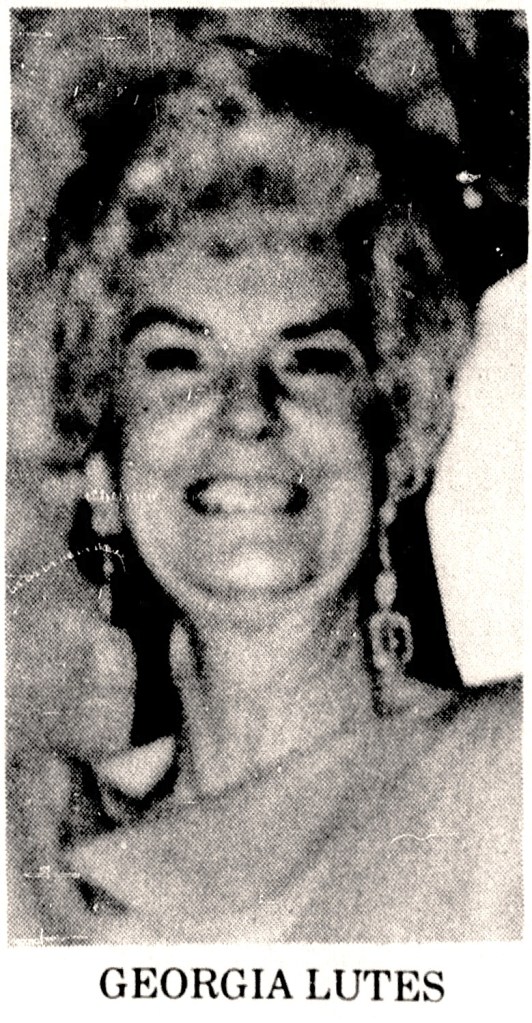
Georgia Lutes served as Yuma’s acting Justice of the Peace from 1944-1945 while her husband was serving in World War II. In a February 1993 oral history interview, son Bob noted his mother’s kindness to servicemen who came to the chapel for marriage: “If they were soldiers, a lot of times she would feed them. Mom would take care of them, make them feel at home.”
Marriage Fees?
Much has been written—in general terms—about Yuma’s marriage officials making large sums of money from their marriage services. Unfortunately, there is not much concrete documentation to indicate the income of these individuals. For most of the time period in question, the fee for an Arizona marriage license was $2.00. Several of the chapels advertised a charge of $10.00 for the wedding service itself. The chapels typically sold items such as rings, flowers, and photographs. After hours marriages seem to have required additional fees. And, yes, some eloping celebrities were very generous tippers. Obviously, many young couples arrived in Yuma with limited budgets for their wedding expenses.
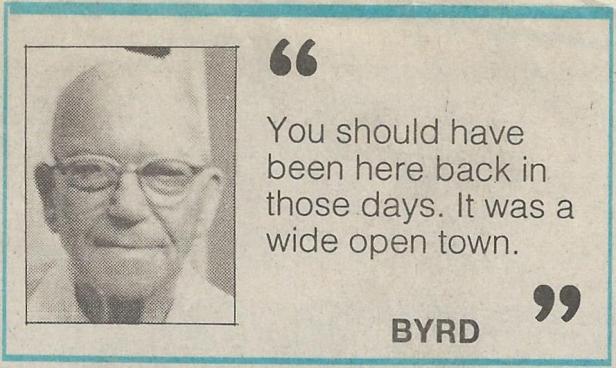
In a September 28, 1986 column, Yuma newspaperman Bob Werley provided a humorous anecdote about the marriage fees of Justice of the Peace Ersel Byrd:

Outside Events


The above headline on the left refers to the blood test requirement which went into effect in California in mid-September 1939. The headline on the right reports that in 1943 California was dropping its 3-day waiting period requirement. California’s mandatory blood test remained in effect, but the headline is correct in suggesting that marriages in Arizona would see a decline. Gas rationing—and rubber rationing—also contributed to a decline in Yuma marriages:
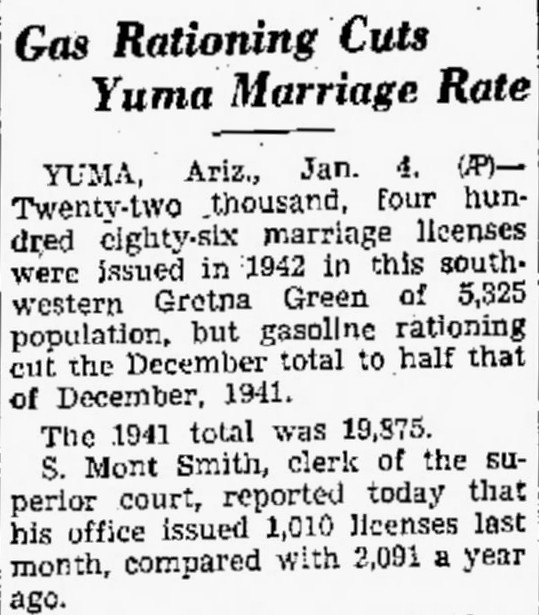
Married in . . . Yuma County

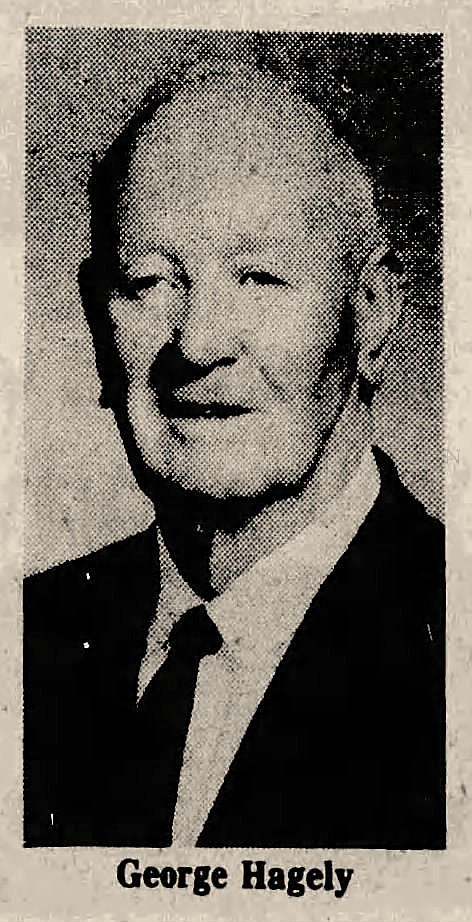
Prior to the creation of La Paz County in 1983, northern Yuma County included several communities with justices of the peace who, along with the towns’ ministers, added significant numbers to the total marriages that took place in Yuma County. George Hagely was Quartzsite’s Justice of the Peace from 1946 to 1977. Hagely, whose residence bore a sign stating “Let’s get married,” estimated that he married around 43,000 couples during his tenure.
The End of Yuma’s Wedding Chapel Era

Thanks to strong support from the state’s churches, Arizona voters overwhelming approved Proposition 200 in November 1956. Couples now had to wait 48 hours after submitting a wedding license application before they could marry in Arizona. A mandatory blood test was also now required. Even Yuma County voters supported the new changes. (Arizona’s 48-hour waiting period was eliminated in August 1972, and the blood test requirement was dropped in August 1984.)
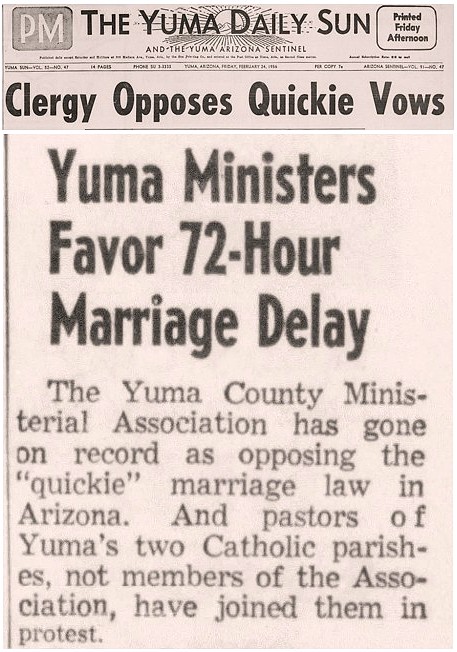

Arizona’s newly restrictive marriage law went into effect on December 7, 1956, and its impact on Yuma’s wedding industry was immediate. In 1956 Yuma County had been the site of 14,286 marriages. In 1957 the number of marriages dropped to 2,188. The Lutes Wedding Chapel—which remains in business today— was the only local chapel to survive the Proposition 200 vote.
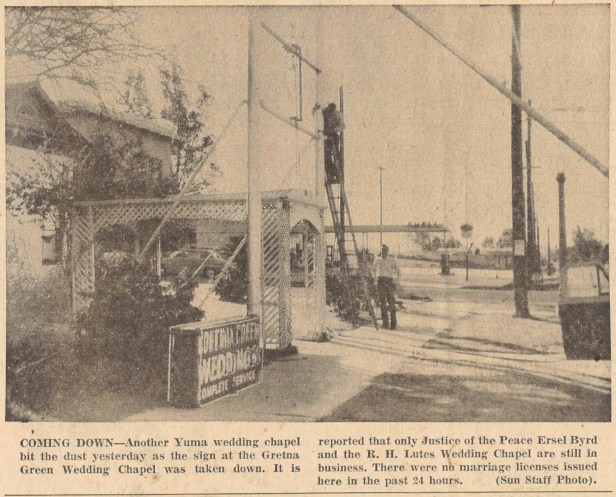
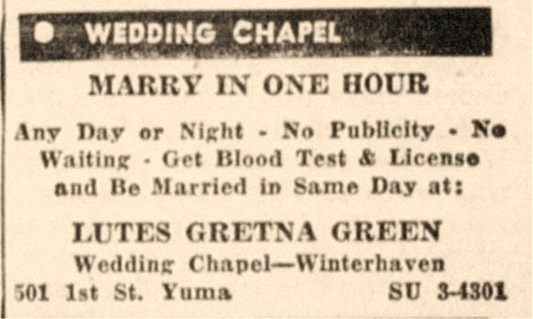
The enterprising Lutes family adapted to the new marriage law by opening a second wedding chapel across the state line in Winterhaven, Califorina. Couples were given a blood test in Yuma and then transported to the Winterhaven city clerk’s office to obtain a California marriage license—and then delivered to the Winterhaven chapel to obtain their “quickie” marriage.
 Yuma History Guy