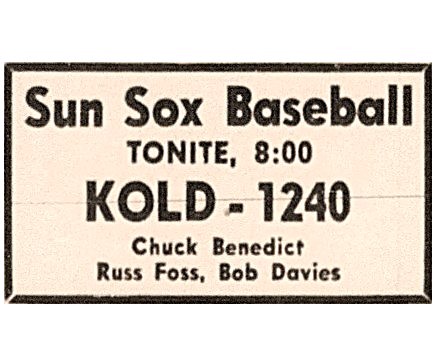
Following a boom in fast-pitch softball after World War II, Yuma became the home of two Class C minor league baseball teams: the Yuma Panthers (1950-1952) and the Yuma Sun Sox (1955-1956). Both teams struggled financially as they struggled to attract fans to summer baseball games in Yuma. But Yuma’s first two minor league teams had some significant differences. The Yuma Panthers traveled in a bus, while the Yuma Sun Sox were transported to road games in three “red and cream-colored” automobiles. And while the Panther games were not broadcast on the radio, Sun Sox home games were broadcast live by station KOLD.
The Panthers, Yuma’s first minor league team, had been born in 1950 thanks to the hundreds of local baseball supporters who purchased stock in the Yuma County Sports Association. The Panthers drew on the community’s love of baseball and the sense of civic pride generated by the new team. Local merchants donated goods and services, while Yuma’s citizens supported the team’s many fundraising efforts. The City of Yuma made available an impressive new ballpark which was branded “Panther Field.” Unfortunately, the ballclub had losing records in each of its three seasons, while the team’s accumulated debts of over $25,000 forced the Panthers to cease operations at the conclusion of the 1952 season.
By contrast, the Sun Sox were privately owned by two ambitious, out-of-town investors: John Carleton and Dick King. A local board of directors was formed, but Yuma’s second minor league ballclub was not accepted by the community as “our team” to the extent that the Panthers had been. And some of the Panthers’ most ardent local supporters still smarted from the painful demise of the town’s first minor league team. Even the City of Yuma showed caution before approving the use of Yuma Municipal Baseball Park by the Sun Sox.
(Pre-Sun Sox) Spring Training Teams in Yuma—Baltimore Orioles (1954) / Sacramento Solons (1955)
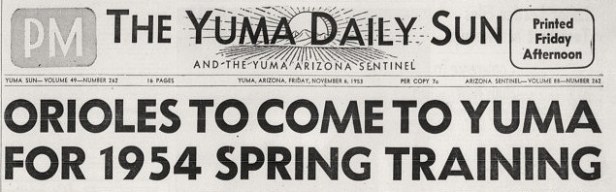
After St. Louis Browns owner Bill Veeck contracted the team to train in Yuma in 1954, he sold the team to a group from Baltimore who did not hide their preference for having their newly-christened Orioles train in Florida. Unfortunately, two of the Orioles’ seven Yuma exhibition games were cancelled due to weather—one by a rare rainout and the other by high winds. The Orioles did not return to Yuma, but 1955 saw a team from the Pacific Coast League arrive for spring training:
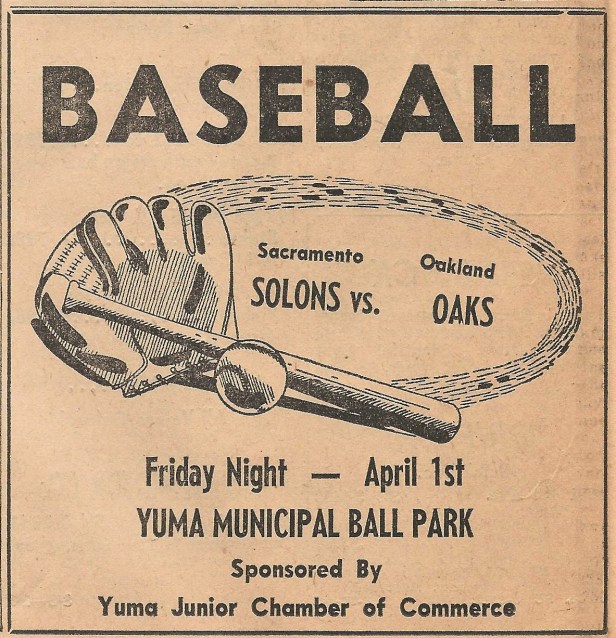
The Sacramento Solons negotiated to use Municipal Ballpark several months before the Sun Sox were formed. The Sacramento ballclub did most of its Yuma training in March, and the final spring training game was on April 1, so there were minimal scheduling conflicts with the new Sun Sox team. Nonetheless, the Solons, who wanted to return to Yuma in 1956, were turned down—a regrettable decision in hindsight.
An 11th-hour entry into the 1955 Arizona-Mexico League
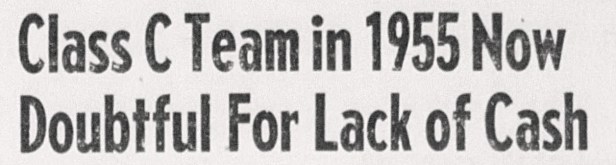
When Yuma was first approached as a potential site of an Arizona-Mexico League franchise, local baseball boosters failed to come up with the needed finances. As the headline states, chances of a 1955 ballclub were doubtful . . . until John Carleton and Dick King stepped up as prospective owners.
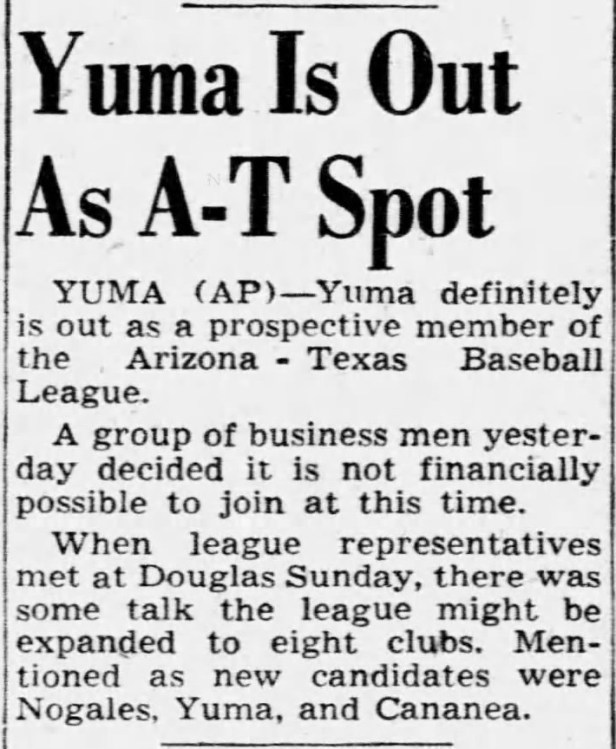

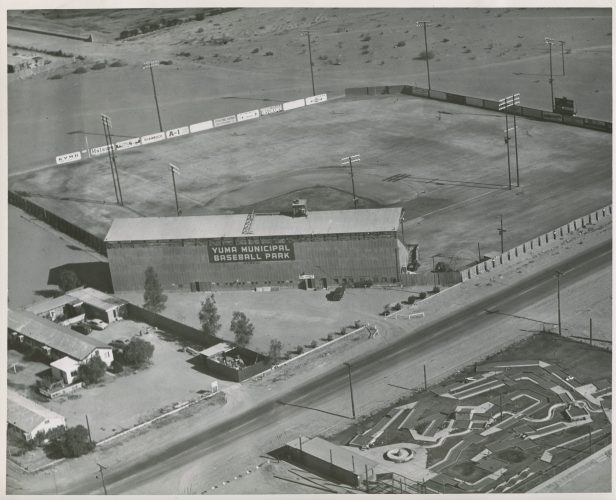
Yuma’s entry into the Arizona-Mexico League was contingent on the City of Yuma allowing the new team use of the Municipal Baseball Park at no cost.
The Sun Sox owners, John Carleton and Dick King, originally agreed to pay the ballpark’s monthly electric bill, and the team’s failure to do so became a point of contention with some City Council members.
Sun Sox Profile: John Carleton & Dick King, owners (1955+)
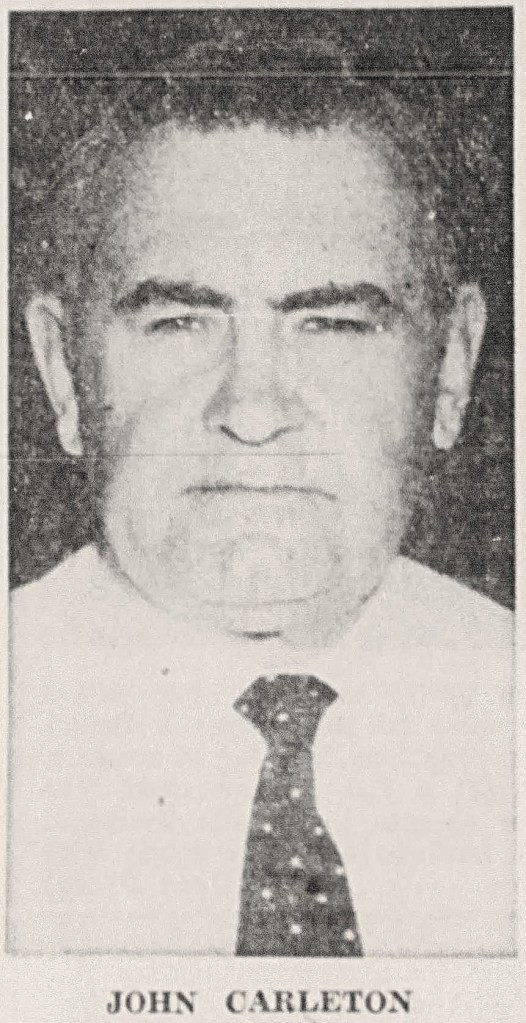
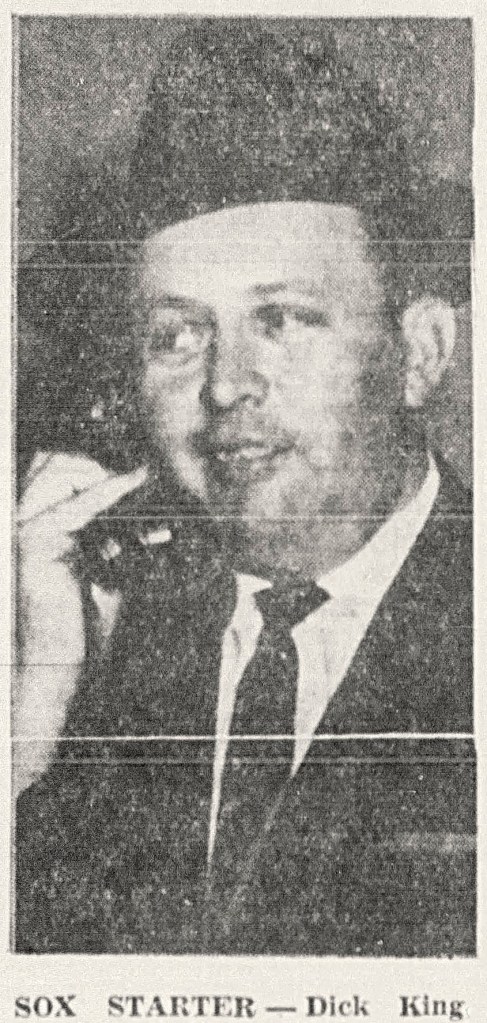
John Carleton and Dick King, the original Sun Sox owners, were the men responsible for bringing minor league baseball back to Yuma after a two-year absence. John Carleton had most recently been public relations director for the Pampa (Texas) Oilers, but he was also a former umpire, a combat veteran of World War II, and a practicing attorney. Carleton’s younger co-owner, Dick King (birth name Diogenes Karabatsos), also had a public relations background which would serve him well in a 50-year baseball career working for several minor and major league organizations.
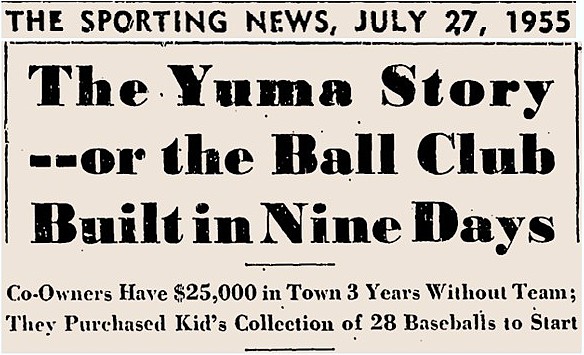
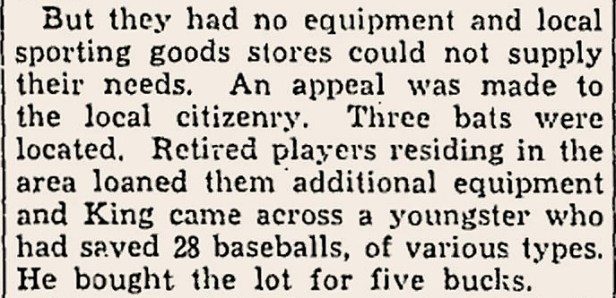
The July 27, 1955 issue of The Sporting News included an account of the eleventh hour formation of the Yuma Sun Sox. In addition to scrambling for equipment—and ballplayers—temporary uniforms also had to be obtained. New manager Whitey Wietelmann used his connections with the San Diego Padres to borrow a set of visitors’ uniforms. The article was primarily a fawning profile of Sun Sox owners John Carleton and Dick King, complete with staged photos:
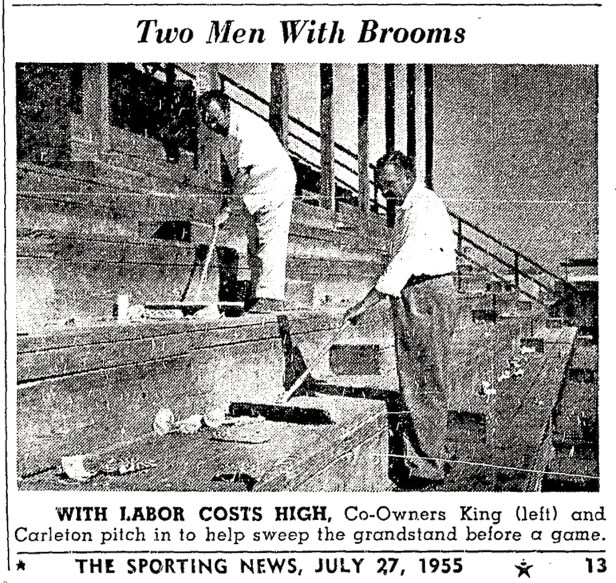
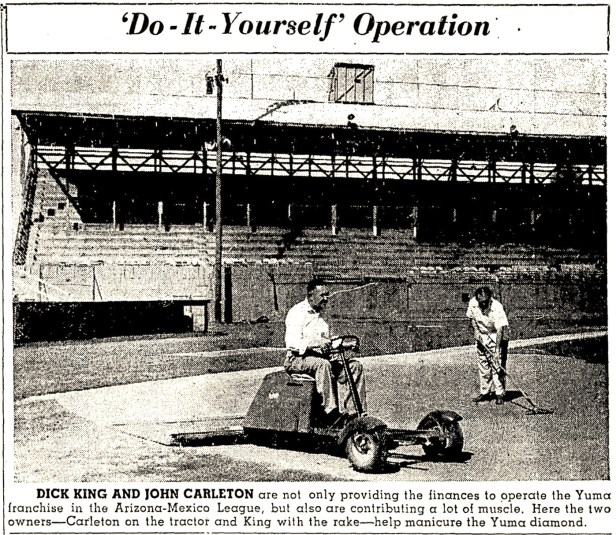
“Two men with a lot of foresight, courage and determination—co-owners Dick King and John Carleton—have performed what most baseball men regard as ‘a miracle,’ rehabilitating, baseball-wise, a city which three years before, had given up baseball with losses of approximately $25,000.” —The Sporting News–July 7, 1955
The “miracle” described in the article was short-lived. Following the 1955 season Dick King sold his interest in the team to John Carleton in order to join the Cincinnati Reds as a scout. And on June 30, 1956 John Carleton sold the team to Stella Davidson, owner of Yuma’s San Carlos Cocktail Lounge. According to the July 2, 1956 issue of the Tucson Citizen, “Carleton reported he was short of working capital and that it was difficult to obtain capital in the Yuma area.”
Season One (1955)
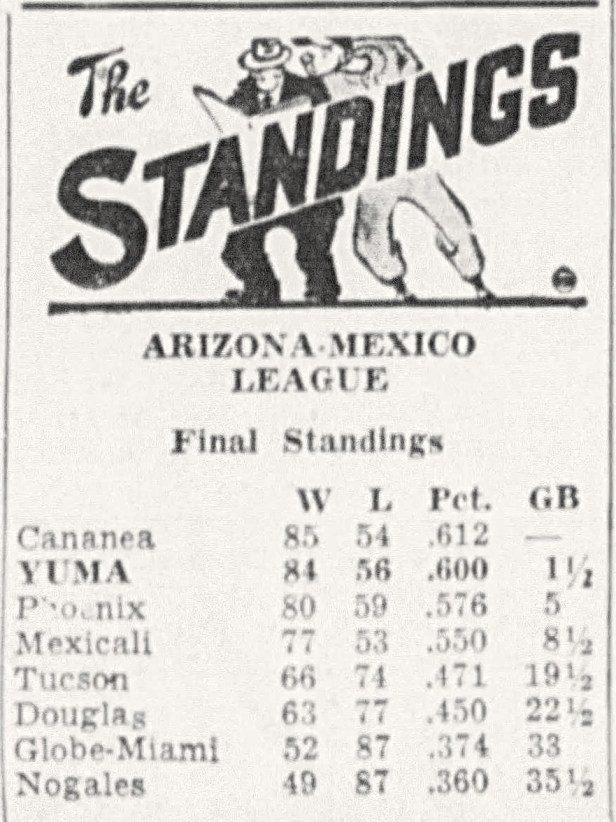
Despite being 17 games out of first place in the middle of the season, the Yuma Sun Sox finished strongly and nearly caught the champion Cananea Mineros. The Sun Sox 84-56 record left them only 1½ games back.
The Arizona-Mexico League was an offense-heavy circuit. In 1955 forty-two players in the league batted .300 or higher. The Cananea team average was .313. Yuma’s respectable team average of .281 was only good for 6th best out of 8 teams.
On April 15, 1955—only 10 days after the team was formally accecpted into the Arizona-Mexico League—the Sun Sox played the the first game in team history on the road at Mexicali. Player-manager Whitey Wietelmann pitched a complete game and hit a 3-run home run to lead Yuma to a 6 to 5 victory. Most Sun Sox games would not be so “low scoring” . . .
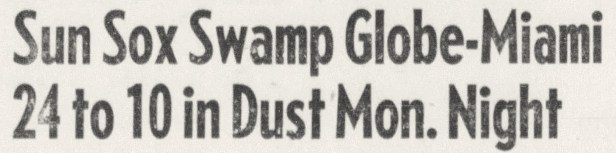
April 18 was the home opener of the Sun Sox versus the Globe-Miami Miners. The newspaper noted that 1100 fans witnessed the 24 to 10 Yuma victory played in “battering and swirling dust.”
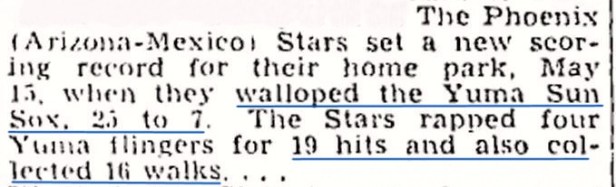
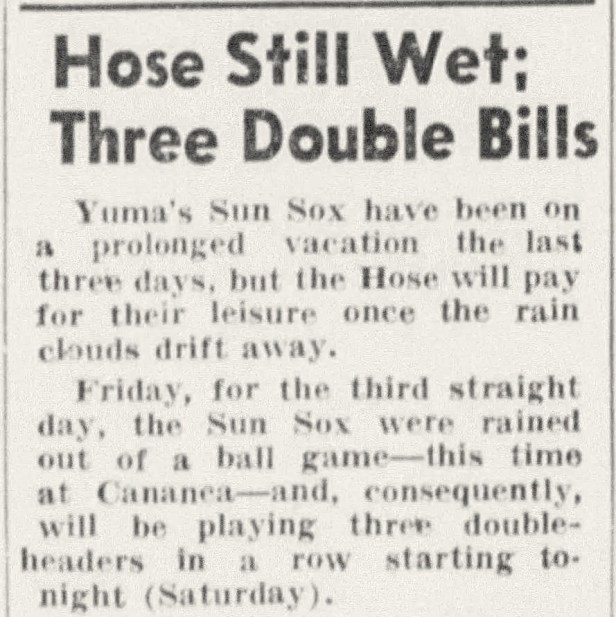
Pitchers did not have it easy in the hitter-friendly Arizona-Mexico League. Small ballparks—especially the one at Cananea—produced high home run totals. Errors were plentiful since many of the young infielders were not experienced or well-trained in playing defense. And since pitching staffs were lucky to have 6 hurlers, complete games were highly encouraged. A pitcher having a bad night would often have to remain in the game and take his lumps in blowouts like the Sun Sox 25-7 loss to the Phoenix Stars in which the winners had 19 hits and 16(!) walks. Later in the 1955 season, three straight rainouts resulted in three straight double-headers—a nightmare scenario for a short-handed pitching staff.
Sun Sox Profile: Whitey Wietelmann, manager / pitcher (1955, 1956)
In my previous article about Yuma’s first minor league team, the Panthers, I suggested that Walt Evans was most deserving of the title, “Mr. Panther.” From Yuma’s second minor league team, the obvious choice for “Mr. Sun Sox” is Whitey Wietelmann, player-manager for the 1955 and 1956 teams. Whitey had previously been in Yuma with the 1951 San Diego Padres of the Pacific Coast League when they held spring training at “Panther Field.” He returned in 1969 as a coach with the expansion San Diego Padres of the National League and was with the Padres for most of their 25-year spring training residence in Yuma. Wietelman was a weak-hitting, but much-valued, Major League utility infielder for nine years, primarily playing for Casey Stengel with the Boston Braves. He then played 5 seasons in the Pacific Coast League before becoming a lower-level minor league player-manager. In 1990, at age 71, Whitey Wietelmann retired from a 53-year career in baseball. The final 21 years were spent with the San Diego Padres big-league club. Whitey died in 2002 at age 83.
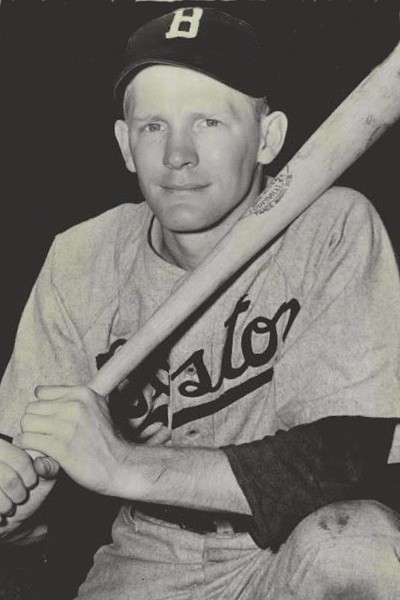
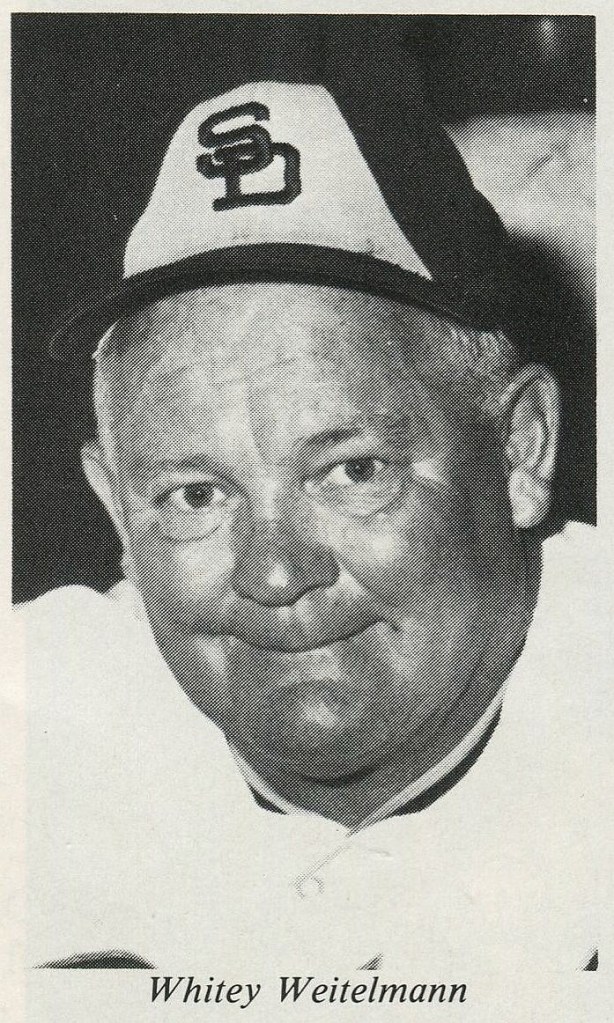

On August 14, 1955 Whitey Wietelmann won both games of a double-header over the Tucson Cowboys. In game one Whitey pitched 5 innings, while in game two he pitched all 9 innings. And in the previous night’s contest Whitey had pitched 2 innings in relief.
As a player-manager in the lower minors Whitey Wietelmann reinvented himself as an effective, durable knuckleball pitcher. In 1955, at age 36, Whitey compiled a record of 21-13, while pitching 257 innings. For an undermanned Sun Sox pitching staff, this was an invaluable contribution. Whitey also played 22 games at second base—in addition to performing all of his managerial duties.
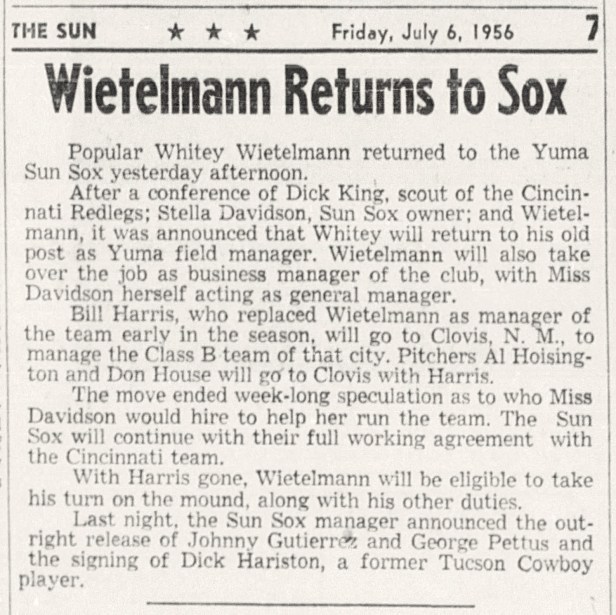
Whitey Wietelmann’s 1956 statistics were not as impressive (9-7, 138 innings), but he was another year older, and he missed 6 weeks of the season after being fired by original owner John Carleton. New owner Stella Davidson earned much good will from Sun Sox players and fans when she rehired Whitey Wietelmann upon buying the team.
Sun Sox Profile: Frosty Kennedy, 3rd baseman (1955)
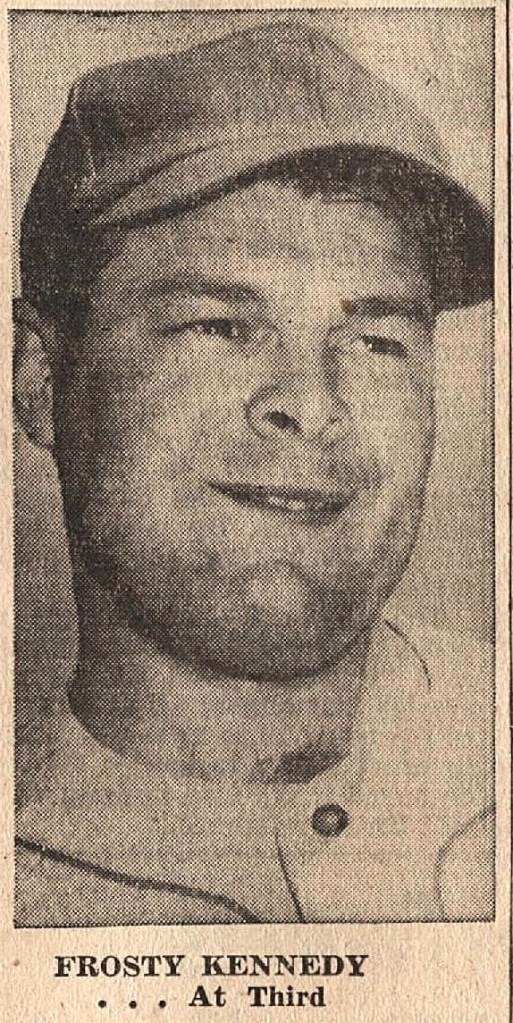
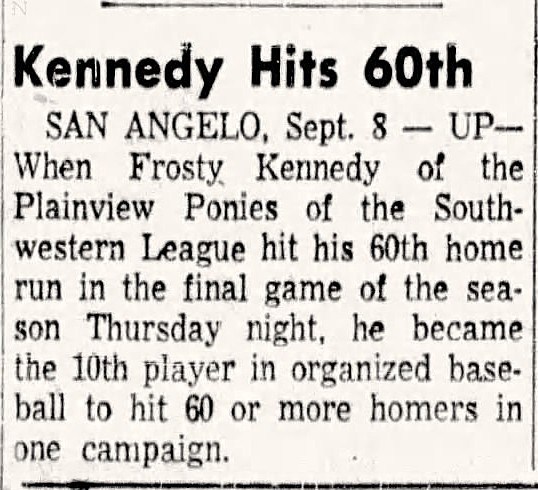
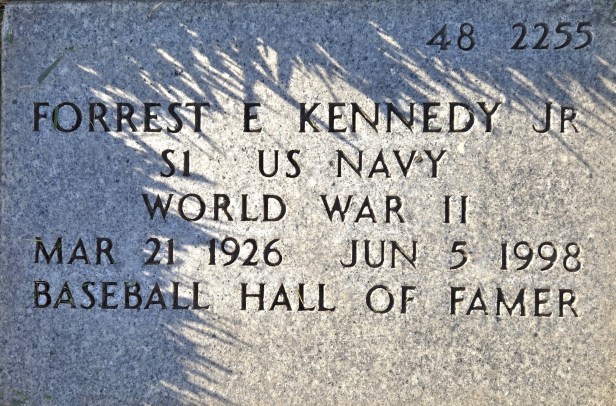
Forrest “Frosty” Kennedy was one of the few Sun Sox players who remained with the ballclub for the entire 1955 season. The 29-year-old third baseman was a valuable veteran presence on the team and a favorite of the local fans. Frosty finished the 1955 season with 30 home runs and 123 RBIs. Kennedy expressed a desire to remain with the Sox in 1956—he had even opened a Yuma car wash in the off-season—but in February 1956 owner John Carleton traded the slugger to the Plainview (Texas) Ponies. As the above article notes, Frosty Kennedy had a historic 1956 season for Plainview. By virtue of hitting 60 home runs in 1956, Frosty’s photo and statistics were displayed in the Babe Ruth wing of the Baseball Hall of Fame in Cooperstown, New York. According to Frosty Kennedy’s gravestone, pictured above, this recognition made Frosty a “Baseball Hall of Famer.” (In reality, Kennedy, an 11-year minor league star, never played in the Major Leagues.)
Sun Sox Profile: Don Jordan, first baseman (1955)
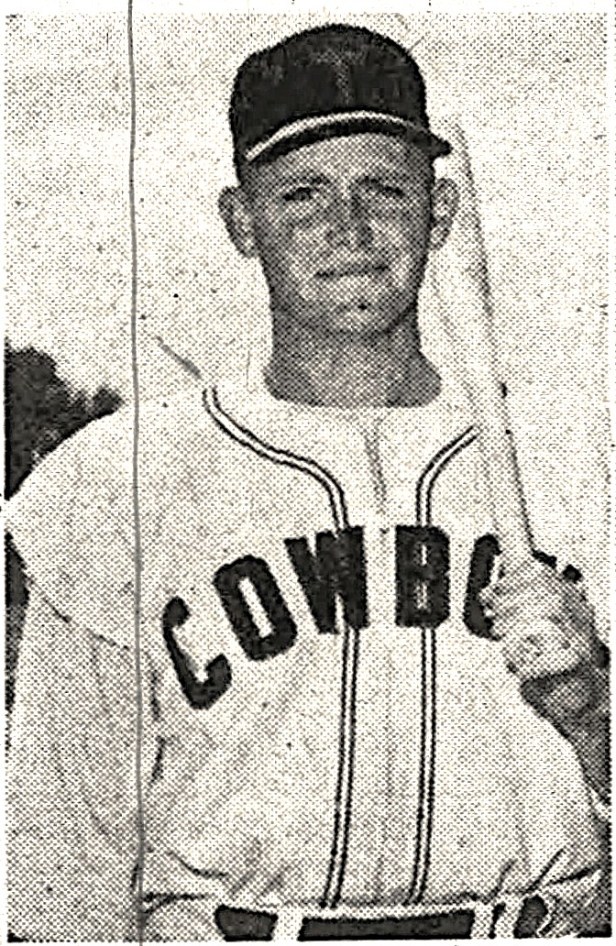
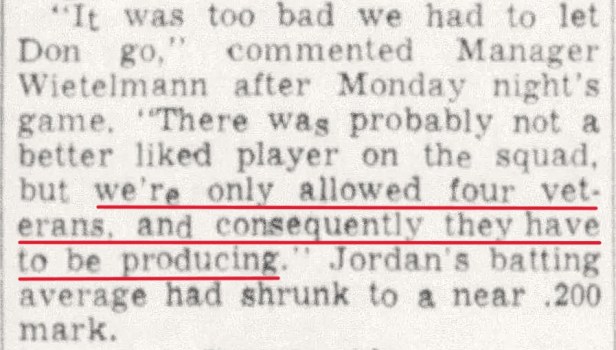
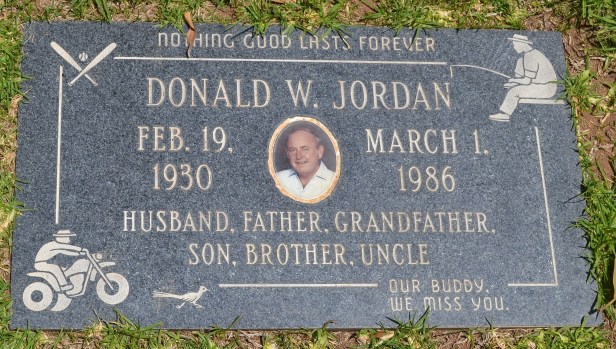
Don Jordan was a victim of the Arizona-Mexico League’s officially restrictive policies toward “veteran” ballplayers—i.e. those with 3 or more years of professional experience. In 1955 the league set a maximum limit of 4 veterans per team, and in 1956 the limit was reduced to 2 veterans per team. These limits were aimed at keeping salaries down since most of the teams were struggling financially. Don Jordan had been a minor leaguer since 1949 and was reportedly earning $450 per month from the Yuma Sun Sox in 1955. His relatively high salary with the 1954 Tucson team had led to his release from the Cowboys despite being their most productive hitter (25 home runs and 140 RBIs). Jordan got off to a slow start with the 1955 Sun Sox and was released after 43 games. At age 25 his pro baseball career was over.
In March 1986 Don Jordan died in San Diego at age 56. Although details of Don’s post-baseball years are sketchy, his gravestone offers a touching portrait of his life.
Sun Sox Profile: Lon Goldstein, first baseman (1955)
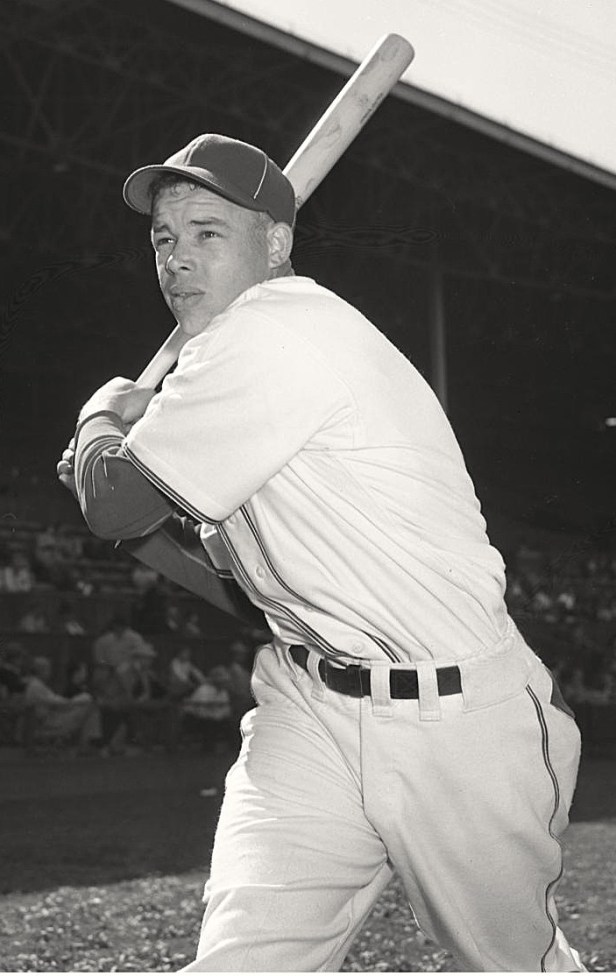
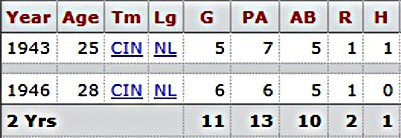
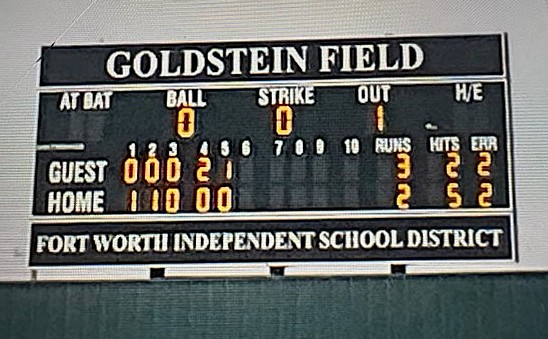
A dozen years before joining the 1955 Sun Sox, Lon Goldstein had been a Major League “one hit wonder” with the Cincinnati Reds. In his brief 1943 call-up, Lon collected his lone major league hit. After serving 2 years in World War II, Goldstein was for a fleeting moment a big leaguer once more—going hitless in 5 at bats with the 1946 Reds.
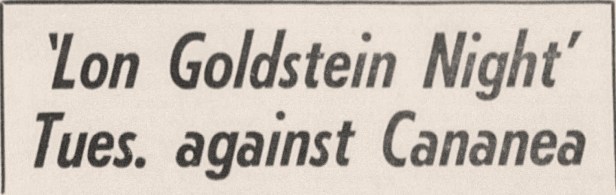
1955 was Lon Goldstein’s final season as a pro baseball player. After 15 minor league seasons, his lifetime batting average was an impressive .330. As a 37-year old first baseman for the Sun Sox, Lon hit .322 with 22 doubles. The Sun Sox declared his August 9 farewell game “Lon Goldstein Night.” Goldstein’s season was cut short for a good reason: he had recently embarked on a high school teaching/coaching career in Fort Worth, Texas that would last for over 35 years. Lon Goldstein died in 2013 at age 94.
Sun Sox Profile: Humberto “Beto” Barbon, outfielder (1955, 1956)
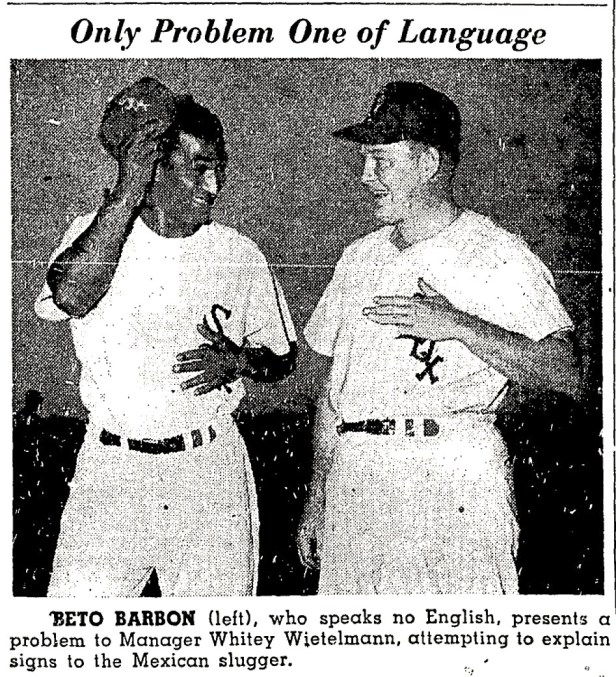
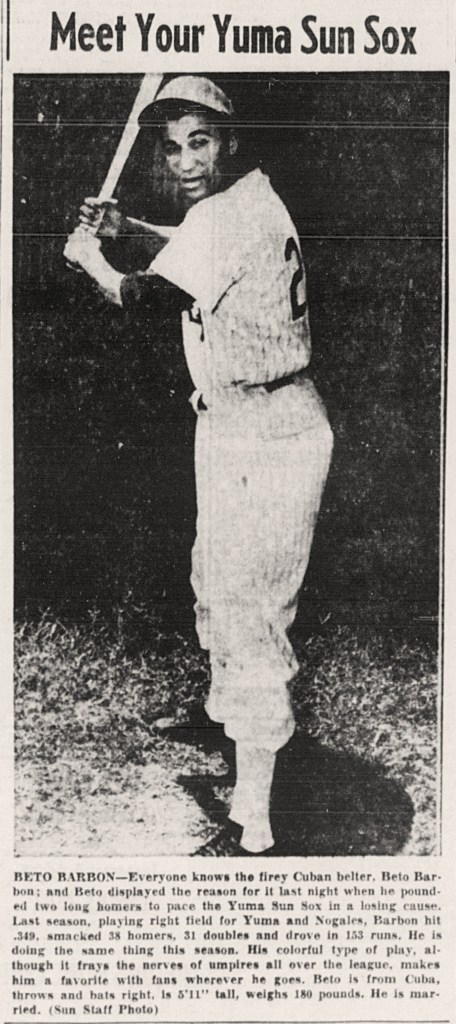
Outfielder Humberto “Beto” Barbon and manager Whitey Wietelmann, along with Walt Tyler, were the only 1955 holdovers on the 1956 Sun Sox roster. Barbon, a native of Cuba, was 30 years old when he joined the 1955 Yuma squad after playing briefly with Nogales. His career with multiple minor league and Mexican League teams spanned the years 1948-1960.
In 1955 Beto Barbon led the Arizona-Mexico League with 38 home runs and 202 hits. His .349 batting average and 153 runs batted in did not lead the league, but they reflect Barbon’s all-around hitting prowess. Beto’s 1956 numbers were slightly lower, due to fewer games played, but he remained one of the most productive and popular stars of the Sun Sox team.
Season Two (1956)

No, 35-6 was not a football score. On May 8 the Yuma Sun Sox defeated the Douglas Kings 35-6, scoring 12 runs in the 1st inning and 14 runs in the 2nd inning. The Douglas team committed 11 errors in the debacle.
The 1956 Sun Sox season was one of major changes and dramatic ups and downs. In the off-season co-owner Dick King left the organization. Most of the team roster was also eliminated at the conclusion of the 1955 season. In 1956, according to baseball-reference.com, a staggering 72 different players suited up for the Sun Sox during the year. For a team which carried a roster of only 16 ballplayers, the turnover in 1956 was constant. The team entered into an informal affiliation with the Cincinnati Reds in 1956. This accounts for some of the excessive player movement as Reds farm teams would temporarily option players to Yuma to give them needed playing time.
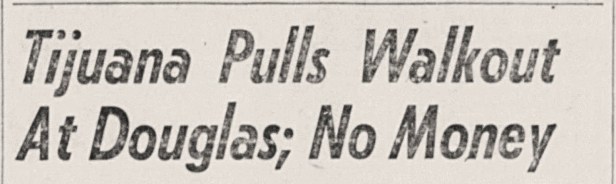
With the team struggling with an 8-17 record on May 15, owner John Carleton made the unpopular decision to replace manager Whitey Wietelmann with Bill Harris. Then on June 30, 1956, John Carleton sold the team to Stella Davidson. Carleton cited Tijuana’s recent dropping out of the league as a factor in his decision: “I was afraid of this seven-team league.”
“Gift Horse”
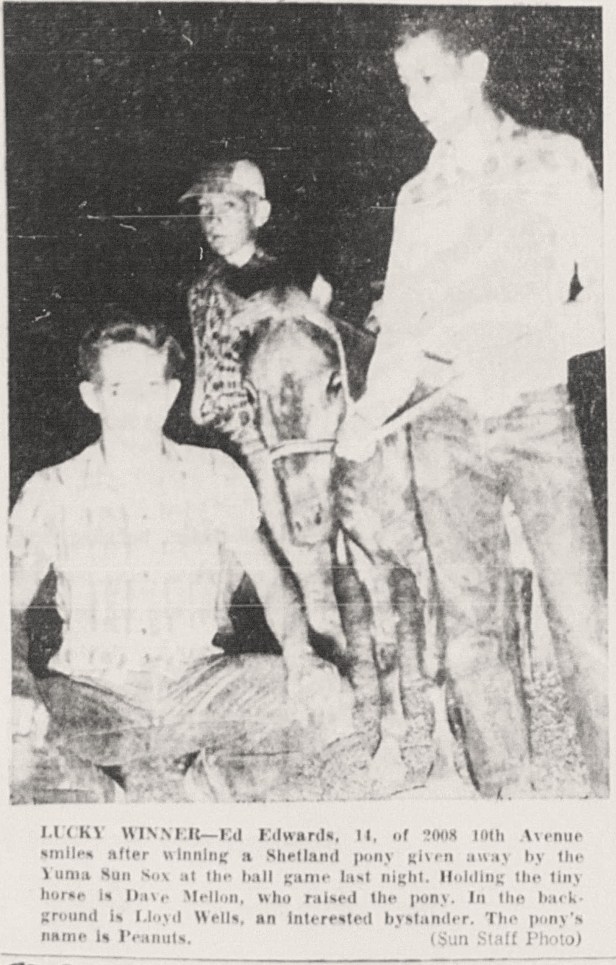
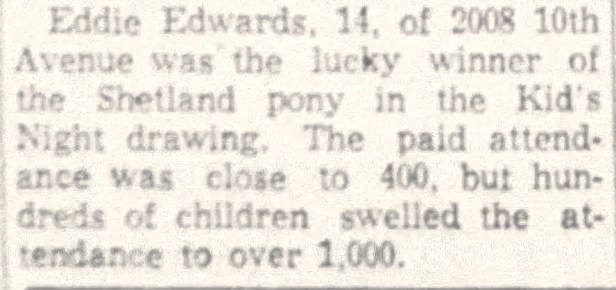
What parent would not be thrilled to have their teenage child bring home a Shetland pony won at a baseball game?

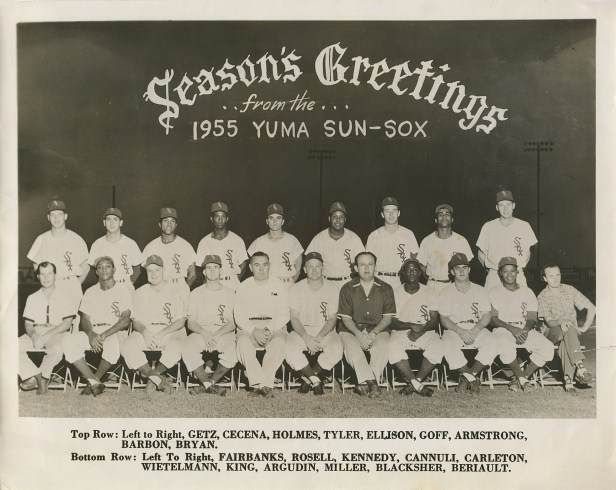
As the headline indicates the Sun Sox caught fire after manager Whitey Wietelmann was reinstated, moving from last place to first place in the second half of a split season. The photo below shows most of the players who made up the playoff roster which faced off against Cananea.
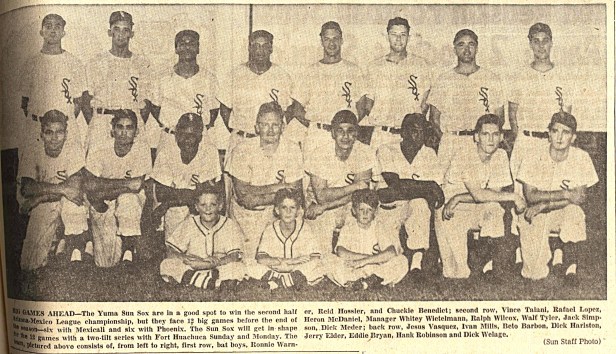
1956 A-M Playoffs: Yuma Sun Sox vs. Cananea Mineros
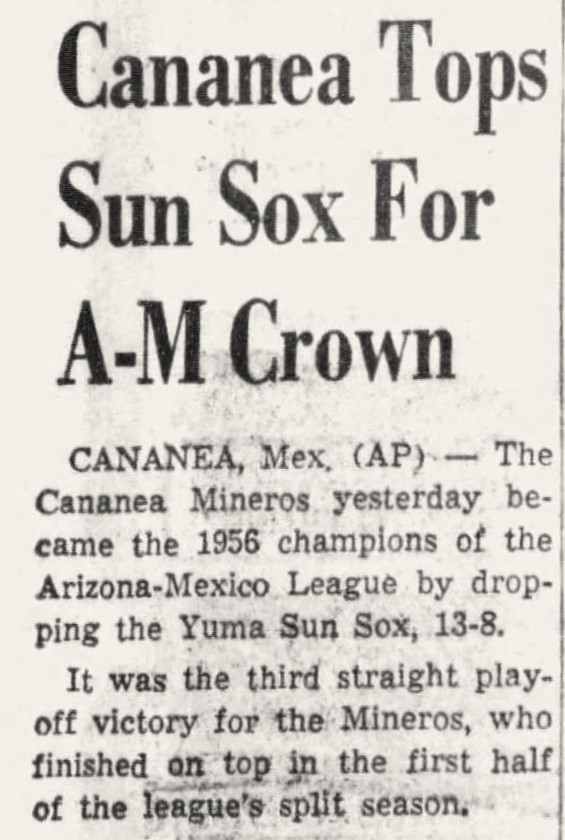
The Yuma Sun Sox, winners of the second half of the 1956 split season faced the winners of the first half, the Cananea Mineros, in a best of five playoff series. Cananea swept Yuma three games to none. Game one (13-2) and game two (10-8) were played in Yuma, while the deciding game three (13-8) was played in Cananea. The September 4, 1956 final playoff game was the last game played by the Yuma Sun Sox.
Sun Sox Profile: Paul Birdsong, outfielder (1956)
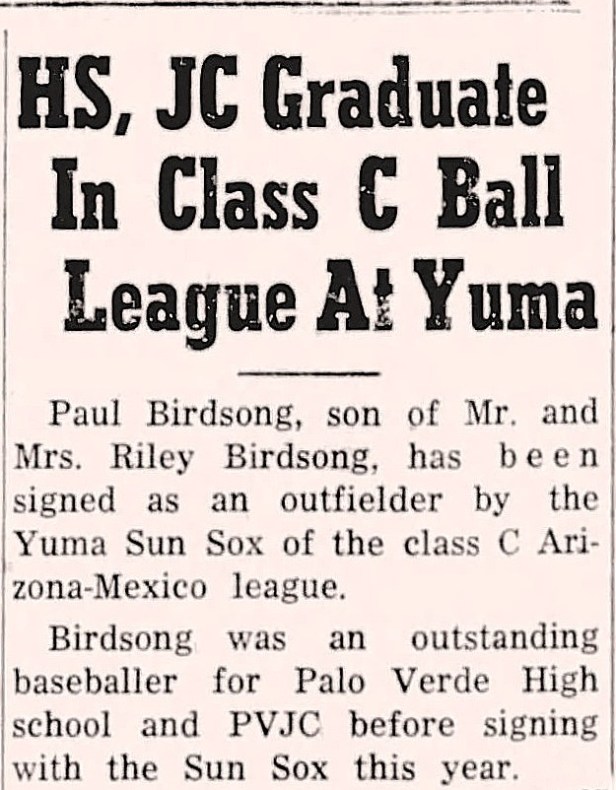
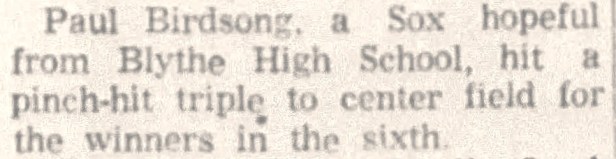
Paul Birdsong, a 20-year-old outfielder from Blythe, California, was one of the earliest “hopefuls” to report to the 1956 Yuma Sun Sox training camp. The above clipping describes a pinch-hit triple hit by Birdsong in an exhibition game between the Sun Sox and a local team of “Army and Air Force All Stars.”
Unfortunately, Paul Birdsong was released by the Yuma team before the start of the regular season. Although he had been a member of the Sun Sox for barely one week, the importance of the experience to Paul Birdsong was evident in the obituary printed when he died at age 76: “[Birdsong] went on to play professional baseball in Yuma, Arizona for the Sun Sox.” A longtime Blythe-area farmer, Paul Birdsong remained a baseball supporter who not only coached youth teams in his community; he also helped construct the town’s baseball fields.
Sun Sox Profile: Al Hoisington, pitcher (1956)
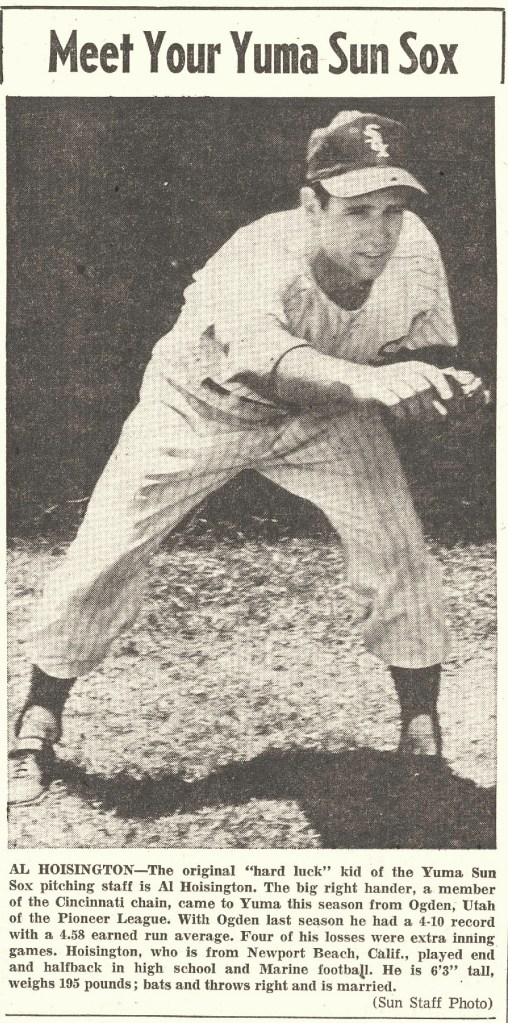
Pitcher Al Hoisington compiled a record of 2 wins and 10 losses with the 1956 Sun Sox, but as the photo caption on the left notes, Al experienced more than his share of “hard luck.” As the team’s opening day starter in Tijuana, Hoisington pitched a masterful complete game—but lost 2-1 in 10 innings.
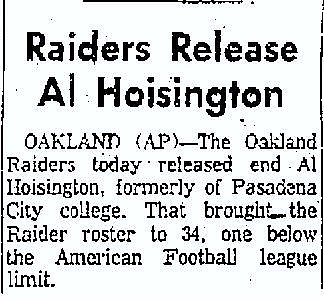
Al Hoisington played one more season of pro baseball—with the 1957 Salinas Packers—and then played several seasons of semi-pro and professional football. In 1960, the first year of the American Football League, Hoisington was a wide receiver for both the Buffalo Bills and the Oakland Raiders. A highlight of his football career was catching a 61-yard touchdown pass from future Hall of Famer (as a coach) Tom Flores.
Sun Sox Profile: Rogelio Alvarez, first baseman (1956)
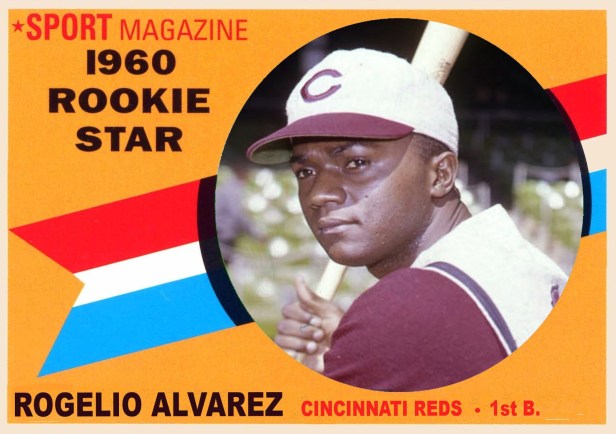
Rogelio Alvarez was a Cuban baseball legend who had an 18-year career in pro baseball, but his Major League experience consisted of 7 base hits in 17 games with the 1960 and 1962 Cincinnati Reds.
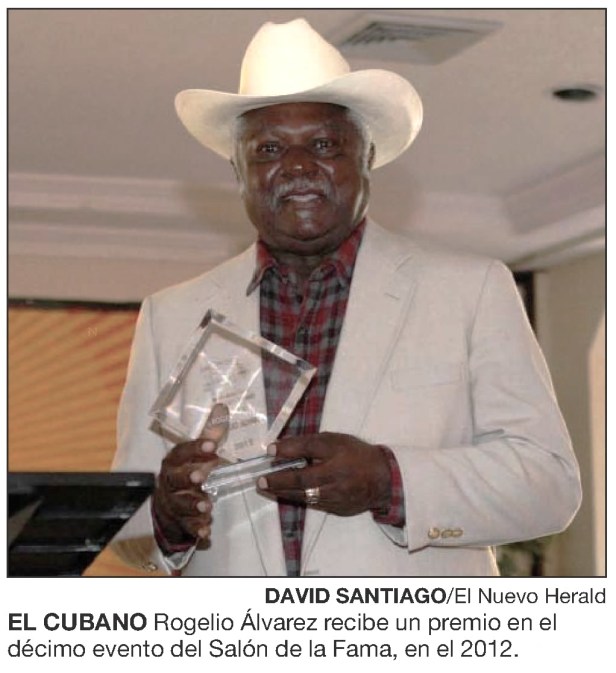
Rogelio Alvarez began his long professional baseball journey as an 18-year-old 1st baseman with the Yuma Sun Sox. He played only 12 games with Yuma before being sent to Port Arthur, Texas. The following year Alvarez hit 39 home runs for two Class B teams. After leading the 1962 San Diego Padres to the Pacific Coast League pennant, Rogelio Alvarez was projected to be the starting 1st baseman for the Washington Senators of the American League. Unfortunately, Alvarez had gone home to Cuba in the off-season and was unable to leave the country in time for the start of the 1963 season. Rogelio Alvarez never made it back to the Majors, but he played for several minor league and Mexican League teams through 1973. He died in 2012 at the age of 74. Earlier that year Alvarez had been inducted into the Cuban Sports Hall of Fame in Miami.
Sun Sox Profile: Ralph Wilcox, third baseman (1956)
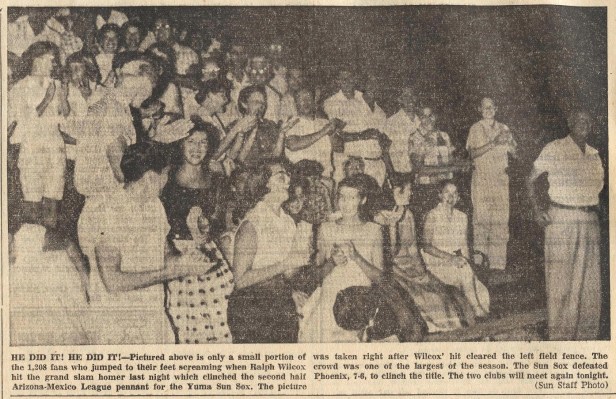
The above caption reads, “He did it! He did it!” Ralph Wilcox produced the biggest hit of the 1956 Sun Sox season when he hit a 7th inning grand slam home run on August 30 against the Phoenix Stars. A crowd of 1,208 at Municipal Stadium saw the Yuma team clinch the second-half pennant of the Arizona-Mexico League to set up a playoff with the Cananea Mineros.
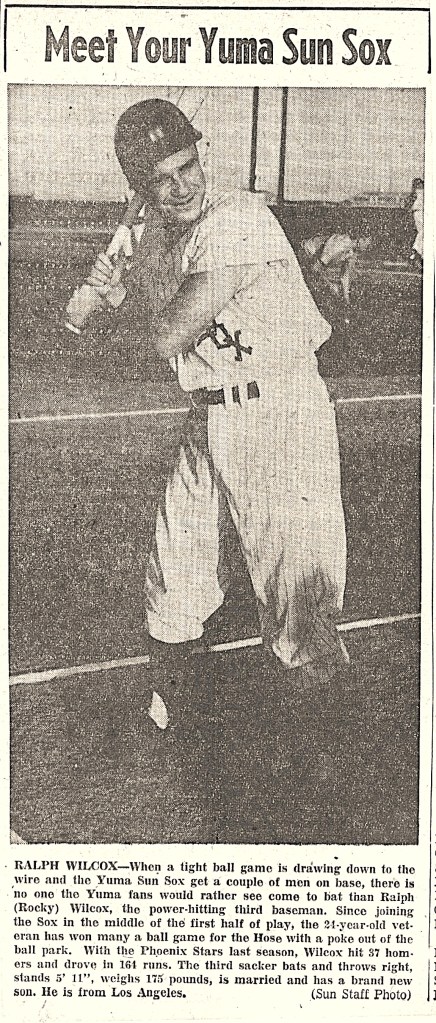
1956 was third baseman Ralph Wilcox’s last full season of pro baseball. At age 26 Ralph was a team leader who served briefly as acting manager after Whitey Wietelmann was fired. Wilcox was a very productive hitter in 1956: 31 home runs, 133 runs batted in, .342 batting average. In 1957, with the Sun Sox out of business, Ralph Wilcox signed with the Plainview (Texas) Ponies, who after enduring a 15-game losing streak . . . also went out of business. Ralph Wilcox’s minor league career came to an end when Plainview dropped out of the Southwestern League on June 16, 1957.
Sun Sox Profile: Walt Tyler, outfielder (1955, 1956)
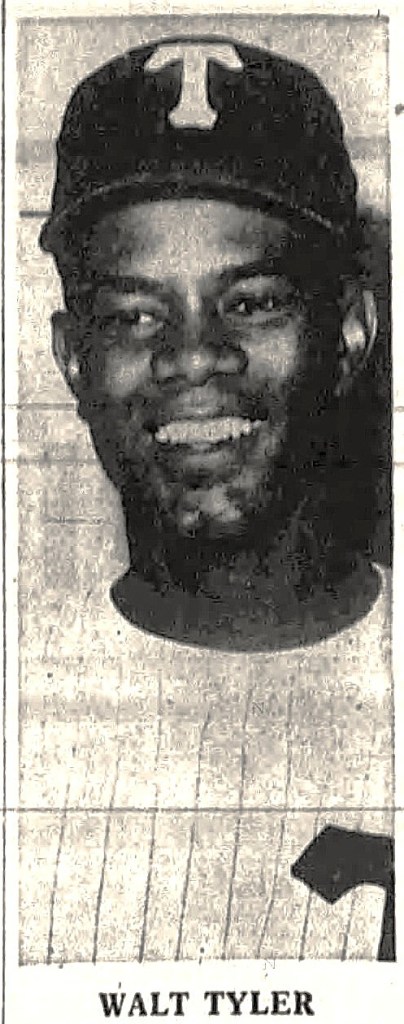
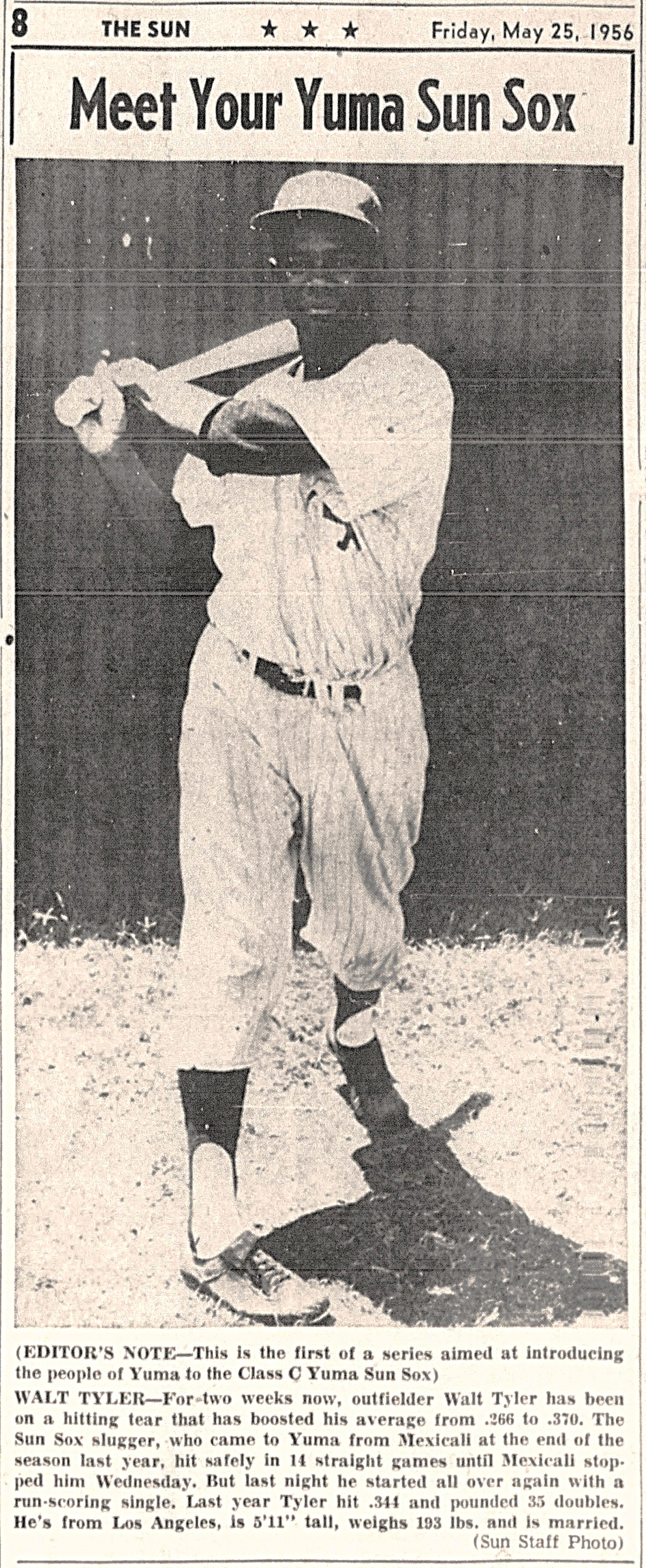
Outfielder Walt Tyler, who was signed by the Sun Sox near the end of the 1955 season, had been a star with the 1952 Yuma Panthers, winning the league batting title with a .366 average.
Walt Tyler was an outstanding hitter throughout an eight-year professional career, but 1956 may have been his finest season. Walt won another league batting crown with a .392 average. His league-leading 208 hits included 43 doubles and 17 triples.
With Yuma out of the league in 1957, Walt Tyler was signed by the Tucson Cowboys. He played his final two seasons in the Mexican League.
Sun Sox Profile: Stella Davidson, owner (1956)

When Stella Davidson became sole owner of the Yuma Sun Sox on June 30, 1956, the national wire services ran stories about the novelty of a woman owning a baseball team.
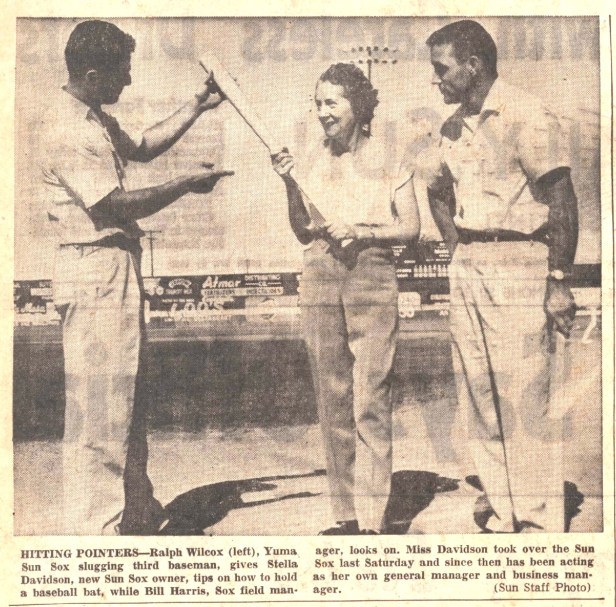
Although she stated that she “didn’t buy the club to make money,” Stella Davidson was not a novice as a business owner. She and her ex-husband, Hollis Carruth, owned the Call of the Canyon Resort near Flagstaff. And since 1952 Davidson had been the owner of Yuma’s San Carlos Cocktail Lounge.
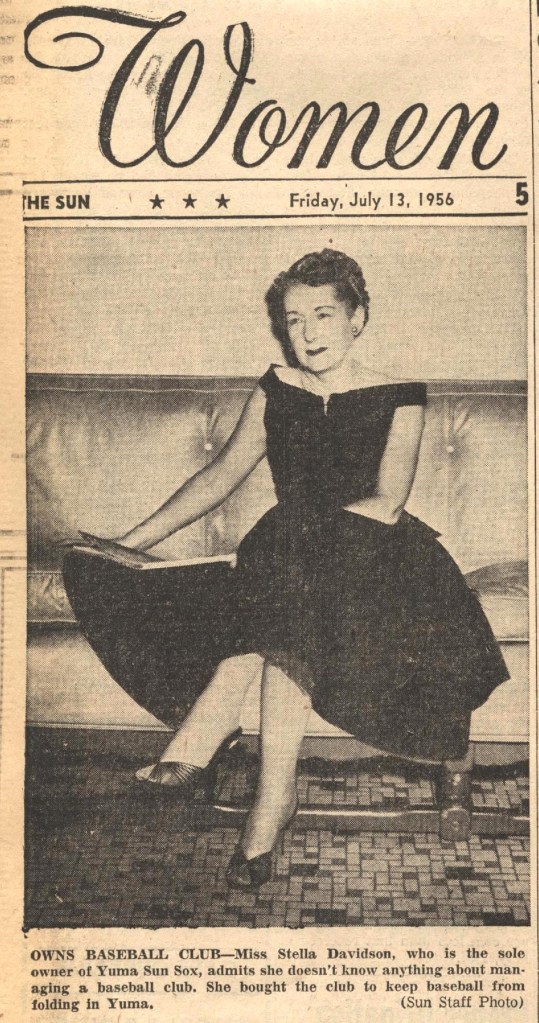
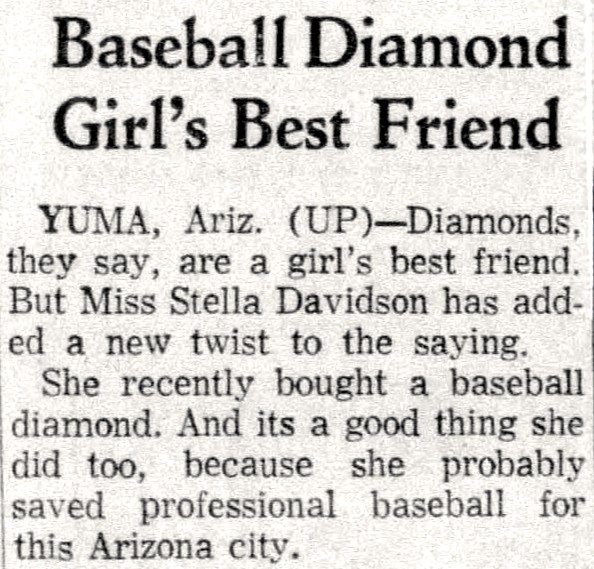
On July 13, 1956 Stella Davidson was profiled in the “Women” section of the Yuma newspaper: “In her home this attractive, chestnut-haired woman dons frilly dresses and dainty aprons. A far cry from the tailored slacks she wears as proprietor and bar waitress of the San Carlos Cocktail Lounge.”
Stella Davidson expressed a willingness to continue as owner of the Sun Sox for a 1957 season, but the team folded when the City of Yuma—citing multiple unpaid bills—did not offer the club the use of Municipal Baseball Park.
Following her ex-husband’s death in August 1957, Stella Davidson operated the Call of the Canyon Resort in Oak Creek Canyon until her death at age 66 on October 16, 1970.
The Arizona-Mexico League continued for two more seasons (1957-1958)—minus Yuma. When the Sun Sox went out of business following the 1956 season, Yuma baseball fans would not have anticipated having to wait nearly 40 years before the arrival of the town’s third minor league team, the Desert Dawgs in 1995. And since the Desert Dawgs’ league folded shortly after its first season began, Yuma’s third minor league team played a whopping total of 10 games.

